


• 247 Aviation
Charter
• Air Methods
Charter
• Avincis
Charter
• Cornwall Air Ambulance Trust
• DRF Assistance
Charter
• Gama Aviation
Charter
• GCH Aviation
Charter
• Midlands Air Ambulance Charity
• Norsk Luftambulanse
Charter
• Swiss Air-Rescue Service Rega
• Tassili Travail Aerien
Charter
• Toll Aviation
Charter
• Airbus Helicopters H125/AS350
• Bell 407
BAN's World Gazetteer
• U.K. The bimonthly news publication for aviation professionals.


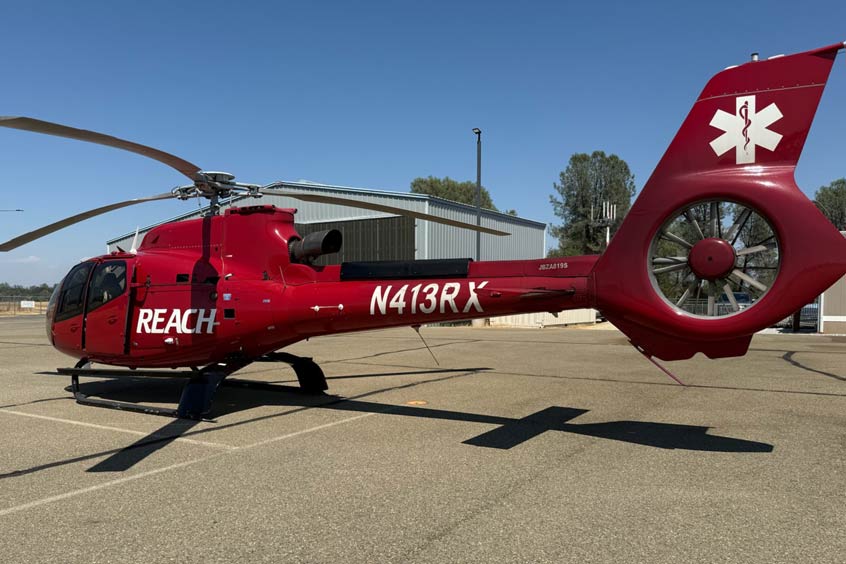



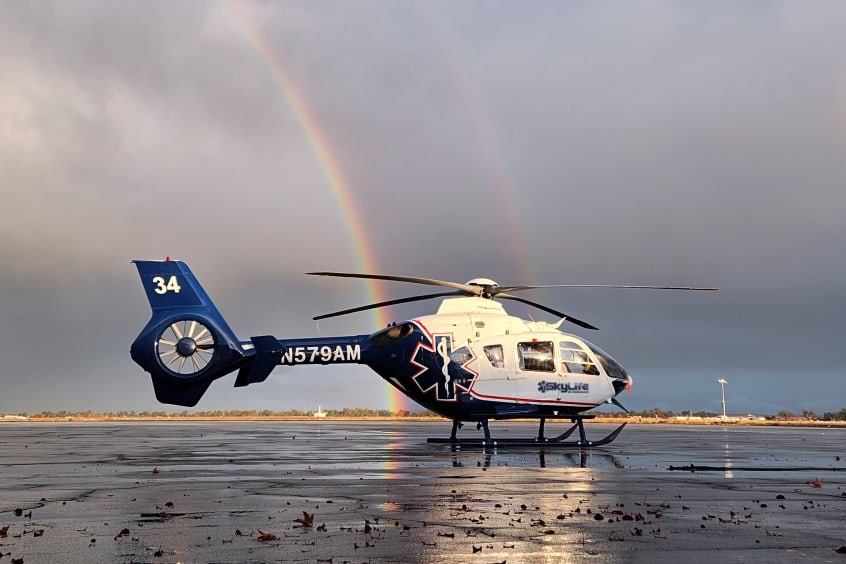
In 2025, business aircraft owners and operators have been responding to growing demand for medical missions by upgrading fleets and expanding capabilities. From single engine turboprops covering remote terrain to twin engine helicopters serving densely populated regions, mission profile and operational environment underpin acquisition choices. Regulatory change, tech maturity, sustainability pressures, expanding markets and new safety demands drive fleet considerations, with operators informing the development of upgrades and advanced models to help realise versatile platforms with ever-improving medevac capability.
Globally, services are under greater scrutiny for safety, airspace access, operator qualifications and operational protocols. Regulatory change will come, and many operators are choosing to adapt ahead of time. In the UK, the Aviation Safety (Amendment) Regulations 2025 come into force at the beginning of December, updating continuing airworthiness (maintenance, parts, documentation) requirements under EU‑derived law.
Advances in avionics are becoming affordable and reliable enough for mission‑critical use, and the sustainability agenda influences fuel choice and engine efficiency to reduce emissions. A number of government programmes and public/private partnerships are being established, increasing both funding and expectations for medevac services.
Cost pressures mean that medevac‑capable business aircraft are often used for non‑medical missions, then converted when needed. Designs and systems are evolving to allow conversion quickly, with shorter downtimes. And while access to care and medical infrastructure remains uneven in many parts of the world, business aviation is filling the gaps in remote or underserved areas.
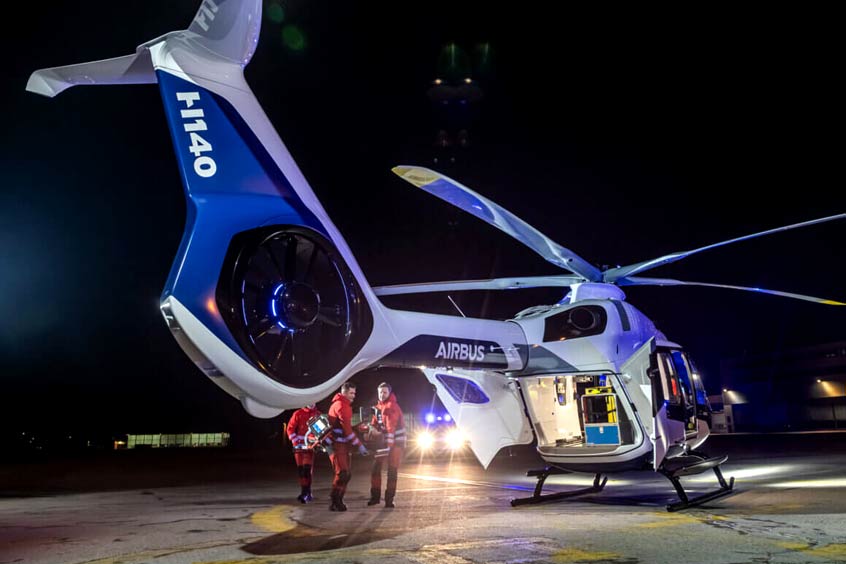
The Airbus H140 is a next-gen light twin optimised for EMS, with rear loading, an improved cabin and better acoustics. It seems to be the most sought-after new model in the EMS field, with plenty of LOIs in place following its unveiling at Verticon 2025. Over the past six to 12 months, Airbus Helicopters has received around 24 firm orders and around 74 options. Global Medical Response in the US signed 10 firm orders and five options; Metro Aviation signed 12 firm orders and 24 options; while STAT MedEvac signed two firm orders plus one option. Air Methods’ fleet expansion also includes both of these as well as 10 H125s and 11 H135s.
The H140 offers more cabin space, higher useful load, better emissions and more modern avionics than the H135, so it is an attractive jump in capability without going to a much larger or more expensive class.
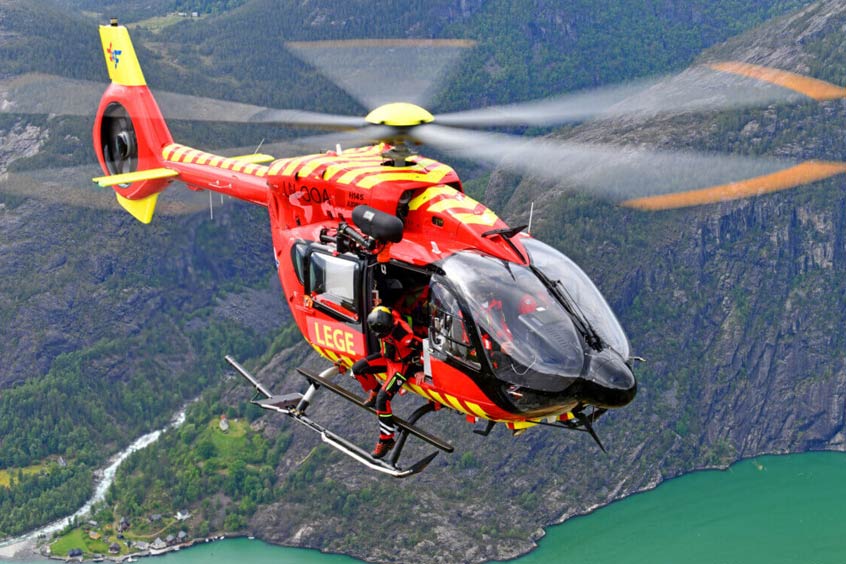
In Europe, ADAC Luftrettung and OAMTC Flugrettung in Germany and Austria ordered five H140s each, with ADAC also committing to a number of H135s and at least one H145 as part of a modernisation programme. DRF Luftrettung signed an LOI for 10 H140s, as well as a Cessna Citation Sovereign+ air ambulance jet, and Avincis in Sweden took delivery of two five-bladed H145s.
Swiss Air-Rescue Rega is retiring from service its AW109SP Da Vinci helicopters and four-bladed H145s, selling them on as it makes strides on its largest-ever acquisition project. Investing more than $2.5m (CHF 200m) in the modernisation and expansion of its fleet, it welcomed the first of 21 new five-blade H145 D3s to its Lausanne base earlier in the year. Ongoing deliveries will be made across its 14 operational bases by the end of 2026. The new helicopters will carry an additional load of 150kg, an improvement that will pay off for onboard mountain rescuers using winches in difficult terrain.
Airbus has received at least six orders for its H145, with the Norwegian Air Ambulance interested in up to eight, of which two are firm orders. The Midlands Air Ambulance Charity in the UK started operating its own in January this year, replacing its leased EC135 in Staffordshire.
StarFlight Australia has ordered three H145s for its aeromedical network in Tasmania following a decision by the Tasmanian government to award the operator a $354m 12-year HEMS contract. The ability to rapidly reconfigure the aircraft between mission types was a decisive factor in its selection, and the new fleet is expected to fly about 1,500 hours per year over the next decade.
GCH Aviation has taken delivery of the first of four H145s for operations across the Canterbury, West Coast, Nelson and Marlborough regions of New Zealand. And New Zealand’s Search and Rescue Services has placed an order for four H145s to join its fleet of H145s and BK117s.
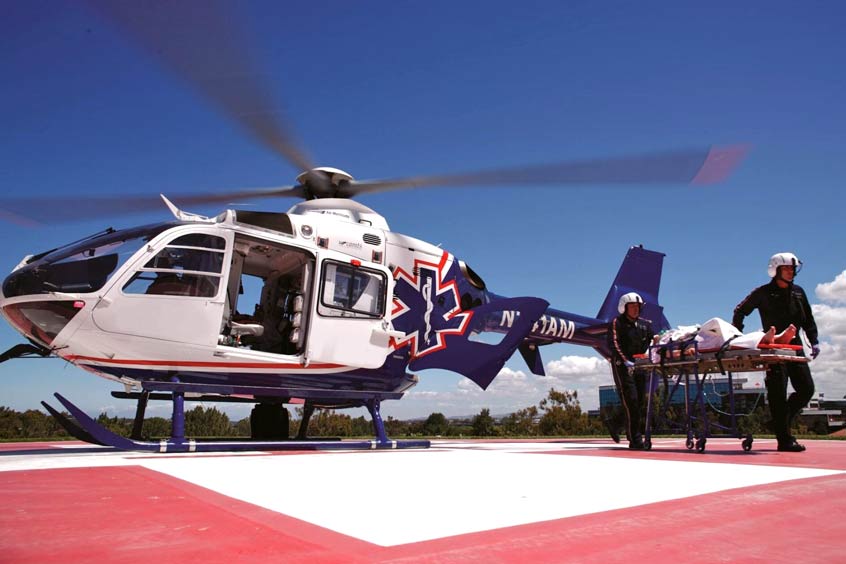
The H145 is a well established platform for HEMS globally, with a large installed base, known support and strong performance in many mission profiles thanks to a balance of payload, cabin, twin safety and its relatively lower acquisition and operating cost than heavier helicopters. Many EMS operators already use it, and upgrades/replacements continue.
The newer five‑blade/D step improvements of higher useful load and quieter operation enhance its attractiveness, and of course it is widely supported globally in terms of spare parts, pilot training and EMS interiors.
The H135 and H125 have been included in mixed orders: for example, Air Methods’ 2025 order includes 11 H135s and 10 H125s among other types, and Global Medical Response’s 2024 order, which is part of broader fleet planning, included H125, H130, H135 and H145 types. These models continue to matter for lighter, shorter missions or where simplicity, reliability, lower operating cost or single-engine performance is valued. Some operators prefer a mixed fleet: twins for longer, demanding or over-water jobs and single engines for smaller or cheaper base coverage.
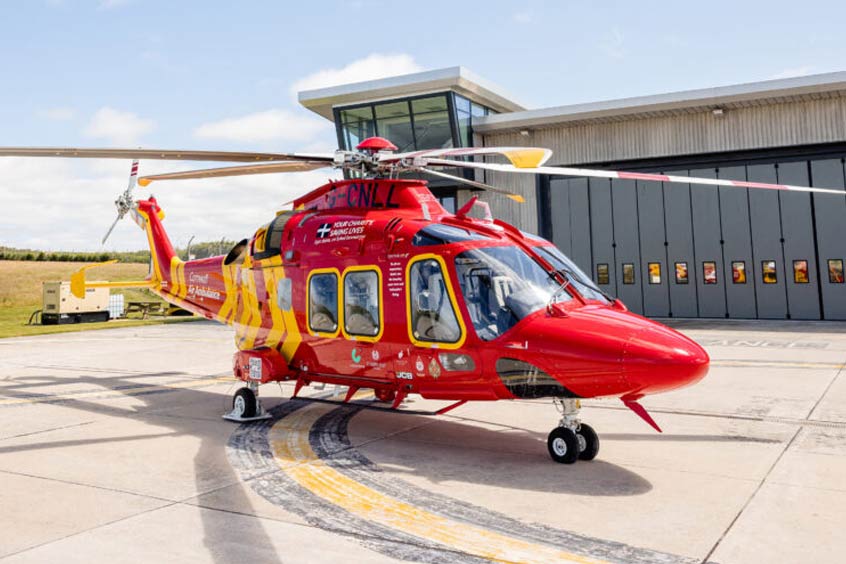
From Leonardo, the AW169 has a larger cabin with good speed, range and flexibility. Many operators prefer its payload over some of the lighter twins when medical equipment, crew and space matter. It remains competitive, especially in Europe, and in those markets where performance, size, safety and a modern cabin are needed. Cornwall Air Ambulance took delivery of its second this year, and Gama Aviation UK ordered three of the skid variant for EMS roles.
CHC Helicopter transitioned its Bell 412EP fleet to three AW139s for its RAC Rescue service in Western Australia, part of a $26.7m commitment by the state to bolster all-hazards rescue and advanced aeromedical care. Meanwhile in the US, Global Medical Response took delivery of the first of 15 IFR-configured Bell 407GXi in March. It has an option to purchase nine more, bringing its total fleet to 250 Bell helicopters.
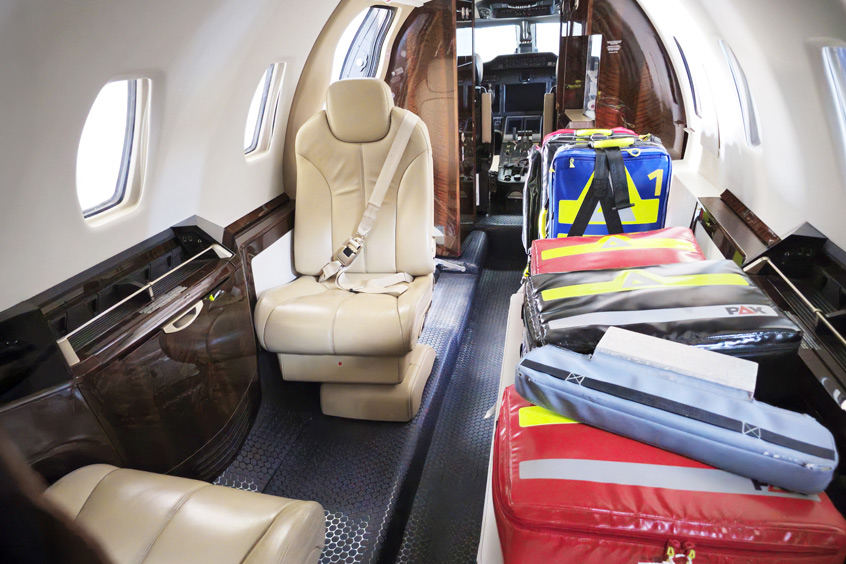
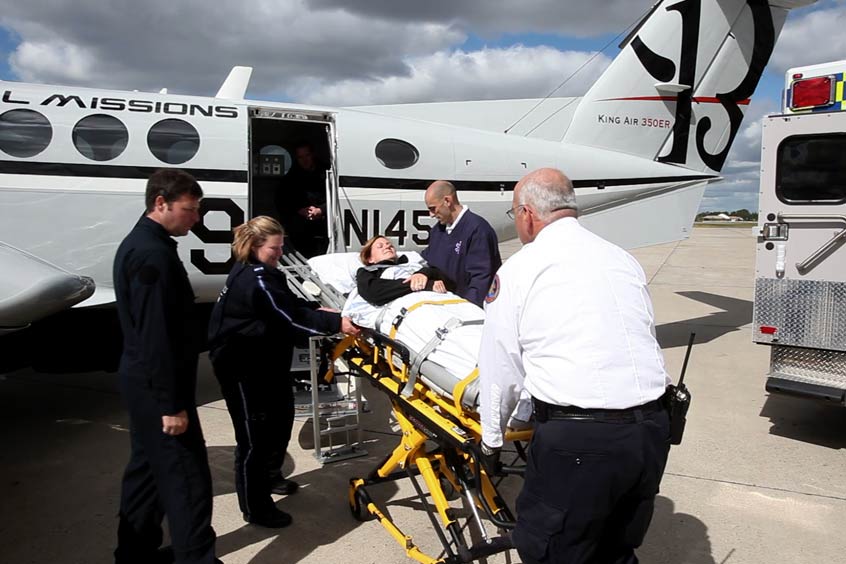
On the fixed-wing front, medevac often involves bed‑to‑bed repatriation, inter‑hospital transfer and cross‑border transportation, so aircraft with good range, cruise speed and high availability are important. There are fewer orders than for helicopters, but King Airs are steady in certain geographies. The aircraft need to be able to carry multiple patients, contain intensive care features, have standing height cabins for medics to work and stretcher loading. The Challenger 650 ordered by ADAC in Germany for delivery in 2026 was selected partly for such cabin advantages.
Operators serving remote, rural or widely dispersed geographies in, say, Scotland and Australia need aircraft that can handle shorter or less well prepared fields, have good reliability and can operate in diverse weather/endurance conditions. The Gama Aviation King Airs for Scotland reflect this: the operator signed for three 360Cs, to enter service in 2026, fitted for air ambulance work with cargo doors as part of a newly awarded 10‑year contract with Scottish Ambulance Service. It has also acquired Capital Air Ambulance, a UK-based fixed-wing medevac/repatriation service, to boost its fixed-wing EMS capacity.
Older aircraft fleets tend to have more downtime, higher maintenance overheads and are possibly less able to meet new regulatory or operational standards – hence several operators are replacing older turboprops with newer models and more capable interiors. Ambulance Victoria (Australia) has replaced its older aircraft with two each of the 260C and 360C, while under a 15-year contract with the South Australian government, Toll Group is preparing for the arrival in 2026 of a PC‑12 and a Cessna 208EX.
Some operators may choose business jets or faster fixed-wing platforms where long distances, speed, patient comfort or high-acuity medical interior are priorities, but in the last six months such fixed-wing jet EMS orders have been less evident.
Belfast-based 247 Aviation is, however, acquiring two Learjet 45s, and is the only UK-based provider operating a dedicated, CAMTS-accredited fleet of medium-range jets.
Given the challenges of terrain, infrastructure, weather and remote access across Africa and the sub-Sahara, Algeria-based Tassili Travail Aerien took delivery of two new Cessna SkyCourier aircraft in June, the first order of an aeromedical-equipped SkyCourier and the first SkyCourier order in Africa.
As with many markets, sustainability and environmental concerns around fuel efficiency, emissions and noise predominate. An agreement was signed at the Paris Air Show in June establishing a US-led partnership with Australia, Canada, New Zealand and the UK. The AAM collaboration aims to harmonise airworthiness and certification standards for eVTOL aircraft, facilitating their safe and efficient integration into national aviation systems and ensuring global interoperability.
eVTOLs may enhance emergency air operations by offering faster response times than ground vehicles, delivering medical supplies and personnel to critical locations and supporting search and rescue in challenging environments. Their ability to bypass traffic, take off and land vertically without runways and provide quicker delivery of aid makes them particularly promising for medical emergencies in urban and remote areas. They could complement existing services, but challenges like limited battery range, high initial costs and the need for new infrastructure and regulatory frameworks will delay their widespread integration for now.
Behind the scenes of a private medical flight
Each year brings advances in air ambulance capability, but the aircraft is just one link in a very long medevac chain. Here Adam Mikulski, managing director of Germany-headquartered global provider Medical Air Service, throws light on the logistical puzzle behind every successful private medical flight.
Before a patient gets on board, the aircraft, besides being operationally configured, should also be medically equipped, perhaps with certified air stretcher beds, ventilators, cardiac monitors, suction machines, a defibrillator and a set of oxygen systems. And all equipment has to meet rigid aviation and medical standards that often differ between jurisdictions and must be certified for flight to withstand turbulence, altitude variations and vibrations. Often medics will conduct a pre-flight simulation on the ground to calibrate all systems to work off the electrical output of the plane and its life-support systems. After all, there is no room for error once flight is underway.
Behind every medevac flight is a web of coordination between dispatchers, physicians, pilots and ground handlers. Every evacuation is a sequence of dependent steps: ambulance to plane, plane to ambulance and ambulance to hospital.
The process usually starts with a call from a relative, hospital or insurer. Within minutes, it is incumbent on a provider to ascertain whether the patient is fit to fly. A specialist checks hospital records and has discussions with treating physicians to establish the suitable type of aircraft and medical configuration. Concurrently, an operations group obtains overflight and landing clearances, potentially across several nations, and verifies whether both the departure and destination airport are suitable for supporting a mission.
Then comes one of the most critical aspects: coordinating ground transportation at both ends. The ground ambulances must arrive precisely when the aircraft is ready, with medical teams on both sides briefed and aligned. A single delay, whether from paperwork, weather or customs, can cascade into hours of waiting for a critically ill patient.
The insurance industry’s role is critical yet frequently confused. Whereas a lot of health or travel policies actually include repatriation, insurers normally rely on dedicated air medical partners to assess medical requirements, source appropriate aircraft and personnel, and handle end-to-end operation.
From a patient’s perspective, this partnership matters. A provider with direct access to a network of accredited operators ensures that the aircraft meets stringent medical criteria such as 24/7 medical supervision, multilingual coordination and verified hospital destinations with available intensive care beds.
The issue many times is timing. Insurance authorisation, though a must, may proceed slower than the condition of the patient permits. Some families pay for the flight request and later seek reimbursement.
A certified air ambulance aircraft must be configured to allow medical staff full access to the patient throughout the flight, with secured oxygen and power connections and sufficient space to store emergency medication and fluids.
Pilots must be trained in aeromedical operations and capable of adapting flight plans for patient comfort and stability, while onboard medical personnel – typically a doctor and paramedic, or in critical cases an ICU nurse or anaesthesiologist – are specifically trained in managing physiological changes during altitude and pressure shifts.
Beyond the cabin, global compliance means providers must navigate customs procedures, health regulations and overflight permissions, especially when crossing borders with medical equipment or biological material. A flight between Spain and Poland, or between Greece and Germany, may involve a number of flight clearances, hospital authorisations and air traffic managements. On intercontinental missions, such as flying across the Caribbean to Europe or Africa to America, it multiplies again.
Even individual nations have pre-authorisation procedures for medevacs. Some demand diplomatic clearing; others insist on preauthorisation documentation from doctors ahead of time. A dedicated operations team must monitor each approval in real time so that when the plane touches down, ambulances and border agents are waiting. Each smooth process represents a critical minute gained for the families concerned.
Transparency helps ease anxiety for families, concerning real-time updates regarding approvals, departures and estimated times of arrival, and constant documentation to support post-mission reporting and claims. Regulation and technology configure a medical flight, but its success hinges on human expertise and compassion, whether it be pilots adjusting altitudes to minimise cabin pressure variations or doctors checking for oxygen mid-flight.
The true meaning of readiness is the ability to act within hours, having the right plane and the right team, and seamless transit across borders.