

• Air Charters Europe
Charter
• Altea

• Avi-Go
• Close Brothers Aviation and Marine
• FAI rent-a-jet
Charter
• Saxon Air Charter
Charter
• ScandiAvia
FBO/Handler (Tornio / Kemi)
• Smartflyer AG
Aircraft
• UBS
• VIPAero Angola
FBO/Handler (4 de Fevereiro / Luanda)
BAN's World Gazetteer
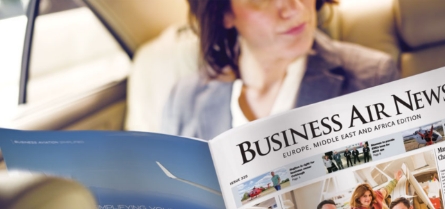
• Netherlands The bimonthly news publication for aviation professionals.

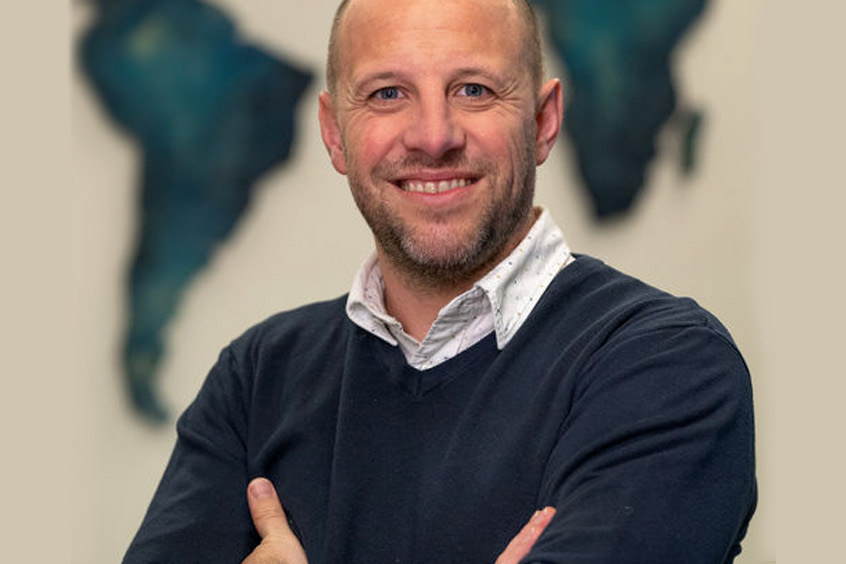

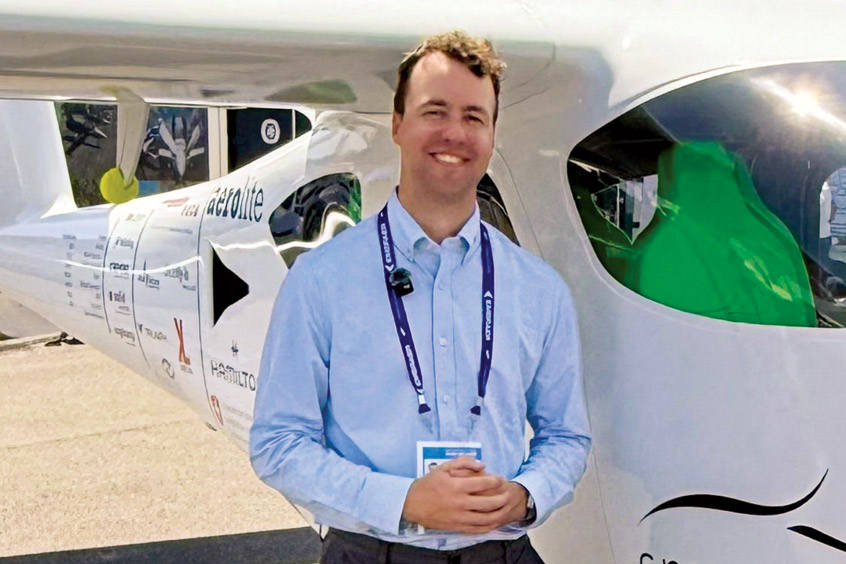


Historically, aviation shows have served as a strong platform not only for industry professionals, but also for aircraft owners and end users. Saxon Air head of sales Oliver Smith says that over time there has been a noticeable shift toward a predominantly B2B focus. While that has clear value, there is now an opportunity to reintroduce a stronger B2C element, creating an environment where owners and prospective clients can engage more directly with operators, aircraft and the broader ecosystem. “Rebalancing this dynamic,” he says, “would enhance both commercial opportunity and overall event experience.”
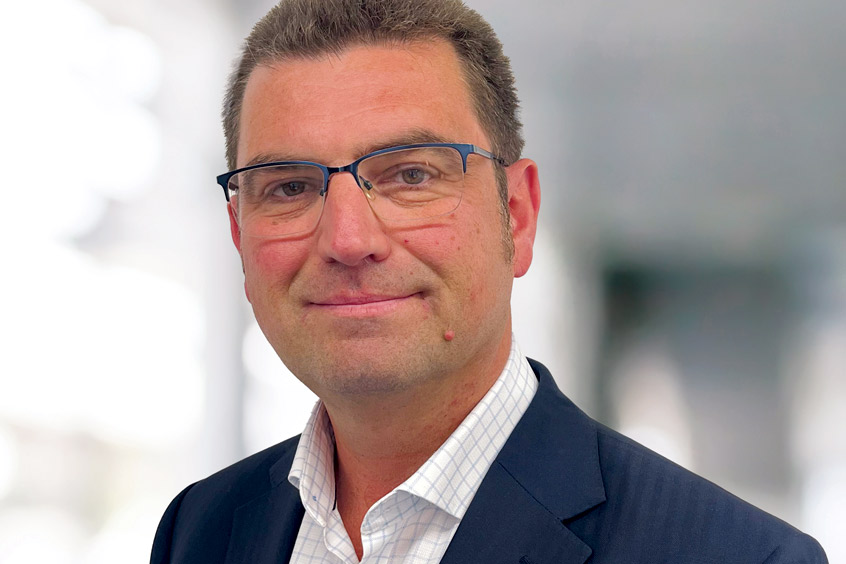
Since the pandemic, the landscape has shifted. UBS believes the end client must remain at the heart of these events and, in an increasingly digital world, nothing compares to stepping on board an aircraft and experiencing it firsthand. The future of aviation finance, it says, depends on genuine, in‑person connections brought to life when the industry comes together around a strong, inclusive aircraft display.
Daniel Robinson, group CEO of Niche & Bespoke & Deluxe Catering, plans to attend a broader range of industry shows this year after recognising missed opportunities in 2025, particularly following conversations with industry peers who were present at key events. He is interested in selected parts of multi-day events, focusing on one to two full days to maximise productivity and efficiency, and his main objective is networking. “People,” he says, “buy from people they like, trust and respect, so meeting in person is still hugely important and helps to create long lasting business relationships.”
The location and accessibility of an event does play a significant role in the decision to attend, and the layout is also important. “If the exhibitor stands are numbered in a logical and structured way, it makes it easier to navigate between appointments,” he notes.
It’s not digital, it’s personal
Digital tools, virtual meetings and automated systems have significantly improved efficiency, but key jobs such as strengthening partnerships, negotiating agreements and understanding client needs are still best handled face-to-face.
“Direct engagement with customers provides valuable insights into their evolving needs, operational challenges and service expectations,” says business development manager Pia Kauppinen of Finnish ground handler, ScandiAvia. At travel industry trade shows, it’s common for buyers and sellers to participate in speed dating-style meetings, where time-limited tables are booked in advance. “Could this be something for events in this industry?” she asks.
Trade fairs are transforming; they used to be about simply showing hardware, now it is about curating experiences, and they are where the foundations for complex deals are laid. Benoit Duvivier, sales director at Air Charters Europe says: “Buying an aircraft or entering into a long-term charter contract is not a transaction that you complete purely through a screen.”
The company mainly uses digital tools to help identify the right people, but the show is the arena where the relationship is sealed. “The lively buzz of a full exhibition hall and the smell of kerosene on the static display cannot be digitised. It is these sensory experiences that ignite passion for our industry and drive sales,” he adds.
Based in Angola, VIPAero has attended not only EBACE, MEBAA and AERO but also Aviation Africa and AfBAA in Africa. “These events are occasions to discuss face to face those things we would not necessarily share by email,” says general manager Claire Matondo. It humanises the business, and the business process that operates during these shows is different from the digital exchanges that occur on normal working hours through messages or virtual meetings. “Being present, with industry participants and with clients, suppliers, partners, competitors and authorities, is a long term investment in strengthened relationships and awareness of who we are,” she adds.
What makes such events particularly valuable is their ability to bring decision-makers together. They create an efficient setting for direct discussions, meaningful market exchange and long-term partnership building. “What we would like to see more of is high-quality networking and relevant industry content that supports meaningful business dialogue,” says FAI rent-a-jet MD Georg Gruber.
Avi-Go has attended a wide range of events over the past year; a deliberate decision for the relatively young booking platform entering this relationship-driven industry. “You cannot understand this market from a distance, you have to be in the room,” says head of sales and business development Sean Ng. “What we found most valuable often came not only from the booth itself, but also from the conversations that happened around it, like an exchange in a corridor, a discussion before a seminar or an operator willing to speak candidly about what they truly need.”
The Euro Jet sales team travels year-round to visit clients, and it provides a network of local agents across CEE and Central Asia who meet customers on the ground and support them directly. “The human element is core to what we do,” says head of marketing Jana Midriakova.
The show floor itself is a formal setting, but the surrounding events; the dinners, receptions and social gatherings, create space for more informal interaction. “That balance is important,” she adds. “It allows us to reconnect, have more open conversations and strengthen relationships on a more personal level.”
See and be seen
Lindsey Stuss Gillen, VP sales and marketing, business aviation at Rolls-Royce says that events are evolving from large-scale exhibitions into more targeted, relationship-driven engagements. “While traditional shows still play a role in maintaining brand presence, Rolls-Royce is seeing increased value in smaller, curated forums where meaningful conversations can take place with operators, owners, influencers and partners,” she says. “Our focus has shifted toward quality of engagement over quantity of interactions.”
Altea, a UK aircraft procurement and completion specialist, is a regular participant in EBACE, NBACE, AERO Friedrichshafen, MEBAA, AIX Hamburg and Red Cabin – Business Aircraft Interiors, and the face-to-face opportunities enable the team to effectively network and to conduct multiple meetings, secure in the knowledge that many of the key people they should see will be available.
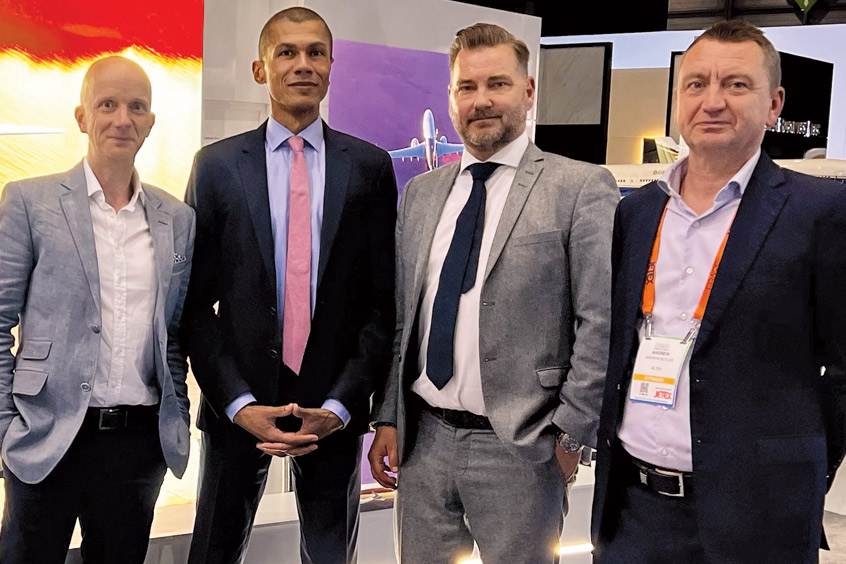
Partners Robin Dunlop, Andrew Butler, Jean Semiramoth and Michael Hoby Andersen are regular faces on the static display and in aircraft OEM chalets. Dunlop says: “These events are stalwarts in the calendar, and we ensure that at least one of us visits. We pre-arrange meetings and ensure we are invited to see new designs and technological advancements. I also like to meet with suppliers to discern the latest trends in interiors and review new materials, especially renewable and environmentally-friendly options.”
Meetings with end customers and owners usually take place in more private locations, and Dunlop observes that industry events need to maintain relevance, offer good security and showcase OEM products. Some effort, he feels, is needed with certain aviation shows to bring that attraction back, otherwise the Monaco Grand Prix, Monaco Yacht Show and even the Met Gala and Art Basel, will take priority in the calendars of potential attendees.
A point echoed by Close Bros MD, aviation and marine finance, Andrew Blundell, who notes the increasing overlap of the client bases of aviation and yacht shows. These provide great visibility both for the company to see the market, and for the market to see it actively participating in the sectors it finances. “Shows are a great way to gauge how the market is really feeling at any point in time,” he says. “The real value is being able to have ad hoc conversations and meetings when we see people, rather than having to stick to a rigid diary.”
Altea also attends either the Paris or Farnborough Air Shows, the Dubai Air Show, and often CJI conferences in Dubai, London or Miami. Butler points out that larger shows cover the industry more comprehensively, attract larger OEMs and often showcase major launches of new aircraft: “It’s important that we attend to keep our finger on the pulse of the market. We are often tasked with securing or selling particular assets that may not be publicly marketed, so the opportunity to have insightful discussions and discover aircraft that may be available under the radar is essential.”
Altea's Middle East specialist Hoby Andersen has witnessed the growth of the Dubai Air Show and MEBAA over the past 10 years. “Irrespective of the current geo-political situation, the Middle East is still seeing exponential growth and activity in the business jet sector,” he says. “Meeting the decision makers and their advisers in-country shows respect and commitment to the business process – this cannot be done over a Teams call.”
It is often expensive to visit these events, and the team needs to be certain that it extracts the utmost value from participation. Semiramoth adds: “We all love the aviation industry and remain as excited as small boys when we witness aeronautical displays and new technologies. Like everyone else we still find time to stop, stare and appreciate the power and beauty. That’s what makes the experience special every time, no matter how often you go.”
Finding the right audience
During 2025, the Martyn Fiddler team attended 43 industry events from a possible 120 or more aviation and marine events globally, many of which lasted for longer than two days, not including travel. That scale alone required careful planning.
“Time out of the office has a real cost, not only in travel budgets but also in maintaining momentum for business as usual,” says MD Tim Harris. “As a result, we undertook a detailed review of event attendance to become more focused for 2026, ensuring the right team members attend the right events where our clients and partners are genuinely present.”
Different shows lend themselves to different specialist conversations. ACE at Biggin Hill naturally suits the customs team, where discussions focus on practical operational requirements and border related challenges. Conferences such as CJI London, by contrast, are more closely aligned with its tax and client services teams, reflecting the ownership and transactional focus of that audience. This deliberate allocation has quickly improved both the quality of engagement and the usefulness of time spent on site.
Director Mark Byrne reflects: “With more than 100 global events competing for attention, the question is no longer how many shows you attend, but whether the right audiences are there and whether the conversations are meaningful.” What the most effective events have in common is depth rather than volume. Attendees value time for informed conversation, the ability to explore nuance and the opportunity to reconnect with trusted peers. Many professionals increasingly view smaller, curated conferences as the places where insight is exchanged and relationships are strengthened.
Shows form part of a broader engagement mix. Some meetings take place digitally before or after an event, others happen because the right people find themselves in the same room at the right moment. The most effective events now work deliberately to facilitate those moments through careful audience curation and agenda design. In a year where many diaries have been reshuffled, clarity of intent has become as important as scale.
Creating a vibe
To encourage attendance, show organisers could do more to negotiate discounted hotel rooms close to the venue. On one-day shows, a later close would give visitors more time, and free refreshments for exhibitors would be massively helpful to keep the tempo going without lunch-time lulls. More lounges or seating areas are essential as everyone needs a chance to recharge, and opportunities to network outside the booths are always good. Hospitality at the end of a long day in the show arena would be welcome for smaller exhibitors and lone visitors, while talks, seminars, speed dating and workshops are helpful to break the ice with associates outside one’s usual network. “Agendas need to be fresh and new voices should be encouraged to participate on panels,” says Dunlop. “Too often it’s the same old faces.”
Large industry shows are important for visibility, but they can be inefficient when time is spent with contacts who are neither customers nor vendors. Companies cannot justify high exhibition fees or send teams to expensive destinations without clear ROI. Organisers, Midriakova feels, are starting to recognise this and are trying to keep participation more accessible and cost-effective.
Simon Freund, co-founder and CEO of The Private Jet App says shows like ACE stand out in particular because of their size and focus. The environment is efficient, highly relevant and allows for meaningful conversations without the noise you often get at larger events.
Business development manager Dominik Heiri regularly represents Swiss electric aircraft developer Smartflyer at major shows. He prefers multi-day shows since the effort involved in attending is significant if displaying an aircraft. “The setup and logistics only really pay off if we can stay for several days,” he says. And travel can be quite demanding depending on the location, so attending for just one day is often neither efficient nor sustainable, an important and reputational consideration for a green tech company.
One challenge the company consistently faces as a small startup is gaining access to large industry players. Aviation shows are one of the few environments where this becomes possible in a relatively natural way. He would like to see more dedicated events that explicitly aim to connect startups with established companies in a more structured manner.
The value of seminars
Generally, talks and seminars are the intellectual fuel of the sector. Although transactions take place on the floor, the sessions provide the necessary framework on regulation, sustainability and innovation. “They offer us the arguments to convince customers and elevate the fair from a marketplace to a thought leadership platform,” notes Duvivier.
“They are a great way to keep up with industry trends,” adds Michele Markarian, director, strategic accounts at Aviation Week. She too would appreciate a change of show scene, as each location draws a different set of aviation professionals: “A three-day show is best. Oddly enough, a one-day show is better than a two day show because I find the focus on Day Two is mostly when we pack up, my flight’s at five, etc. But any more than three days is too much, plus there is usually a day tacked on for the general public, which is mayhem.”
Duvivier believes in the differentiated approach. For the fast charter market, one-day shows like ACE are superior because they force focus. Multi-day events remain essential for asset sales and complex partnerships, where deals often require the informal atmosphere of a dinner after Day One to reach a final ‘go’. He also sees room for more interoperability between sectors; closer integration with luxury lifestyle brands and sustainable tech startups. And perhaps more private deal rooms, where contracts can be signed with complete discretion.
A strong, well-structured programme, tailored to the audience, can highlight industry trends, share operational insight, present new data and spark meaningful or provocative discussion. “They also create visibility for the companies and brands participating in them, and that visibility matters,” says Midriakova. “It positions those companies as active contributors to the industry and strengthens their credibility as industry experts.” And for exhibitors, who are making a greater financial commitment to be at the show, this added exposure is especially valuable and can serve as a strong incentive to participate.