 The bimonthly news publication for aviation professionals.
 Read this story in our October 2022 printed issue.
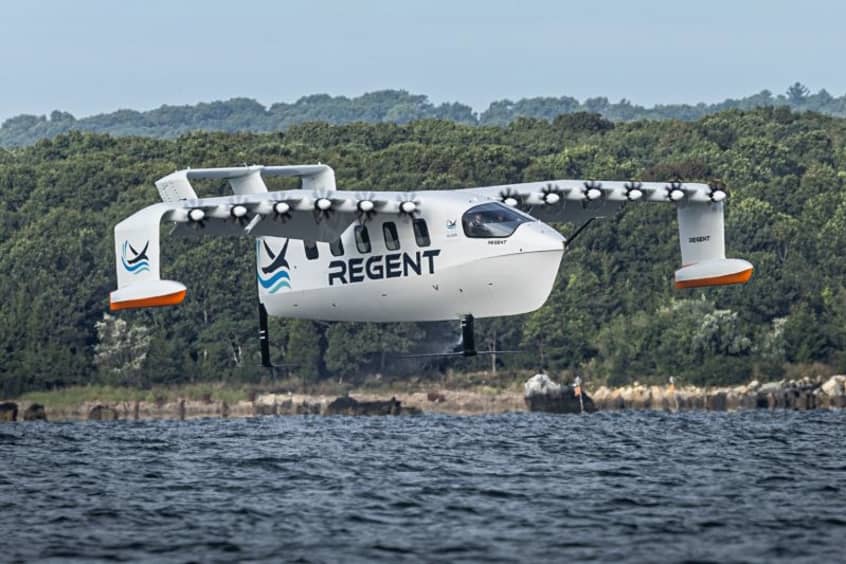
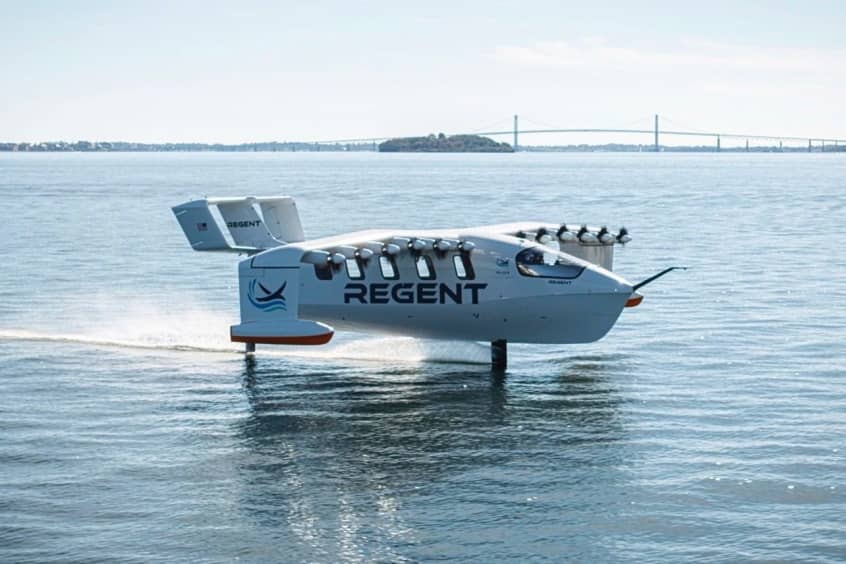
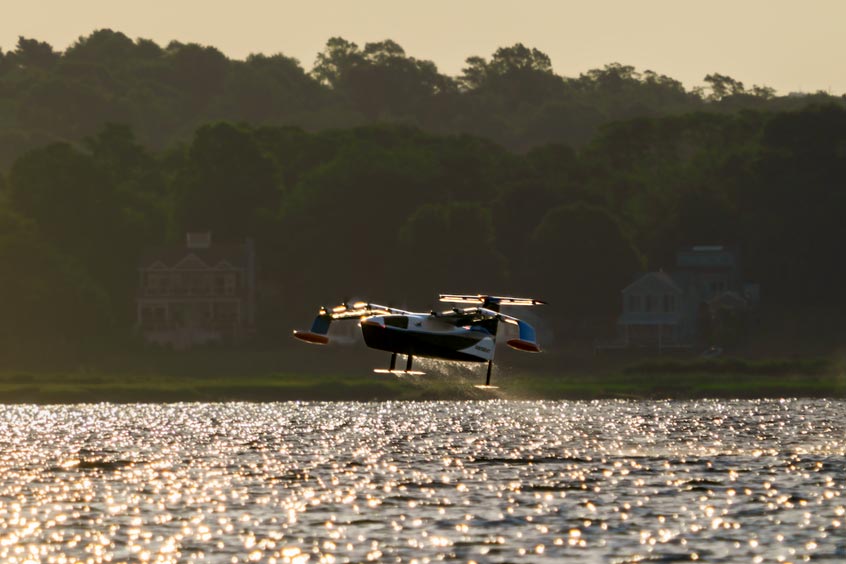
US-based electric seaglider developer Regent has completed the first successful series of flight tests of its seaglider technology demonstrator in Narragansett Bay, Rhode Island. The Regent seaglider is the first-ever vehicle to successfully utilise three modes of maritime operation: floating, foiling and flying, marking a major step forward in maritime transportation.
“This is the next great moment in the history of human transportation,” says CEO and co-founder Billy Thalheimer. ”There has not been a new mode of transportation since the helicopter. Seagliders will bring welcome relief for travellers seeking an alternative to traditional air travel servicing coastal communities such as New York City, the Hawaiian Islands, Barcelona, Tokyo and many more worldwide. 40 per cent of the world's population lives in coastal communities. These successful flights give us full confidence in our ability to apply this technology at full scale and bring seagliders to global commercial service by 2025.”
The Regent seaglider is an all-electric wing-in-ground effect vehicle, meaning it flies low (within one wingspan) over the water to take advantage of numerous aerodynamic and operational efficiencies, enabling increased payload capability and greater range than other electric aircraft concepts. The seaglider operates in three modes. From the dock, the vehicle first drives on its hull like a traditional boat. As it leaves the harbour area and speeds up, it rises on its hydrofoil, a key maritime technology popularised by the America's Cup sailing competitions. The hydrofoil offers significant wave tolerance and a smooth ride as the seaglider leaves a crowded harbour. Upon reaching open water, the seaglider takes flight, retracting the foil and accelerating up to cruise speed, all while staying within a wingspan of the water's surface. Driving a seaglider is enabled by coupling advanced digital flight software to simple boat controls.
“People have been attempting to make wing-in-ground effect vehicles viable for 60 years, and in 15 months we have gone from a drawing on a napkin to the first successful flight,” says CTO and co-founder Mike Klinker. “Regent is the first team in history to overcome the deficiency of low wave tolerance with past designs by combining high-speed hydrofoils with ground-effect flight, a crucial innovation that will revolutionise coastal transit. No vehicle in history can match the combined wave tolerance and speed of our seaglider. I'm proud of our multidisciplinary team that accomplished this major technical milestone; their performance and dedication are truly exceptional.”
The successful flight demonstration of the quarter-scale, 18 ft wingspan technology demonstrator was the final step in proving the feasibility of seaglider technology. Regent is now focused on developing its full scale, 65 ft wingspan prototype with human-carrying sea trials expected to begin in 2024.