 The bimonthly news publication for aviation professionals.
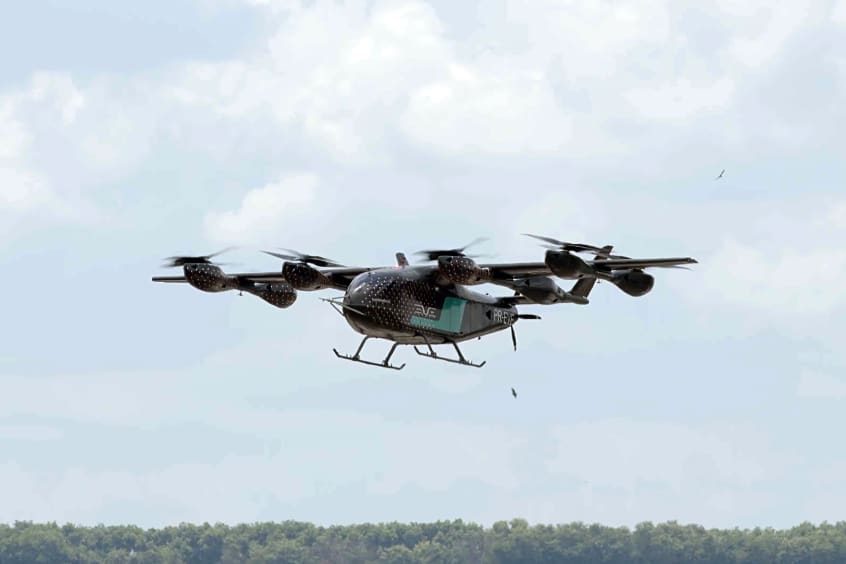
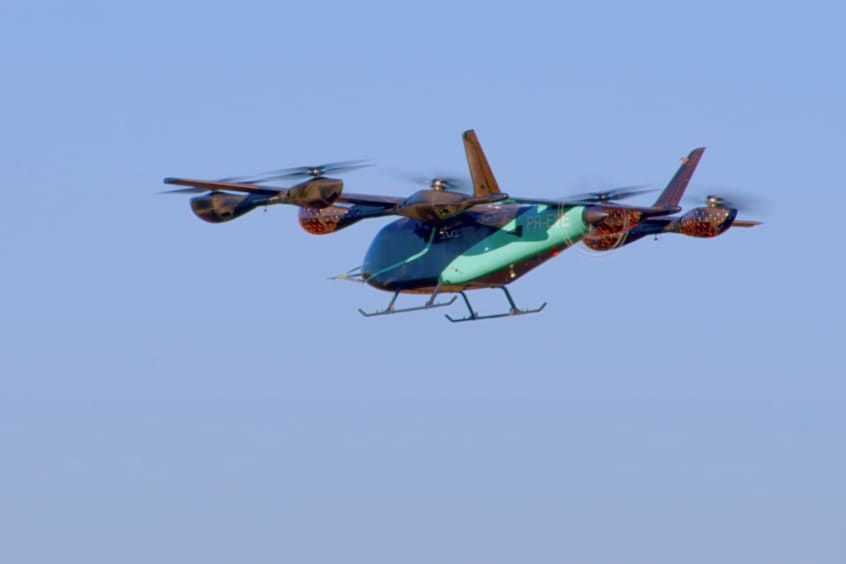
Eve Air Mobility has completed hover and low-speed flight testing of its full-scale eVTOL engineering prototype, clearing another stage in the company’s step-by-step campaign toward transition and cruise flight.
The latest phase covered 59 flights and more than 100 flight test points, generating data used to validate aerodynamic, propulsion and load models ahead of transition testing expected this summer.
“Closing this phase validates the discipline behind our flight test strategy,” says Johann Bordais, CEO of Eve. “Across 59 flights, we confirmed stable hover performance and predictable control behaviour within the envelope, while expanding our understanding of loads, aerodynamics, propulsion and energy management, key foundations for the transition phase and the certification path ahead with the conforming prototypes.”
The aircraft initially completed low-speed testing below 15 knots before progressing to around 20 knots ground speed, including simultaneous four-axis manoeuvres intended to validate aerodynamic behaviour and structural loads as the envelope expanded.
The programme also included first demonstrations of autoland capability and a simplified fly-by-wire mode designed to provide a secondary control layer if the primary mode becomes unavailable.
During the campaign, the aircraft reached 215ft above ground level and remained airborne for three minutes and 48 seconds. Eve says propulsion and battery performance exceeded expectations while recorded noise levels remained in line with projections.
“Completing hover and low-speed testing gives us high-confidence data to validate and refine our aerodynamic, propulsion and load models,” says Marcelo Basile, head of tests at Eve. “That model correlation is what enables disciplined envelope expansion. With planned ground tests next, we will be ready to begin transition flights, in which we validate the lifter-pusher synchronisation before moving on to the cruise phase.”
Ground tests will continue over the coming weeks before the company begins transition flights, which are intended to validate synchronisation between the aircraft’s lift and cruise propulsion systems ahead of wingborne operations.