• Beta Technologies
Aircraft
• Federal Aviation Administration
• Joby Aviation
Aircraft
• St Petersburg (St Pete-Clearwater International) Airport
• St Petersburg (Albert Whitted) Airport
• Orlando International Airport
BAN's World Gazetteer
• Vermont The bimonthly news publication for aviation professionals.
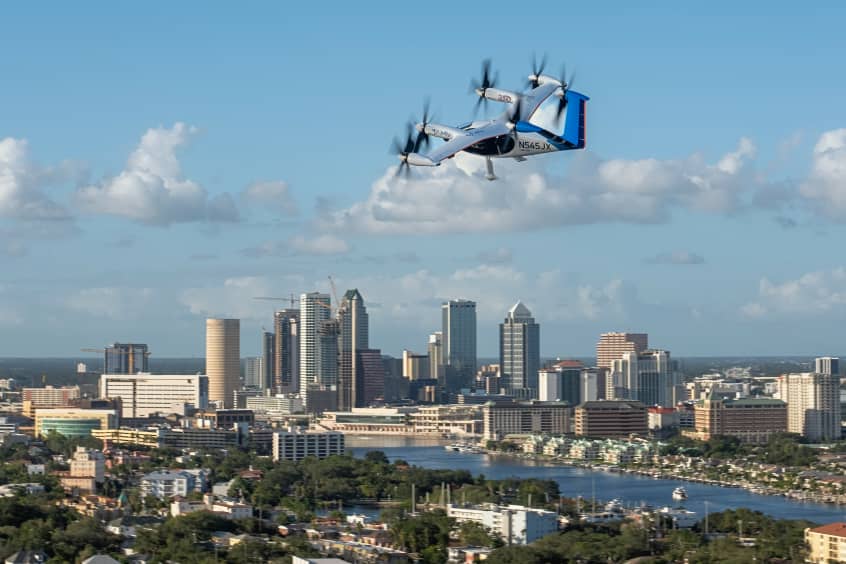

US Transportation Secretary Sean P. Duffy is celebrating another major milestone in the landmark Electric Vertical Takeoff and Landing (eVTOL) Integration Pilot Program (eIPP) after Florida completed its first demonstration flights. The Florida Department of Transportation (FDOT) conducted the flights, which are a recreation of the world's first scheduled passenger airline service in 1914, with eVTOL OEMs Joby Aviation and Beta Technologies to test cargo deliveries and routes over the Tampa Bay area. Florida is the seventh location to launch under the initiative, marking the latest milestone in the Department's work to implement President Trump's Unleashing Drone Dominance Executive Order.
“Tampa Bay helped make the dream of flying a reality 112 years ago with the first-ever passenger flight. Now thanks to President Trump, the next quantum leap in aviation is happening,” says Duffy. “The future of flight is right around the corner, and the US is paving the way by integrating these new aircraft into our skies safely to transform how people and products move.”
“Florida is helping safely integrate these new aircraft into the airspace system and prove that the next great era of American aviation is already here,” adds FAA Administrator Bryan Bedford. “Each flight provides crucial data and lessons learned that will help establish safety standards for everyday operations.”
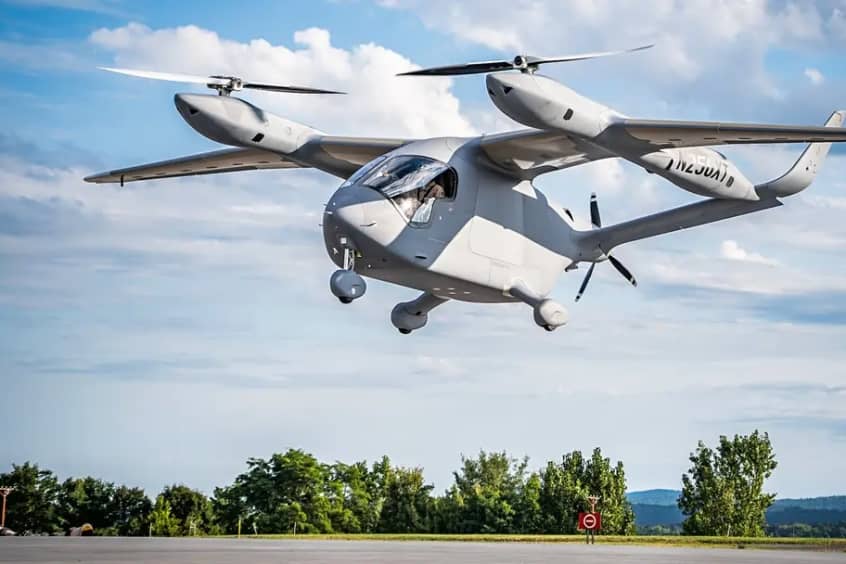
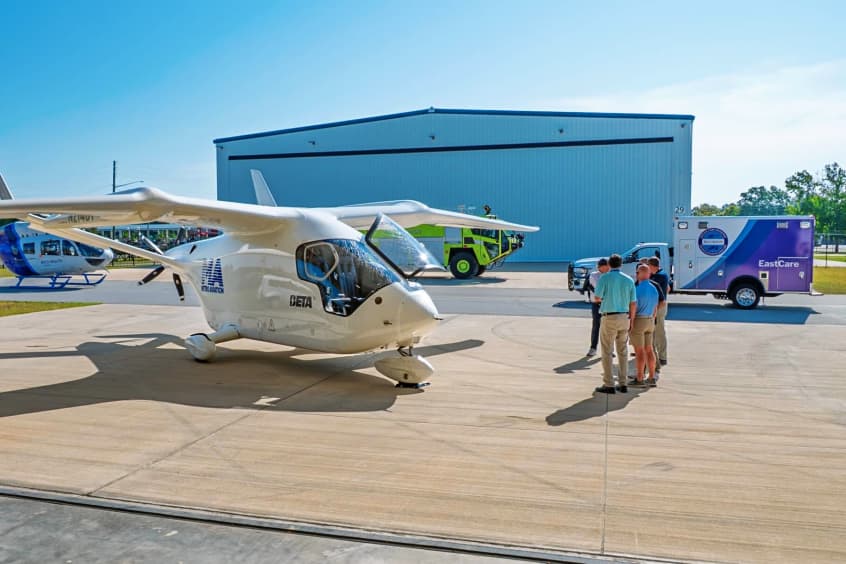
Beta's Alia CX300 electric conventional takeoff and landing (eCTOL) aircraft flew from St. Pete-Clearwater International airport to Tampa, replicating the first-ever passenger flight in 1914.
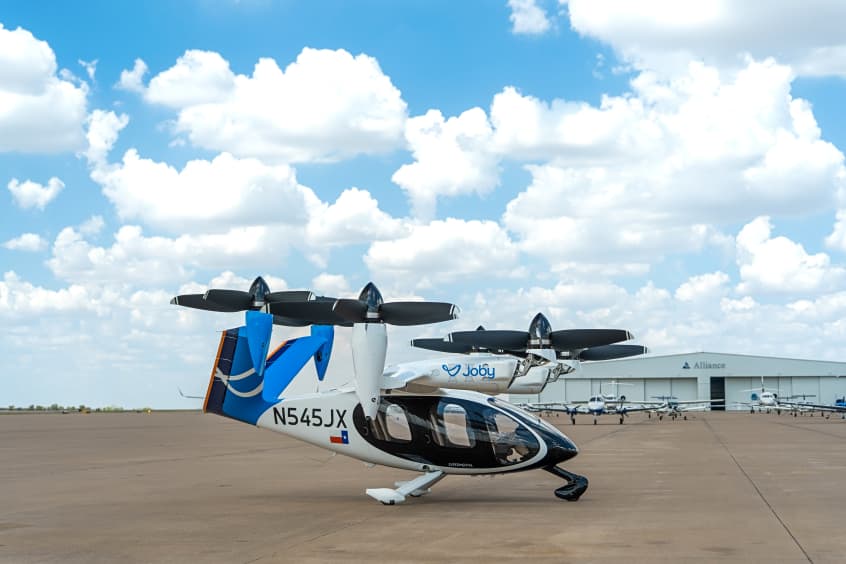
Joby meanwhile conducted test flights with its S4 electric eVTOL aircraft from St Petersburg's Albert Whitted airport to Tampa International airport and at the SunTrax testing facility. In November, FDOT and Electra will conduct flight tests in several locations throughout central Florida.
“History has been made in Tampa Bay with Florida's first advanced air mobility electric aircraft demonstration flights,” states Governor Ron DeSantis. “From the first commercial airline flight over Tampa Bay in 1914 to today's AAM demonstrations along that same historic route, Florida has long been a launchpad for new ideas that shape the future of transportation. I'm proud that Florida is a place where groundbreaking transportation technologies can be developed and deployed. Thanks to strategic investments, education partnerships and policies that promote innovation, we're ensuring that Florida continues to lead the way in aviation and aerospace.”
“In Florida, we are paving the way for the future of flying cars. The work we're doing to prepare for this new mode of transportation will revolutionise the way people and goods move throughout the state,” adds Florida Department of Transportation Secretary Jared W. Perdue. “This flight series will serve as an important step forward in our efforts to take highways to the sky. With today's launch, it's clear that the future is now in Florida.”
“Florida has the routes, the operators and the infrastructure this industry needs to scale,” adds Kyle Clark, founder and chief executive officer of Beta Technologies. “Earlier this year, we flew high-cadence operations along the I-4 corridor with Republic Airways, up to nine legs a day, with energy costs under $17 per leg. Our Alia aircraft was built to move people and goods faster, more reliably and at a fraction of the cost of conventional aircraft. The eIPP lets us keep flying, gather the operational data and prove out the case for routine commercial passenger service alongside experienced operators.” The first production CX300 received an FAA Special Airworthiness Certificate in November 2024.
“One hundred and twelve years after Tony Jannus launched commercial aviation by flying across Tampa Bay, we're proud to return to its birthplace and demonstrate the future of commercial aviation with an electric aircraft that takes off and lands vertically,” remarks JoeBen Bevirt, founder and CEO of Joby Aviation. “There's no better place to demonstrate how this technology can transform everyday travel, and we're grateful to FDOT for helping make it possible. We look forward to bringing that same excitement to Orlando and the Space Coast as we continue our journey across Florida.” Joby Aviation's S4 remains in Stage 5 of the FAA's five-stage type-certification process, having entered it after its first FAA-conforming aircraft flew in March 2026.
“We are excited to bring to Florida the same Ultra Short aircraft operations that we so recently displayed by landing on a heliport barge in downtown Manhattan,” concludes Electra CEO Mar Allen. “The opportunity to collaborate with FAA and FDOT to likewise pilot novel operating concepts in Florida is invaluable. We are collecting the data necessary to demonstrate safe operations of Ultra Short aircraft in existing non-traditional environments and to shape infrastructure investment for air services of the future.” Electra's EL2 demonstrator landed at Downtown Skyport, the heliport on a 300-foot barge at Pier 6 on the East River in Lower Manhattan, on 26 October 2026 – four days before the Florida eIPP flights.
FDOT and other eIPP participants are planning additional test flights throughout the rest of the year.
Through the eIPP programme, the USDOT has created one of the nation's largest real-world environments for testing eVTOLs, autonomous planes and drone technology. The first-of-its-kind initiative has the potential to create jobs, connect communities and strengthen American leadership in aviation. The Federal Aviation Administration (FAA) may use data from the pilot projects to develop new regulations that safely enable this futuristic technology at scale.
The Florida Department of Transportation's (FDOT) project was one of eight selected nationwide and is a statewide effort with multiple industry partners, planned in three phases covering passenger transportation, cargo delivery, automation and medical response.
Florida has been preparing for this moment for years, FDOT having led statewide AAM planning since 2021. In April 2026, Governor Ron DeSantis signed House Bill 1093, which allows FDOT to fund vertiport infrastructure statewide. FDOT is also building SunTrax Air, a dedicated AAM test campus off Interstate 4 that is home to the nation's first dedicated AAM aerial test track, where AAM testing is planned to begin by the end of 2026. Together they make Florida an attractive place for Joby to operate, and these eIPP flights are the first step toward commercial service in the state.