



 The bimonthly news publication for aviation professionals.
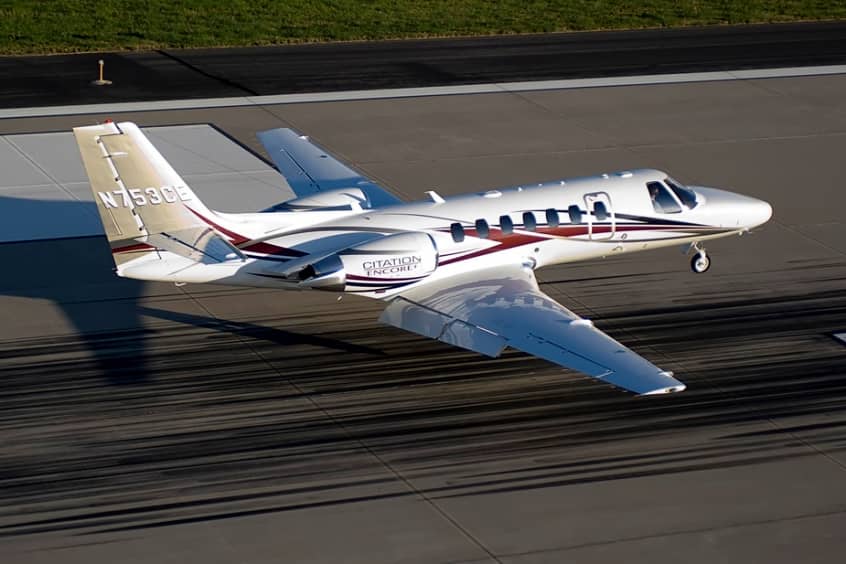
In an urgent letter sent to the FAA, the NBAA and Citation Jet Pilots Association (CJP), it has been requested that the agency delay by at least 90 days its rescission of single-pilot training exemptions (SPEs) for certain Cessna Citation aircraft.
In a letter to FAA Flight Standards Service executive director Hugh Thomas, the organisations warned the agency's sweeping action could disrupt safe flight operations and undermine access to specialised pilot training.
“A temporary stay would enable the FAA to evaluate specific safety concerns for single-pilot operations, distinguish compliant entities from problematic ones and work collaboratively with operators/owner-pilots and training providers on a durable solution,” states the letter signed by NBAA senior vice president, operations Heidi Williams and Rob Balzano, CEO of CJP and the CJP Safety and Education Foundation.
The letter comes following the FAA's September Federal Register notice rescinding SPEs issued to pilots of legacy Cessna Citation CE-500, CE-550 and CE-560 aircraft originally certified for two-pilot operations due to what the agency termed ‘widespread non-compliance’ and a spate of recent accidents involving legacy Citation jets.
While supportive of the FAA's safety mission, NBAA and CJP questioned whether the agency had adequately presented the evidence supporting its blanket action. “The FAA did not provide the underlying data to allow it to be independently analysed,” the groups note. “Nor did it address whether the raw numbers from the two datasets invoked were properly comparable.”
For owner-pilots of the roughly 1,250 US-registered legacy Citations now affected, aircraft that have been routinely flown solo since the mid-1980s, the rescission is not a future compliance question but an immediate operational crisis: every flight now requires a second qualified pilot, with instant consequences for scheduling, cost and aircraft utilisation. The dispute over the FAA's accident-rate methodology matters equally to the training industry, because if industry groups can demonstrate the comparison is flawed, the basis for the blanket rescission weakens; if they cannot, the result may be a permanent two-pilot requirement with no route back to single-pilot operations for these types.
The associations also noted the FAA did not fully explain how actions involving individual exemption holders apply to other operators. “Notably, the only two specific accidents cited by the FAA include the 18 December 2025 accident involving Greg Biffle, which the FAA concedes was being operated illegally,” the letter states. “That facially is irrelevant to the safety of compliant single-pilot operations.”
NBAA and CJP emphasised the additional time would preserve the agency's ability to address documented problems while providing critical relief to ongoing operations.
“A temporary stay would not prevent oversight or enforcement against a specific entity presenting a demonstrated safety or compliance concern,” they write. “But it would avoid immediate, industry-wide consequences for operators/owner-pilots and training providers that would incur irreparable harm despite having safely operated within an FAA-approved and FAA-supervised framework for decades.”
Both associations also called for an FAA-industry working group to bring together affected operators and representatives from multiple FAA departments to review that evidence and evaluate alternatives.
“The establishment of a collaborative FAA-industry working group would allow affected operators the ability to review the safety data used as the basis for the policy change and to work with the agency on alternative paths forward,” the letter goes on to say.
In addition, the Aircraft Owners and Pilots Association (AOPA) has sent a letter to FAA Administrator Bryan Bedford, urging him to reconsider the agency's decision to rescind single-pilot exemptions for several popular Cessna Citation models that have commonly been flown by single pilots since the mid-1980s.
Aircraft were certified under FAA Part 25 for two-pilot crews, but the FAA has been granting single-pilot exemptions for them since 1984, and many of these aircraft are regularly flown by single pilots.
“While the FAA can grant and revoke operators' authority to conduct self-examinations of their pilots, it remains the FAA's responsibility to continue exercising that authority and address operations where noncompliance continues to be an issue,” states Robert Geske, senior manager of safety analysis. “ASI is still working to duplicate the results and conclusions reached by the FAA, but questions the agency's decision to dramatically shift toward a blanket prohibition approach, given that a number of operators are operating accident-free and routinely exceed the minimum standards established by the administration.”
Citation training centres such as FlightSafety International, Loft and others have long offered single-pilot training courses that allow Citation pilots to operate these aircraft without a second crew member. Copilots must hold either an aircraft type rating or a less stringent second-in-command qualification.
The FAA action doesn't affect single-pilot operations in Citations such as the Citation 501 and 551 or the CE-525, which includes the CJ1, M2, CJ2, CJ3, CJ3+ and CJ4, as those aircraft were originally certified as single-pilot aircraft and can continue being operated that way by pilots who have single-pilot type ratings.