


 The bimonthly news publication for aviation professionals.

Electra is to explore how 'Direct Aviation' can enable faster, quieter and more efficient regional air mobility across the Gulf of Finland with the City of Helsinki and Haaga-Helia University of Applied Sciences.
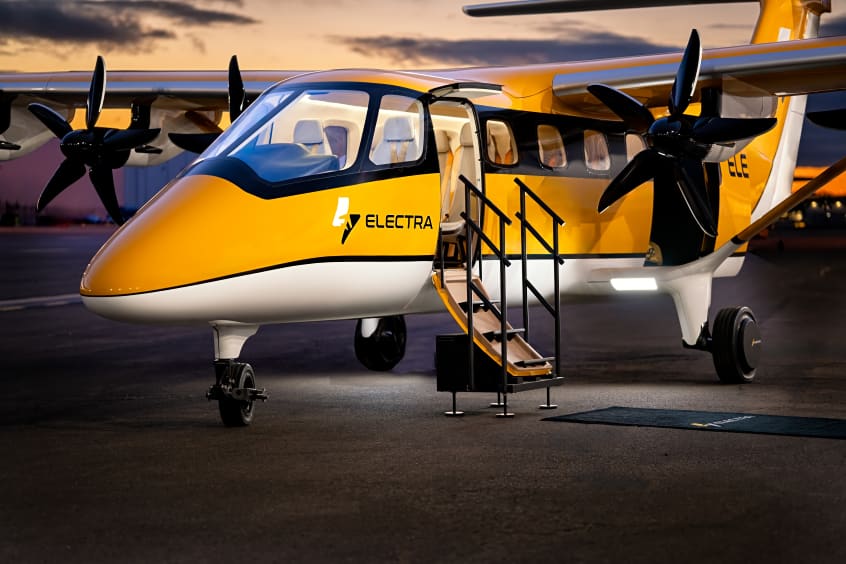
The collaboration will study a new approach to Helsinki-Tallinn connectivity using Electra's hybrid-electric Ultra Short aircraft, designed to take off and land in just 50 metres, and compact access points located closer to where journeys begin and end. The parties will also evaluate additional regional destinations of interest to Helsinki residents, businesses and visitors.
Helsinki in Finland and Tallinn in Estonia are twin cities, with just 80 kilometres separating them across the Gulf of Finland. Approximately 7.5 million travellers move between the cities each year, reflecting their strong commercial, tourism and cultural ties. Despite the short distance, the journey can take hours. Ferries take two hours, plus the time required to reach the terminal and board, while flying today requires travelling through international airports and the traditional airport and security process.
Direct Aviation means flying from where people are to where they want to go. By combining Ultra Short aircraft with compact access points closer to travellers, it can reduce the friction of ferry crossings, airport transfers, long drives and hub connections and create faster, simpler, easier regional connections.
“Helsinki and Tallinn are a natural Direct Aviation market: strong travel demand, short distance and too much friction in the journey today,— says VP of commercial programmes Diana Siegel. “By studying demand, infrastructure, operations and economics together, we can understand what it would take to make this connection faster, quieter and more direct.”
“Electric aviation has the potential to reshape how we think about distance and connectivity,” adds Susanna Niinisto-Sivuranta, president of Haaga-Helia University of Applied Sciences. “New aircraft capabilities create new possibilities for connecting cities and regions. This collaboration allows us to study those possibilities rigorously, from passenger demand and economics to infrastructure and their broader impact on regional mobility.”
“Helsinki aims to grow sustainably while strengthening its accessibility, vitality and international connections,” continues Ville Lehmuskoski, executive director, urban environment division, City of Helsinki. “If emerging low-emission and electric aviation can complement the existing transport system with faster and more direct connections across the Gulf of Finland, it could create tangible benefits for residents and businesses on both sides, while supporting the development of a more sustainable and integrated regional transport system.”
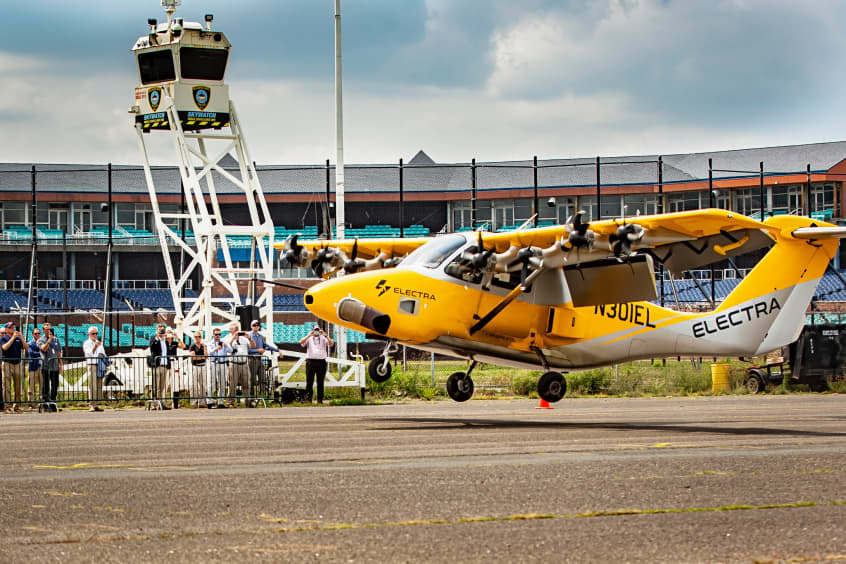
Electra, the City of Helsinki and Haaga-Helia will conduct a structured feasibility effort covering access-point design, passenger demand, operating economics, regulatory considerations and potential public-private partnership models. The parties will also explore opportunities for a future flight demonstration using Electra’s existing EL2 technology demonstrator, subject to future agreements and approvals. The study is expected to be completed by the end of 2026.
Electra will assess high-level sizing, design requirements and rough-order-of-magnitude costs for an Ultra Short access point for candidate sites designated by the City of Helsinki. Haaga-Helia and the City of Helsinki will evaluate passenger demand, including existing travel flows by air and ferry, opportunities for demand stimulation through faster air service and how demand could vary by time of day, day of week, season and ticket price.
“The third era of aviation is about what electrification makes possible,” says Electra CEO Marc Allen. “For Electra, that means aircraft that can operate from smaller places, connect more communities and make regional travel dramatically easier. The Gulf of Finland is exactly the kind of real-world market where that promise can be studied, understood and made real.”
The parties will use the findings to inform a roadmap for establishing Ultra Short access infrastructure in Helsinki and identifying viable commercial models for initial service.