


 The bimonthly news publication for aviation professionals.
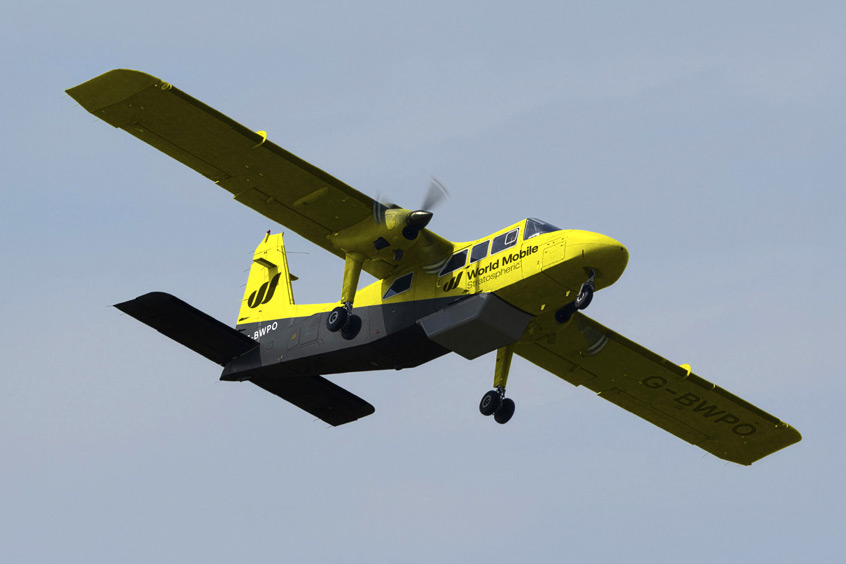
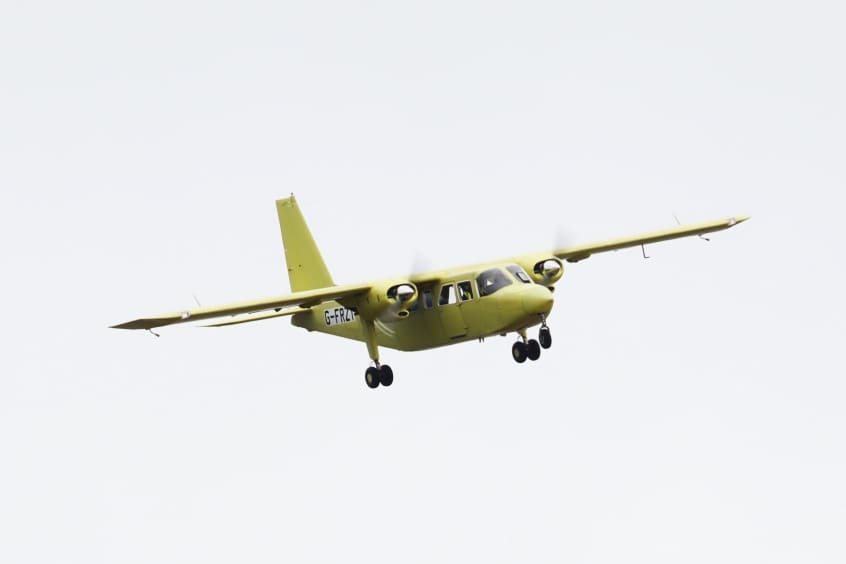
World Mobile Stratospheric (WMS) is to collaborate with Britten-Norman to demonstrate an airborne 5G communication system using a BN2T-4S Islander aircraft. The partnership is the first major step in WMS's mission to extend next-generation connectivity from the skies.
WMS, a joint venture between World Mobile Group and Indonesia’s digital infrastructure company Protelindo, is developing a stratospheric connectivity platform to provide affordable and resilient communications worldwide. The Islander will be equipped with an advanced phased-array antenna system to test high-altitude, aircraft-based 5G services over a 15km radius. The project builds on more than a decade of pioneering work by the former Stratospheric Platforms Ltd, now fully integrated into WMS.
One of the key applications of the technology is emergency response. Operating from short or austere runways, a WMS-equipped Islander could quickly restore mobile networks in disaster-hit areas, providing essential communication links for emergency services and affected communities.
Flight testing is scheduled to begin in mid-2026, with operations led by WMS and Britten-Norman’s flight test organisation, conducting system testing in cooperation with BT at its Adastral Park R&D facility near Ipswich in the UK.
“This collaboration with Britten-Norman brings together world-class British aircraft engineering and World Mobile's next-generation telecoms innovation. Our goal is to demonstrate how stratospheric communications can bring reliable 5G connectivity to places that need it most,” says Richard Deakin, CEO of WMS. “World Mobile Stratospheric will ultimately realise the use of DePIN networks using a sharing economy model from the stratosphere.”
Mark Shipp, technical director and head of design at Britten-Norman, adds: “We’re proud to work alongside World Mobile Stratospheric to advance airborne connectivity technology. The Islander serves as a proven, certified platform for innovative applications, with our experienced teams ensuring seamless integration of novel technologies while maintaining the highest safety standards.”
The BN2T-4S Islander’s endurance, payload capacity and modular design make it well suited to specialist missions, continuing its legacy as one of the most versatile utility aircraft in operation. The demonstration is a key step in WMS’s long-term roadmap towards full-scale stratospheric flight, with the potential to connect millions of people currently beyond the reach of conventional networks.