


 The bimonthly news publication for aviation professionals.
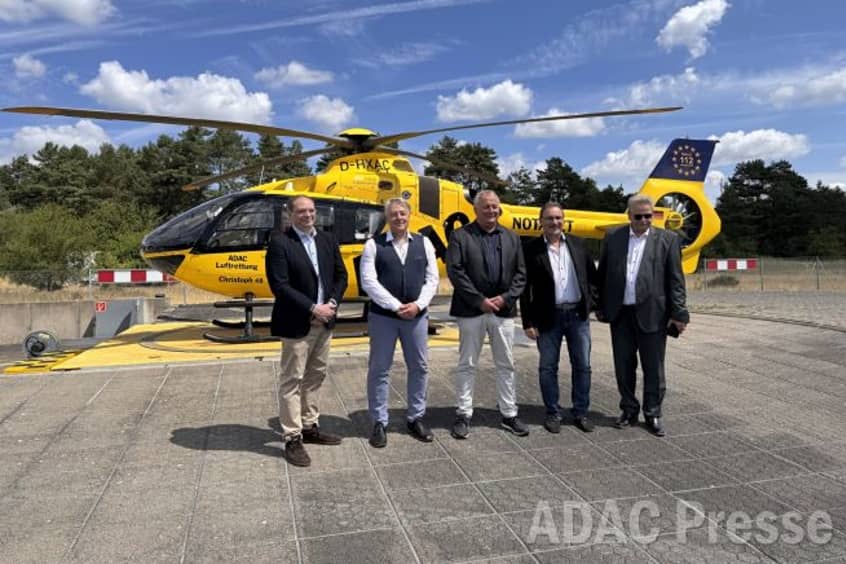
One year ago, the newly created Hungriger Wolf air rescue base opened in Schleswig-Holstein. The German non-profit ADAC Luftrettung, which won the tender to operate the base at the airfield in Hohenlockstedt near Itzehoe, is drawing a positive conclusion after a total of more than 1,200 missions. The high number of missions carried out by the ADAC rescue helicopter Christoph 67 alone demonstrates that the location was the right choice to ensure emergency medical care in the region. “Alerting Christoph 6 via the new Schleswig-Holstein air rescue central dispatch in Kiel has proven itself in practice,” summarises station manager and pilot Sascha Richter. “With a control centre that centrally dispatches rescue helicopter missions for an entire federal state, Schleswig-Holstein has taken a pioneering role nationwide with the launch of Christoph 67.” Currently, such a facility only exists for transfers from hospital to hospital.
“We were given a very warm welcome by the locals and feel very comfortable here. The cooperation with emergency services, the fire department and the police runs smoothly,” explains station manager Richter. He is part of a very experienced and highly professional crew. The pilots and paramedics come from ADAC Luftrettung, and the emergency physicians are provided by the University Medical Center Hamburg-Eppendorf as part of a cooperation agreement.
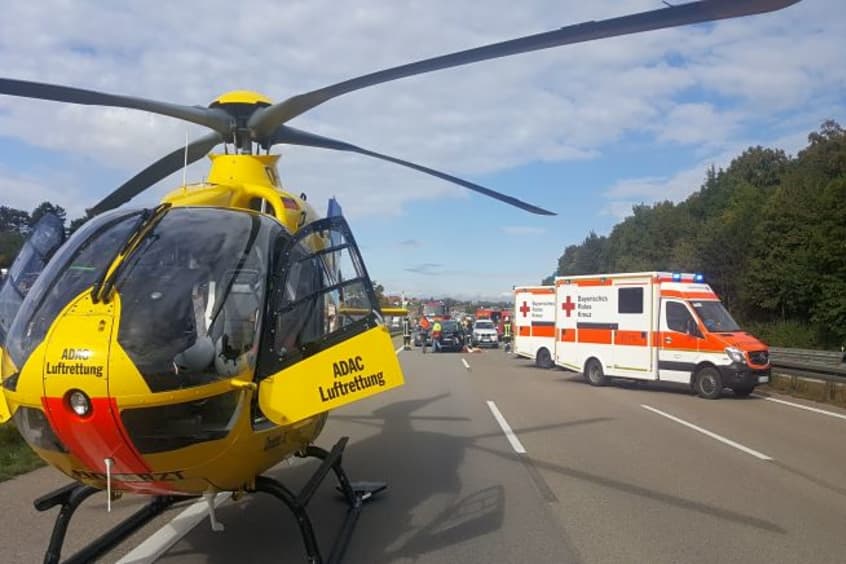
In the last year the number one reason for the deployment of Christoph 67's often life-saving missions is injuries following accidents, at 32 per cent. These include leisure, sports, school and traffic accidents. Cardiovascular emergencies, such as heart attacks and cardiac arrhythmias, follow, at 29 per cent. In 13 per cent of cases, the airborne lifesavers diagnosed neurological emergencies, such as strokes.
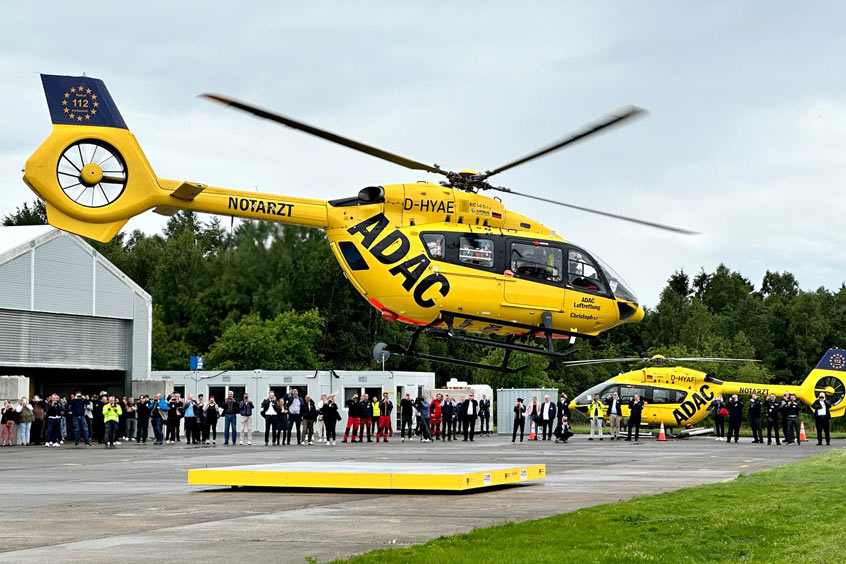
With Hungriger Wolf ADAC Luftrettung is operating a station in Schleswig-Holstein for the first time, the 38th for the non-profit organisation. One of the most modern rescue helicopters, an Airbus H145, is being deployed. The helicopter can be used in dual-use mode for both rescue missions and as a flying intensive care unit for patient transport from hospital to hospital.
The new ADAC rescue helicopter is ready for use daily from sunrise (0700 at the earliest) to sunset. Its main area of operation is the densely populated southern part of Schleswig-Holstein. The operating radius is 50 to 70 kilometres, and the helicopter's operating speed is around 220 kilometres per hour. The aircraft can cover 70 kilometres in just 20 minutes of flight time and, from Hohenlockstedt, along with the ADAC rescue helicopter Christoph 6 stationed in Bremen and the Christoph 26 stationed in Sande in Friesland, can also fly emergency missions on the North Sea coast and on the islands. With a range of around 670 kilometres, the helicopter can also be used for emergencies in even more distant locations.
Until the completion of a new, state-of-the-art building, operations begin from a fully equipped interim base. It consists of mobile containers for medical and technical equipment, offices, rest and recreation rooms, and two tent hangars for Christoph 67 and a backup aircraft for the ADAC Luftrettung stations in the north. The contract with ADAC Luftrettung is for 20 years.
In the event of an emergency, the Christoph 67 crew consists of a pilot, an emergency physician and an emergency paramedic (TC HEMS). A total of 21 team members are deployed at the location. The Christoph 67 team consists of station manager and pilot Sascha Richter, emergency physician Dr. Andreas Otto and TC HEMS Jascha Mahro.