 The bimonthly news publication for aviation professionals.
 Read this story in our July/August 2025 printed issue.
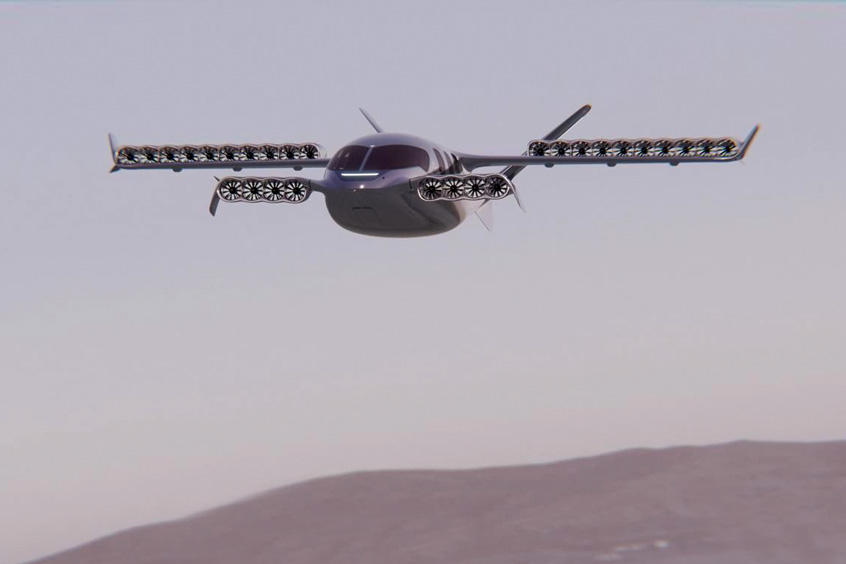
StellarJet has unveiled two innovations that could bring hydrogen-powered aviation closer to reality: a solid-state hydrogen storage unit and a next-generation electric ducted fan (EDF). These technologies lay the foundation for the upcoming flight debut of the hydrogen-powered StellarJet demonstrator, scheduled for summer 2025.
The solid-state hydrogen fuel tank achieves a system-level hydrogen content of 23 per cent wt, offering an energy density of 6.6kWh/kg and a safe operating pressure from 20 to 350 bar. Capable of functioning between -60°C to +80°C, the system enables fast refuelling in under 30 minutes and provides a lightweight, modular alternative to traditional liquid hydrogen tanks. The technology surpasses liquid hydrogen in all key performance metrics: it is compact, stores more usable energy per unit weight, uses low-cost, widely available materials and is easier to certify under aerospace safety standards.
Unlike legacy liquid hydrogen systems that pose boil-off and explosion risks, the tank uses advanced metal hydride technology, enabling fully customisable tank shapes with superior safety. The system is optimised for a wide range of applications, including industrial, aerospace, satellite and even submarine. With this technology, StellarJet will be able to fly up to 3,000km on a single tank.
The EDF propulsion unit delivers 132kW of power and 1,700N of thrust, while weighing only 14.7kg. With a duct diameter of 375mm and integrated power controller, the EDF represents the next evolution in distributed electric thrust architecture, tailored specifically for the StellarJet.
“This storage solution represents a turning point in aviation,” says Alexey Popov, CEO of Stellar Aircraft. “Until now, the limited efficiency and complexity of hydrogen storage systems held back the potential of hydrogen-powered flight. By leveraging our long-standing collaboration with experts in rocket science, our team has delivered a safe, scalable and high-performance solution.”
All core technologies, from design and engineering to machining and final assembly, are developed and manufactured in-house at the company’s Austin, Texas, headquarters.