


 The bimonthly news publication for aviation professionals.
 Read this story in our January 2022 printed issue.
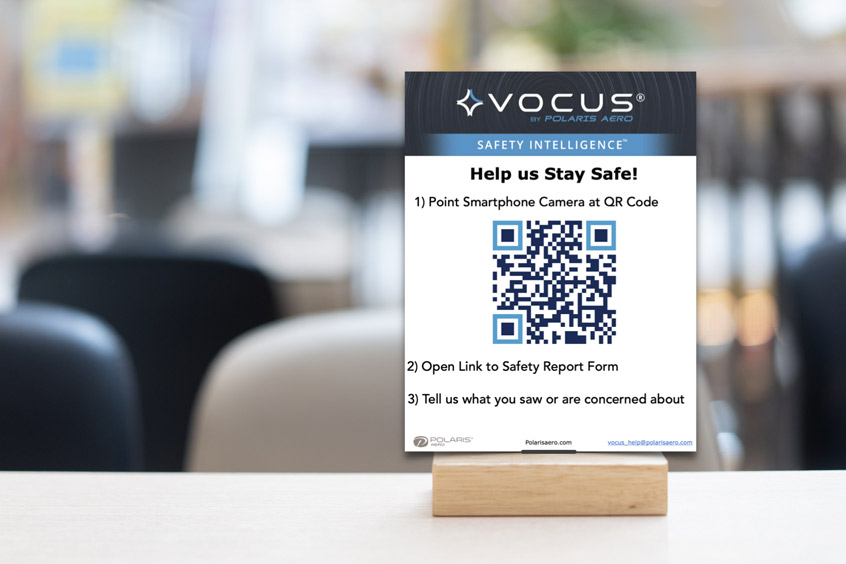
Arizona-based aviation safety software company Polaris Aero has integrated a QR code safety reporting feature into its advanced safety management application, VOCUS SMS. With the upgrade, VOCUS SMS subscribers can now generate a unique QR barcode to print and display in their aircraft and hangar, enabling aviation contractors and VIP passengers the means to submit important safety reports.
Vice president of aviation services Steve Bruneau comments on the significant advantage the upgrade offers: “Our Polaris Aero clients love how simple it is for one of their line personnel or staff to submit a safety report via VOCUS SMS. And now, they want to give their aviation contractors, visitors and passengers the tools to submit a safety report easily and anonymously. This latest software enhancement helps them to do just that.”
The new QR code can be displayed in a variety of locations; as a seatback card; as stickers to post around hangar and office areas; and on contractor onboarding intake forms.
“The idea is to have the code displayed in lots of places so non-aviation staff can easily see it and access it,” Bruneau adds. “The report might be for something as simple as some liquid being spilled, or for something that appears to be broken. Or, perhaps, someone isn't following safety guidelines.
“Engaging non-aviation travellers and contractor staff as additional 'spokes' on the wheel of safety helps everyone gain more insight into aviation safety issues. And by having a QR code at their disposal, they don't need to email someone, which they often won't do anyway, and then wait for someone to transfer that email into the SMS on their behalf.”
The QR code reporting upgrade is user friendly, anonymous and convenient for submitters; the reports are completely dissociated from submitters and do not grant any access to the organisation's internal safety management system. Indeed, non-user safety reporting shines a spotlight on issues that could have gone unnoticed, helping to mitigate potential hazards before they become actual threats to safety.
Dell Aviation's captain/safety manager Max Grover is a longtime VOCUS SMS user and is excited about the additional safety reporting feature. He has already incorporated third-party QR code reporting into Dell's contractor briefing materials and will be displaying his organisation's QR code in multiple areas. He says: “It's very helpful for contractors and third-party vendors working in the hangar.”