• Britten-Norman
Aircraft
• Inmarsat
• Loganair
Charter
• ZeroAvia
BAN's World Gazetteer
• U.K. The bimonthly news publication for aviation professionals.
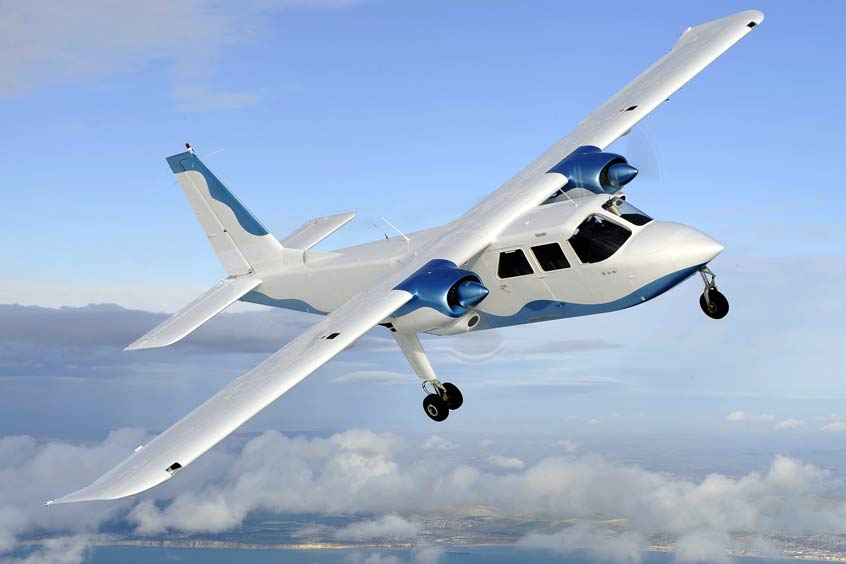
A consortium of British SMEs and academics have announced the formation of Project HEART as part of the UK government's Future Flight Challenge. The consortium will work on the project, Hydrogen-Electric & Automated Regional Transportation, over five years to create the foundation for a fully sustainable and scalable commercial aviation network that could connect the whole of the UK.
HEART aims to transform air transportation in the UK for cargo and passengers. The project will focus on transforming nine - 19 passenger capacity aircraft and utilise up to 100 licensed general aviation airfields around the UK. The partnership has identified the main challenges facing regional air transport, and aims to address them during the project. Each member of HEART will focus on combating a specific issue including cutting carbon emissions to zero, reducing costs to operators and passengers, expanding regional airports and increasing the frequency of services.
As the UK's only sovereign commercial aircraft manufacturer with over 65 years' experience designing and manufacturing aircraft, Britten-Norman will work with Blue Bear Systems to automate the Islander. Known as a workhorse, the aircraft serves in a variety of roles from passenger and cargo transport to medevac and SAR. Its adaptability, as well as STOL abilities, has made it the choice of communities around the world. The project's first milestone will be to demonstrate single pilot operations with an autonomous co-pilot providing access to more information and assistance than human perception alone can provide.
The project's breakthroughs will allow regional air transport to compete with traditional ground services. A zero-carbon aircraft that is able to offer higher frequency services, with more day return scheduling and reduced travel times, could become a significant rival to road and rail journeys. This is critical to the UK's levelling up agenda, improving transport links between the UK's regions and cities.
Members of the project, led by UAV specialist Blue Bear Systems, include hydrogen-electric powertrain developers ZeroAvia and green hydrogen experts Protium, satellite communications authority Inmarsat, regional airline Loganair, regional airport group Highlands & Islands Airports Limited, award-winning architect firm Weston Williamson + Partners, global vehicle hire company Fleetondemand and Edinburgh Napier University.
Britten-Norman business development director Lara Harrison says: “We are looking forward to working closely with Blue Bear Systems to produce the next generation automation for the Islander. Project HEART represents an important step towards the future of aviation in the UK. I look forward to the consortium working together to revitalise and expand the UK's regional air transport network.”