


 The bimonthly news publication for aviation professionals.
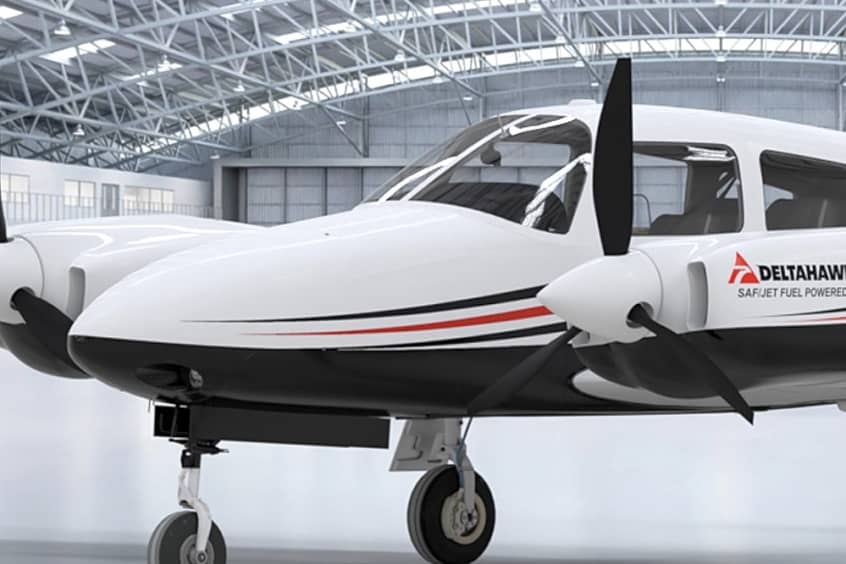
DeltaHawk Engines has reported that the Piper Seminole DX development aircraft, powered by twin DeltaHawk Jet-A compression-ignition engines, has entered active flight-test and is making strong progress ahead of EAA AirVenture.
The Piper Seminole DX is a diesel-powered PA-44 featuring DeltaHawk’s FAA-certified, DHK4A180 180hp, heavy fuel, compression ignition engine. It was born from a collaboration between the two companies in early 2024 to explore alternative propulsion solutions offering enhanced efficiency, performance and sustainability in general aviation. The liquid-cooled, 180hp turbo-charged engine produces turbine performance at 40% better fuel efficiency versus reciprocating avgas engines, while also achieving a significant reduction in cost of ownership due to fewer moving parts. The engine is approved for Jet A and Jet A-1 fuels, with SAF approval pending. Piper uses a Piper-owned STC to integrate DeltaHawk’s firewall-forward kits into the Seminole production line. The kit includes counter-rotating DeltaHawk Engines and three-blade, full-feather propellers. Additionally, the aircraft will have an advanced cabin temperature control system utilising the engines liquid cooling to ensure a comfortable flight experience in diverse conditions.
Following its successful first flight, the aircraft has now completed multiple flights as DeltaHawk continues expanding the flight envelope, validating systems integration and gathering performance data in support of the STC programme. The milestone reflects both the transition from ground development to flight testing and the rapid progress made in bringing a new propulsion option to the Piper PA-44 Seminole multi-engine training platform.
The Seminole DX all-American aircraft-and-engine combination brings a fresh approach to multi-engine training, offering flight schools and fleet operators a potential path to lower fuel consumption, simplified engine operation and broader global fuel compatibility.
A Piper spokesman says: “We are very pleased with today’s first flight of the new Seminole DX, powered by DeltaHawk. The Seminole DX will further expand our already comprehensive training fleet and provide multiple aircraft and fuel solutions for professional flight schools around the world. Interest in the Seminole DX has been overwhelming since its announcement at last year’s AirVenture, particularly from the European and Asia-Pacific flight training markets.”
Early flight test results have been encouraging. During the aircraft’s initial 30 minute flight, conducted in demanding summer conditions of 91°F and approximately 88% humidity, corresponding to a density altitude of about 3,500ft, the aircraft achieved an initial climb rate of approximately 1,700 to 1,750 feet per minute while maintaining adequate cooling margins. Both engines operated normally, with stable power delivery, satisfactory propeller and governor response, and no significant abnormalities reported.
The aircraft configuration includes two counter-rotating DeltaHawk Engines driving three-bladed propellers at approximately 2,400rpm, a configuration intended to help reduce noise while supporting strong operating efficiency. Preliminary indications point to cruise fuel consumption approximately 35 per cent lower than a conventional Seminole, a figure that could significantly affect the economics of high-utilisation multi-engine training if confirmed through the continuing test programme.
“This programme is moving from promise into proof,” says Jon Heup of DeltaHawk. “The aircraft is flying, the data is coming in and the results so far give us a strong foundation as we continue progressing towards certification.”
Andy Oja, airframe integration manager at DeltaHawk, adds: “Each flight gives us more information about cooling performance, handling qualities, engine operability and systems integration. The early results are encouraging, and the team has made meaningful progress heading into Oshkosh.”