


 The bimonthly news publication for aviation professionals.

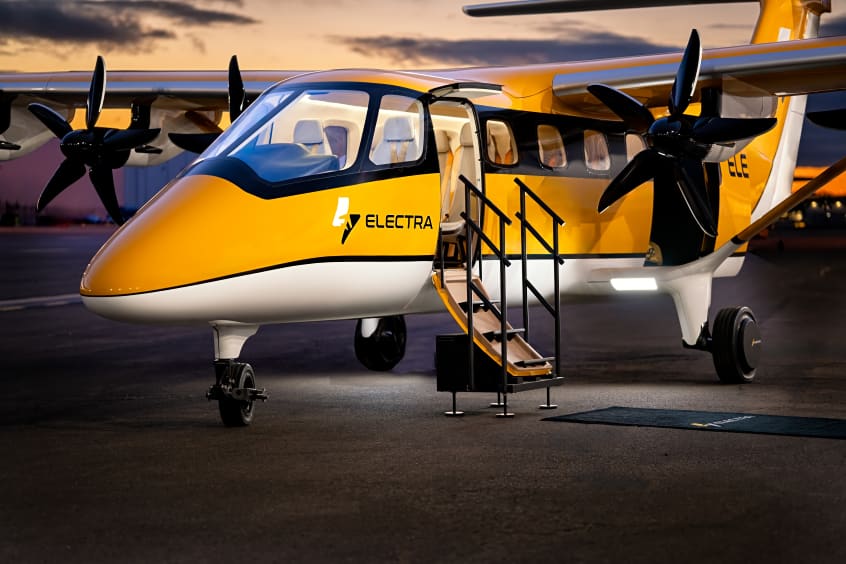
Electra has successfully completed the first urban demonstration of its ultra short aircraft at the Columbus Street Terminal, a shipping terminal in Charleston, South Carolina, offering a real-world look at how regional air travel can move beyond airports to become faster, simpler and far more accessible.
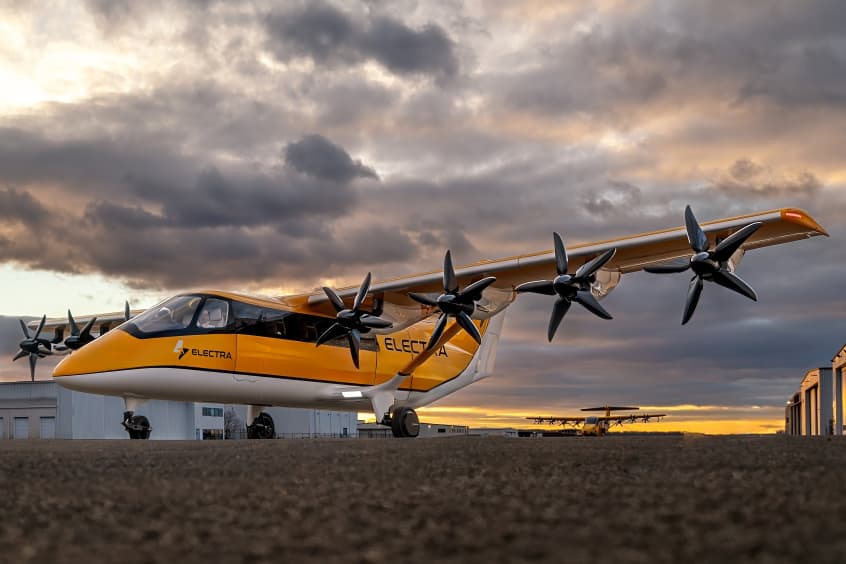
Hosted by SC Ports during the CAPA Airline Leader Summit Americas, the flight highlights how Electra's hybrid-electric propulsion and blown-lift technology enable takeoffs and landings in 150 feet or less, opening up entirely new places for air services to operate, called ‘Ultra Short Access Points’, like parking lots, rooftops, fields and barges. While Electra's EL2 technology demonstrator completed the flight, Electra's flagship EL9 nine-passenger aircraft will ultimately serve as a regional shuttle to fill the regional mobility gap.
“This demonstration is about showing what's possible in the real world for urban/suburban airspace access,” says Marc Allen, CEO of Electra. “When you can offer air services close to where people live, work and play, that opens the door to transformative options for regional mobility. It is new way to travel that's more direct, flexible and much easier to use.”
This new approach is called ‘Direct Aviation’, a model that targets the more than 35 million daily trips that fall between driving and flying on routes where travellers can save hours by going direct without the usual friction of commercial air travel. It's designed for a wide range of travellers, from business professionals looking to save hours in a day to families trying to make the most of a weekend getaway or anyone who wants to stay connected to loved ones without turning a short trip into an all-day journey.
The Charleston demonstration builds on Electra's recent release of the first-ever Direct Aviation Market Outlook, a nationwide analysis of US travel patterns that quantifies the scale of regional mobility demand and outlines how Direct Aviation will reshape it. The report uncovers a massive opportunity: 10s of millions of trips happen every day at distances that are too long to drive efficiently but poorly served by traditional aviation. These are exactly the kinds of trips where Direct Aviation will cut hours off door-to-door travel times.
Among routes with at least 1,000 travellers per day, the analysis identifies: 1,851 routes with more than one hour of potential time savings; 540 routes with more than two hours of potential time savings; and 227 routes with more than three hours of potential time savings.
Earlier this year, Electra was selected as an inaugural participant in the US Department of Transportation's advanced air mobility pilot operations programme (the eIPP), which is accelerating the safe deployment of advanced air mobility aircraft. As part of that effort, Electra is working with public and private partners on groundbreaking demonstrations including connecting urban and regional destinations in Florida and linking metropolitan centres in New York, New Jersey and Pennsylvania. The company also supported the submission from the State of Louisiana.
Electra's analysis shows that regional travel in the US is already extensive: 35 million passenger trips (driving) per day across distances of 50 to 500 miles; 1.6 trillion passenger miles annually; and more than 6,000 routes with over 1,000 travellers per day.
At the heart of this market are trips of between 50 and 265 flying miles, where demand is both concentrated and largely unserved by existing aviation. More than 80 percent of these trips lack a practical air option, forcing travellers to rely on cars despite significant time costs.
“Aviation is entering a new era, where capabilities that weren't possible before are now fundamentally changing how we move,” continues Allen. “Direct Aviation is how that shift shows up in the real world, giving people the ability to go from where they are to where they want to go without the time, friction and constraints that define travel today. It will slash travel times by hours, changing how people live, work and play.”
Electra's EL9 Ultra Short aircraft is designed for this operating model, combining hybrid-electric propulsion with ultra-short takeoff and landing capability to enable operations from compact, distributed access points. Based on this analysis, the route and passenger demand will require 12,000 to 16,000 aircraft over the first 10 years of operations for a nationwide fleet of regional shuttles.
Electra is releasing the Direct Aviation Market Outlook alongside an interactive microsite detailing nationwide demand, route-level analysis, and regional network opportunities.