 The bimonthly news publication for aviation professionals.
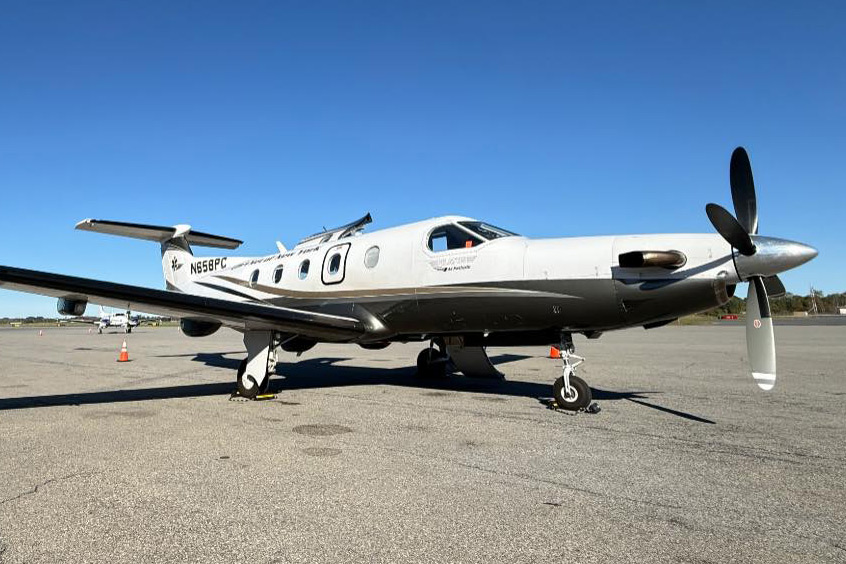
LifeNet of New York, an air medical provider serving communities across the US Northeast, is completing a major upgrade to LifeNet 7-9, its Pilatus PC-12 fixed wing aircraft based in Potsdam. The aircraft now features a state-of-the-art Garmin flight deck, a redesigned medical interior and operational enhancements, making it one of the most advanced air ambulances in the region. These investments ultimately improve the speed and efficiency of life-saving patient care across the region.
With this upgraded aircraft, LifeNet of New York, a programme operated by Air Methods, continues to expand its ability to deliver rapid, high-quality critical care over longer distances, even in challenging weather or rural conditions. The enhanced avionics provide improved flight safety and precision, while the upgraded medical interior ensures a more effective clinical environment for in-flight interventions.
“Our mission is to provide critical care to the sickest patients in some of the most remote areas,” says Steve Sculley-Beaman, business manager for LifeNet of New York. “This upgraded aircraft allows us to better deliver on that goal. We'll be able to reach patients more quickly and more reliably.”
The interior has been transformed with a Hillaero air medical crew cabin conversion. This means more space for medical teams, better lighting and improved ergonomics, making it easier for clinicians to care for patients during flight. There is also a wide cargo door for easy patient loading, integrated oxygen and suction ports, and a dedicated cargo area for equipment. The cabin can accommodate up to four medical crew members, plus a fifth in the co-pilot seat, and even allows a family member to accompany the patient when needed.
The upgraded PC-12 is equipped to handle the most critical and fragile patients including traumas, cardiac emergencies, strokes, pregnancy complications, paediatrics and even neonatal transports. It carries advanced equipment, such as the Zoll AutoPulse CPR device for in-flight mechanical CPR. Flight clinicians also carry blood that can be administered in-flight for patients at risk of haemorrhagic shock.
An additional upgrade includes the latest Garmin avionics in the cockpit, replacing older systems with cutting-edge technology. This upgrade gives pilots a clearer view of their surroundings and has advanced autopilot features. The system can even guide the aircraft to the safest nearby airport in an emergency. These enhancements mean pilots have better tools to fly safely and efficiently, reducing their workload and improving overall flight performance. The aircraft can fly over 1,000 miles without refuelling, reach speeds over 300 mph and operate from short or unimproved runways, making it ideal for reaching patients in rural or remote areas.
“The technology upgrade in our PC-12 has truly transformed how we fly and care for patients,” remarks Stuart Hirsch, lead fixed wing pilot for LifeNet of New York. “With the new Garmin flight deck, I have a much clearer view of the terrain, weather and air traffic, even in challenging conditions or at night. The advanced autopilot and safety systems not only make each flight smoother and more precise, but also give me the confidence to focus on getting our medical team and patients where they need to go.”
This upgrade is part of LifeNet of New York's ongoing investment in better care for New York's communities. By combining a proven airframe with the latest in medical and aviation technology, LifeNet of New York continues to set the standard for air medical transport, ensuring that help is always within reach, no matter the location.
LifeNet of New York remains focused on accessibility. The programme is in-network with most major insurance providers, and its dedicated patient advocacy team works directly with patients and families to ensure that financial concerns never stand in the way of receiving care. No prepaid membership is ever required.