• Air Methods
Charter
• Airbus Helicopters
Aircraft
BAN's World Gazetteer
• Colorado The bimonthly news publication for aviation professionals.

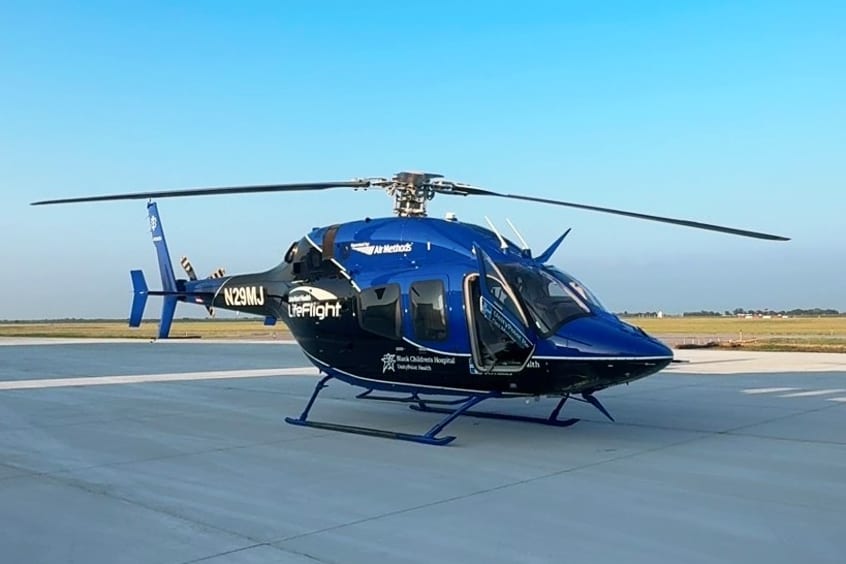
At the Air Medical Transport Conference (AMTC) 2025 in Omaha, Nebraska, Air Methods, Airbus Helicopters and ChristianaCare held a ribbon cutting to celebrate ChristianaCare’s new Airbus H145 D3 helicopter. The aircraft is the first of its type to enter service in the US Northeast, marking a step forward for emergency medical aviation in the region.
ChristianaCare, which was established nearly 25 years ago, operates two helicopter bases across Delaware and supports surrounding states. One helicopter is stationed at Christiana Hospital in Newark, with another at Delaware Coastal Airport in Georgetown. The organisation also maintains helipads at its Wilmington Hospital and Middletown Free-standing Emergency Department.
Air Methods CEO Rob Hamilton says: “The H145 D3 demonstrates what’s possible when industry leaders come together with a shared purpose. Together, we’re advancing innovation, elevating safety and ensuring the best possible care for every patient, every time.”
The aircraft joins the ChristianaCare LifeNet air medical programme, operated in partnership with Air Methods, extending its ability to serve patients across Delaware, Maryland, New Jersey and Pennsylvania. Its enhanced avionics, expanded cabin space and quieter operation improve safety and patient care.
ChristianaCare programme director John Roussis says: “This aircraft represents a transformative step in our commitment to delivering critical care when seconds count. With advanced capabilities that improve safety, reliability and performance, the H145 D3 enables us to better serve patients and communities across the region.”
The aircraft’s five-bladed main rotor and upgraded engines boost power, reduce vibration and lower maintenance needs. Airbus Helicopters U.S. president Bart Reijnen adds: “The H145’s Helionix avionics suite and advanced autopilot reduce pilot workload and enhance safety, while the five-blade rotor delivers a smoother, quieter flight benefiting both crew and patients.”