 The bimonthly news publication for aviation professionals.
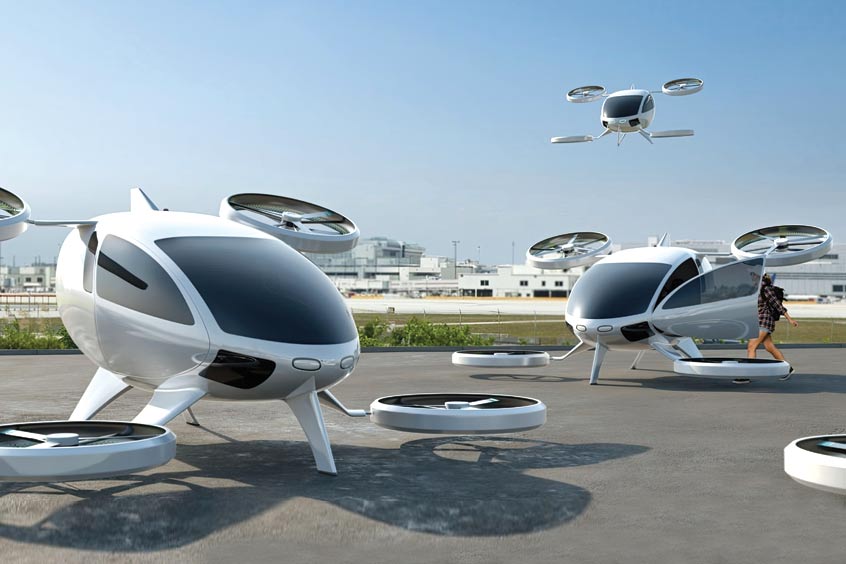
The UK Civil Aviation Authority (CAA) has been working with WMG, University of Warwick, on an 18-month project to study how eVTOL aircraft can be safely integrated into UK skies. Funded by the Department for Transport as part of the Future of Flight programme, the research applied systems thinking to examine safety risks and system interactions.
The project included trials at the British Grand Prix at Silverstone, where high volumes of helicopter and potential eVTOL activity provided insight into future airspace pressures. More than 50 high-priority areas were identified, addressing issues such as airspace integration, vertiport energy management and automation oversight.
Rick Newson, co-chair of the eVTOL Safety Leadership Group at the UK Civil Aviation Authority, says: “With eVTOL aircraft expected to enter UK airspace within the next few years, proactive planning and coordination is essential to ensure their safe, responsible and seamless integration. This research provides valuable insights into the complex challenges and potential risks ahead.”
The study was delivered in collaboration with industry members of the UK’s eVTOL Safety Leadership Group, including Bristow and NATS, whose contributions ensured the findings reflected operational realities.
Professor Siddartha Khastgir, head of safe autonomy at WMG, University of Warwick, says: “For any technology, ensuring its safety is an absolute requirement for it to succeed commercially. And for emerging technologies like eVTOLs, a systems thinking approach to safety is necessary to understand the multiple interactions between the stakeholders.”
Simon Meakins, co-chair of the eVTOL Safety Leadership Group and director of advanced air mobility at Bristow Group, adds: “This is an extremely valuable piece of work that proactively identifies potential risks and enables them to be mitigated effectively.”
The findings are being reviewed by the CAA as part of its ongoing regulatory development and will also feed into the Airspace Modernisation Strategy to prepare for new aviation technologies.