


 The bimonthly news publication for aviation professionals.
 Read this story in our July/August 2025 printed issue.
Diamond Aircraft is coordinating the 'H2EDT' project, funded by the Austrian Research Promotion Agency (FFG), to explore gaseous hydrogen as a fuel source for hybrid electric aircraft propulsion. The research, involving FH JOANNEUM, TU Graz, HyCentA and IESTA, is focused on developing an experimental testbed to study the challenges posed by hydrogen fuel systems in aviation.
Hydrogen, a zero-carbon fuel, produces energy either through fuel cells or internal combustion engines without carbon dioxide emissions. Low-temperature fuel cells, with quiet operation and zero emissions, are becoming increasingly popular across automotive, maritime and aviation industries. Hydrogen fuel systems also provide greater range than purely electric propulsion due to higher energy density.
However, hydrogen propulsion faces challenges including low power-to-weight ratios of fuel cells, complicated storage requirements due to hydrogen's low density, and safety and certification issues related to leakage and low ignition energy. As a result, the researchers are developing a hybrid architecture combining hydrogen fuel cells with battery systems, enhancing power density, redundancy and safety.
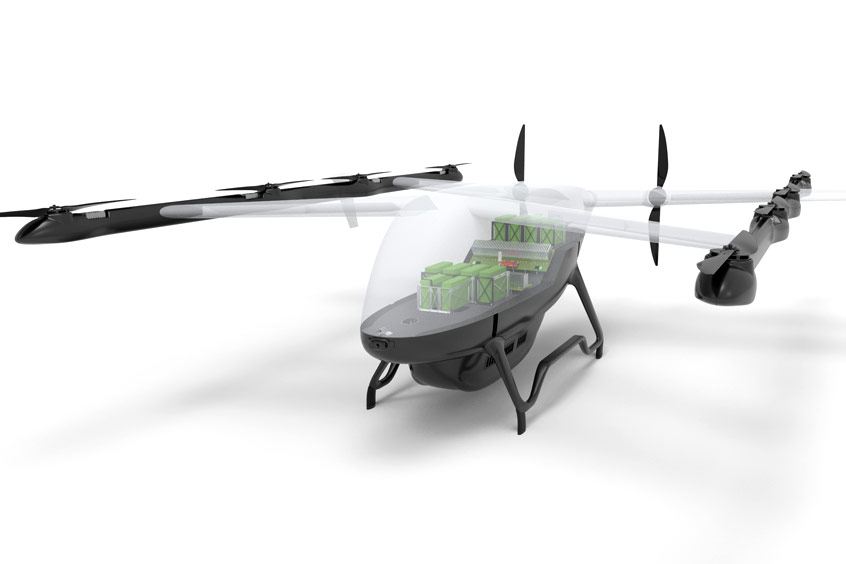
The H2EDT testbed simulates a scaled general aviation platform featuring a fuselage, hydrogen fuel cells, batteries, hydrogen storage, and up to 10 electric motors and propellers. Originally designed for twin-engine aircraft, the testbed was adapted for VTOL platforms, reflecting rising interest in advanced air mobility.
The project also emphasises innovative digital power management technology developed by FH JOANNEUM, allowing simultaneous and efficient operation of batteries and fuel cells. A digital twin developed with TU Graz will enhance performance analysis through detailed simulations, including failure scenarios and environmental variations.
Additionally, the H2EDT aims to set certification and design guidelines for future full-scale hydrogen-powered aircraft, potentially including Diamond Aircraft’s DA40 or DA42 models. Results from H2EDT research will be presented in the first half of 2026.
Funding for the H2EDT comes from the Take Off programme managed by the Austrian Research Promotion Agency (FFG) under Austria’s Ministry for Innovation, Mobility and Infrastructure (BMIMI).