


 The bimonthly news publication for aviation professionals.
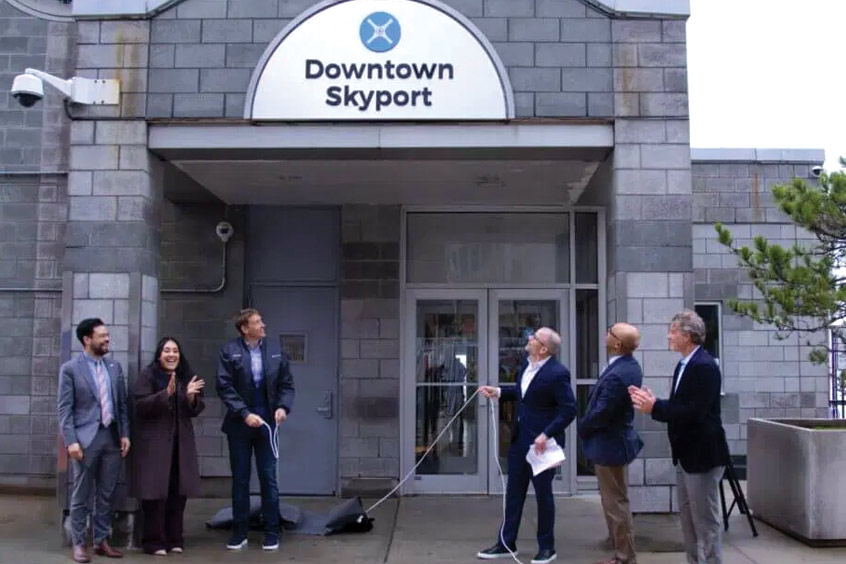
Downtown Manhattan Heliport has been renamed Downtown Skyport, marking its transition from a helicopter-only facility into a multimodal site for sustainable air and sea freight infrastructure. The change coincides with the handover of operations to Downtown Skyport, a joint venture between Skyports Infrastructure and Groupe ADP.
The rebranding reflects New York City's aim to support electric vertical take-off and landing (eVTOL) aircraft and to develop marine freight services. Site electrification work is due to begin later this year ahead of expected FAA eVTOL certification in 2026. Design and permitting for maritime freight infrastructure are also scheduled for completion this year, with construction to follow.
“Today's renaming is not just a sign of what's to come, but an important milestone in taking the Downtown Skyport to new heights,operating not just a heliport, but as a multi-modal hub for sustainable transportation and last-mile freight delivery,” says New York City Mayor Eric Adams. “This Skyport will deliver a future of cleaner, quieter transportation that will launch New York City into the future. By naming this the 'Downtown Skyport' we're paying homage to our city's history, while looking toward a future filled with electric aircraft in our skies and maritime freight moving up our blue highways.”
The New York City Economic Development Corporation says the transformation supports the city’s “Harbor of the Future” strategy, which includes investment in climate resilience, cleaner transportation and economic innovation across all five boroughs.
The modernised heliport is expected to accommodate eVTOL operations from companies such as Joby, Archer and Beta Technologies, all of which have conducted demonstration flights. NYC officials say the Skyport will also bolster the city’s ‘Blue Highway’ freight network, taking delivery trucks off the roads and easing supply chain pressure.
Downtown Skyport’s concession agreement is valid for five years with the option of three five-year extensions, contingent on the delivery of planned upgrades.