 The bimonthly news publication for aviation professionals.
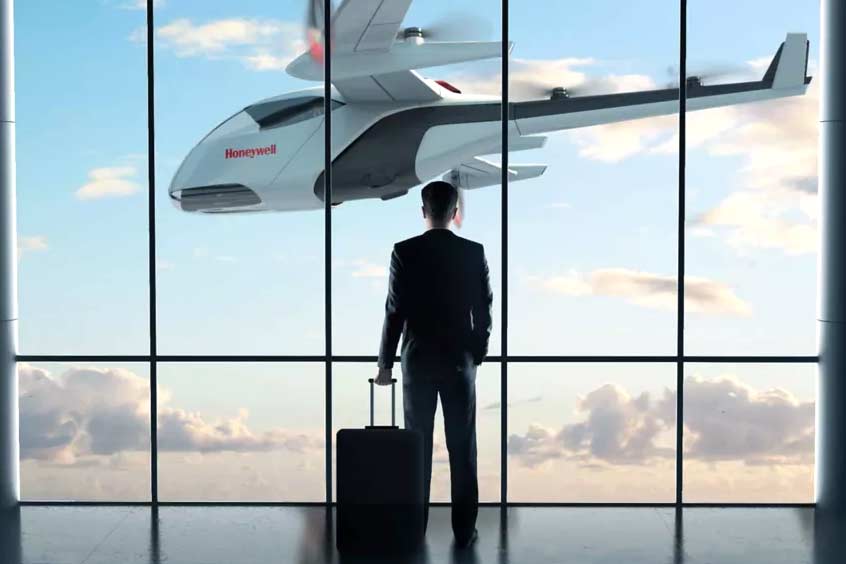
A survey by Honeywell found that 98% of U.S. airline passengers would consider using an electric vertical take-off and landing (eVTOL) aircraft, commonly known as air taxis, as part of their journey. The poll of 1,000 frequent travellers also revealed that 79% would fly more often if air taxis provided transport to the airport.
The primary appeal of air taxis is reduced travel time, with 47% of respondents citing the ability to avoid traffic as a major factor. Other important considerations include convenience (61%), cost (61%), environmental impact (44%) and novelty (44%).
“Anyone who travels regularly knows that the journey to and from the airport often adds unwelcome time, cost and hassle to the overall trip,” says Dave Shilliday, vice president and general manager of advanced air mobility at Honeywell Aerospace Technologies. “Air taxis can offer a safe, fast and innovative alternative to traditional transport methods. Our research indicates significant appetite for such services already exists, but like any new technology, consumers need to feel confident about safety, cost and reliability.”
Millennials (65%) and those who flew more than 10 times in the past year (67%) showed the highest enthusiasm for eVTOLs, compared to 58% of overall respondents. Business travellers (60%) expressed more interest than leisure travellers (45%).
The top use case for air taxis is travel between cities within 100 miles (41%). Other common applications include travel from suburban airports to city centres (31%) and connections between nearby cities (28%).
While interest is strong, safety remains a top priority, with 65% of respondents highlighting it as a key factor. Honeywell’s advanced air mobility business unit is working with aircraft developers, regulators and OEMs to accelerate the integration and certification of next-generation aircraft.