


 The bimonthly news publication for aviation professionals.


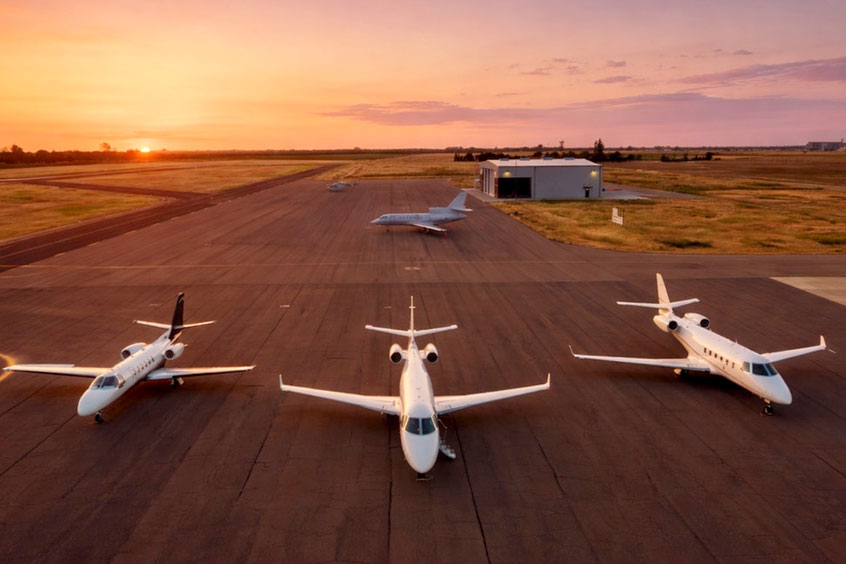
LifeFlight’s air ambulance jet crews made history in 2024, airlifting a record number of patients amid surging demand. Patient numbers for the Australian aeromedical organisation's Challenger 604 jets, which are located at its Brisbane, Townsville and Singapore bases, soared to 1,099 people helped.
The figure is 73 per cent higher than the previous year and equates to three people helped per day. The Townsville base recorded a 67 per cent increase in people assisted to 487 while total flight hours reached 2,227. Statistics released this week show jet numbers contributed to an overall bumper year, with 8,477 people attended to over the course of the 12 months. The figure was 13 per cent higher than 2023 and more than any other year in the not-for-profit's history.
In August last year, LifeFlight completed one of the longest jet flights in its history when it transported a patient with a head injury from Bern in Switzerland to Perth in Australia. The mission lasted 52.8 hours with the patient on board for 24.2 hours.
LifeFlight first officer Amanda Deed says it was a momentous flight that saw the jet pass over the Pyramids of Giza on its way to Switzerland: “To be part of this flight was incredible, not just from a flying perspective but from a coordination and medical perspective as well. What our whole team was able to achieve was amazing. From the moment LifeFlight received the job, the team in C3 (LifeFlight’s communication, coordination and control centre) worked tirelessly to ensure everything ran smoothly. Our doctors and nurses then ensured the comfort and care of the patient, and as a team we delivered him safely to Perth.”
Other noteworthy missions in 2024 included airlifting a newborn and parents from Chiang Mai in Thailand to Brisbane. The successful mission required advanced neonatal equipment and specialised medical teams to be on board the aircraft.
In April and May a patient was repatriated from Hiroshima, Japan to the Gold Coast during Japan’s Golden Week when much of the country shuts down. The mission, launched from the Singapore base, required 48 hours of planning and preparation to be undertaken successfully.
Two flights were also completed with eight patients on board during a single mission, highlighting the capabilities of the Challenger 604 jets.
LifeFlight general manager, commercial partnerships, Tyson Smith, states that LifeFlight’s aeromedical capability was constantly expanding, explaining that flights were made possible because the jets are capable of handling both long-distance flights from the US or Europe to Australia or domestic missions across Queensland. “The 2024 results, which came off the back of a strong 2023, demonstrate the increasing demand for our service whether it’s international repatriations or domestic jobs like transporting patients to and from regional centres to major hospitals in capital cities,” he notes. “Our crews play a vital role airlifting patients from distant locations to major hospitals in Australia for life saving treatment and procedures.”
Smith adds that LifeFlight was constantly seeking efficiencies through improved flight planning and technological advancements to help deliver services to more people. This meant missions undertaken by LifeFlight’s medically configured, long-range jets could be activated and dispatched faster resulting in improved patient outcomes. “This is especially important as our workload increases and we take on increasingly more complex missions overseas.”
LifeFlight chief medical officer Dr Allan MacKillop reveals that LifeFlight’s air ambulance crews are trained to deliver emergency medicine under difficult conditions. “Our highly skilled crews have the most advanced medical equipment specially designed for these missions,” he says. “This effectively acts as a mobile intensive care unit while flying 35,000 feet above the ground. This aeromedical intervention can be the difference between life and death, significantly increasing a patient’s chance of survival, so it is vitally important.”
LifeFlight’s fleet of four air ambulance jets and eight rotary wing aircraft operates from eight Queensland bases and is available 24 hours a day, 365 days a year, directly servicing an area of 1.85 million square kilometres. LifeFlight has helped more than 90,000 people since it first took to the skies in 1979.
More Queenslanders were helped last year than any other as LifeFlight came to the aid of a record 8,477 people, a 13 per cent increase on the previous year.
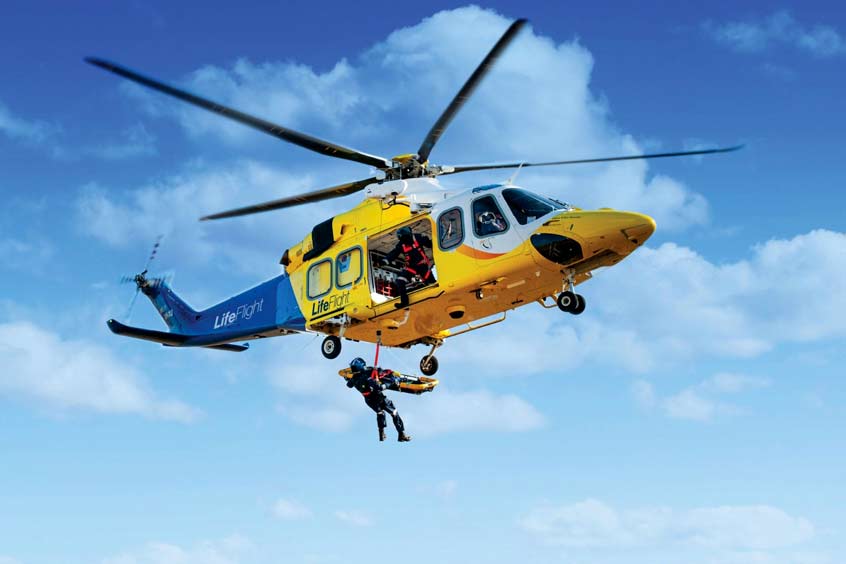
LifeFlight's helicopter crews, operating from bases on the Sunshine Coast, Bundaberg, Mount Isa, Toowoomba, Roma and Brisbane, clocked up 3,534 missions, which included airlifting injured motorists, patients with cardiac problems, seafarers, hikers and farmers injured by animals. Statistics released this week show the number of missions was 24 per cent higher than 2023 while flight hours also increased by 20 per cent to 5,551.
LifeFlight invested in infrastructure to support its growth with construction getting underway on two new bases in Mount Isa and the Sunshine Coast, and the opening of the LifeFlight Clive Berghofer Maintenance Centre at Brisbane's Archerfield Airport. LifeFlight is also part of a new Aeromedical Precinct under construction at Brisbane Airport, bringing together the Royal Flying Doctor Service, Retrieval Services Queensland and the Queensland Police Service Aviation Capability Group in one central location and due for completion in 2026.
LifeFlight chief operating officer Lee Schofield, said it was a momentous year as the not-for-profit marked 45 years in operation.
“Queensland's strong population growth combined with our expanded capabilities mean we are called on more to help Queenslanders whenever and wherever we are needed,” Schofield comments. “Last year's record follows on from another record year in 2023 and demonstrates our value to the emergency rescue helicopter network. This year we'll be focused on finishing construction of our new bases in Mount Isa and the Sunshine Coast and enhancing our aeromedical capabilities through new AW139 helicopters, equipment and cutting-edge training programmes.”
In December a new AW139 helicopter touched down in Toowoomba to begin service. It follows a $1.25 billion, 10-year service agreement with Queensland Health.