 The bimonthly news publication for aviation professionals.
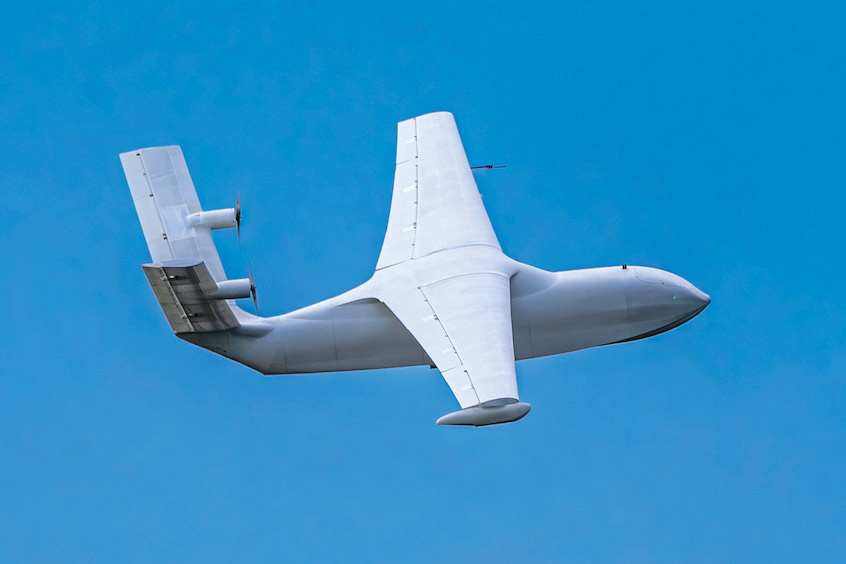
Hampton, Virginia-based startup Tidal Flight has been awarded a Commonwealth Commercialisation Fund grant for $75,000. Tidal Flight is unlocking the regional mobility of coastal populations and providing a clear pathway to future zero-emissions flight with an improved seaplane aircraft option.
For the 40 per cent of the world’s population that lives in coastal areas, seaplanes are the fastest and most convenient form of transportation. Seaplanes offer direct access to city centres, unparalleled access to island and coastal locations and the only access to certain remote communities.
Unfortunately, seaplane aviation is extremely expensive, a problem driven by current airframes that are heavy, draggy, ageing and not designed for the corrosive ocean environment. Tidal Flight is developing the Polaris, a hybrid-electric seaplane that can carry nine-12 passengers and is capable of landing on waterways and runways alike. Polaris brings an 85 per cent reduction in fuel burn and a 40 per cent reduction in direct operating costs while enabling quiet and sustainable operations.
“There is a recognised gap in regional air mobility, specifically around trips of 50 to 300 miles that are often served poorly by commercial airlines,” says co-founder and CEO Jude Augustine. “ With our team's expertise in electric aircraft design, we are capitalising on the opportunity to bring growth to coastal regional mobility.”
The CCF grant will enable Tidal Flight to fabricate subscale prototypes of the aircraft, execute flight testing of the prototypes, and perform prototype and flight simulator demonstrations for customers. These efforts serve to de-risk and validate the technology while attracting new customers and investors.
Tidal’s team has already put CCF funds to work with co-founder and chief engineer Mark Lau and Pranav Krishnamurthy, co-founder and chief technology officer, leading technical development. Tidal has fabricated its first prototype and achieved first flight.
The company has previously received funding from Virginia Innovation Partnership Corporation’s (VIPC) Federal Funding Assistance Program (FFAP) to enhance the competitiveness of its federal Small Business Innovation Research proposal strategy and is an active participant in the Virginia Unmanned Systems Center at VIPC and Virginia Advanced Air Mobility Alliance. Through such initiatives, VIPC has united stakeholders from across the Commonwealth to develop, grow and promote the advanced air mobility industry around Virginia and the US, as well as connect and provide resources for UxS startups like Tidal Flight.
Joe Benevento, VIPC president and CEO, says: “Virginia alone has more than 3,000 miles of coastline and more than five million coastal residents. Providing an innovative transportation option with lower operating costs and reduced noise and emissions has the potential to enhance the lives of these Virginians and revolutionise travel outside of the Commonwealth. Tidal Flight has all the makings of a Virginia success story, and VIPC is proud to partner with it throughout the early stages of its innovation journey and beyond.”
“Tidal Flight represents a mature, capable startup team with a clear project focus and go-to-market strategy,” adds Jeanette Townsend, VIPC director of private sector grants. “It is developing a novel solution to an age-old problem and is highly motivated to see it succeed and positively impact a deserving population. VIPC could not be more delighted to support it on its quest to improve transportation options for coastal communities and looks forward to witnessing it emerge as a game-changer in the aerospace industry.”