 The bimonthly news publication for aviation professionals.
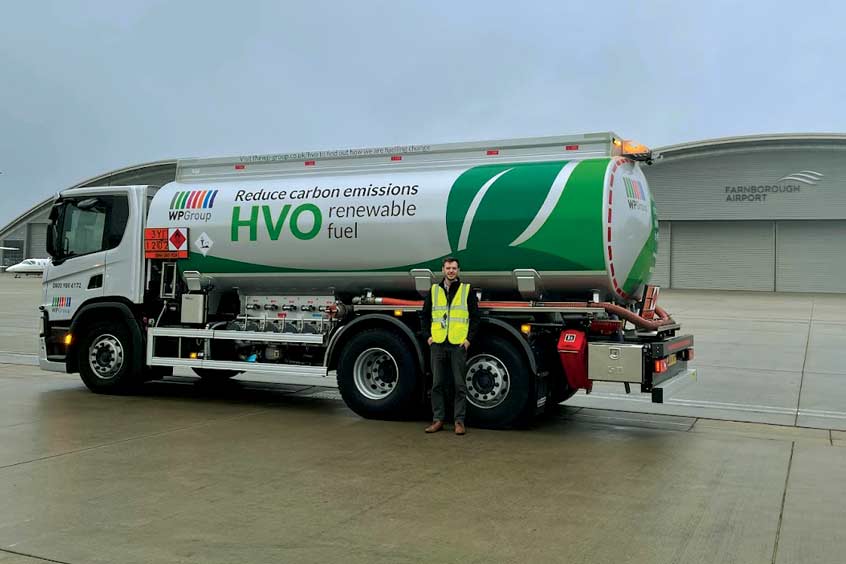
All diesel powered cars at Farnborough Airport will now start changing over to use hydrotreated vegetable oil (HVO). Using HVO reduces net greenhouse gas emissions by up to 90 per cent and marks another significant step in the airport's work to support the decarbonisation of the wider aviation industry.
In July 2021, Farnborough introduced SAF, which allows the reduction of flying emissions by up to 80 per cent. In 2018, the airport was the first business aviation airport to be awarded carbon neutral status by Airports Council International Europe, and over the past 10 years the airport has reduced its controllable emissions by over 70 per cent.
CEO Simon Geere says: “The Farnborough Airport team recognises that climate change is a clear and pressing issue and is committed to minimising its environmental impact and improving environmental performance throughout its operations. The introduction of HVO is another milestone in our sustainability programme and an integral part in delivering against the government's targets for net zero carbon emissions.”
The paraffinic diesel HVO is supplied by the WP Group; it can directly replace standard diesel with no retrofitting required to the vehicle. HVO is produced from 100 per cent sustainable renewable feedstocks waste, including used cooking oil, plant, food and animal waste, with each order accredited to the Renewable Fuels Assurance Scheme (RFAS). HVO is also EN15940 accredited, and other benefits include increased storage life, reduced NOx and PM tailpipe emissions. Also it is not susceptible to 'diesel bug' and has a low freezing point.
WP Groups commercial manager Mark Clouter says: “It's great to see Farnborough Airport switching to a renewable fuel. HVO offers an immediate way to reduce emissions without incurring capital costs to change vehicles or equipment. WP is committed to our longstanding relationship with Farnborough Airport, providing a secure supply of the latest products, technologies and fuel management supporting the airport's sustainability programme.”
"Farnborough Airport is thrilled to be working with the WP group on this new initiative," adds FBO director Dominic Osborne. “We are delighted to be able to use HVO here and continue to lead the way in reducing on-site emissions throughout all operations. As Europe's leading business aviation airport, we strive to continually improve our services and give our partners the opportunity to make a greener choice by working with us.”