

 Read this story in our April 2022 printed issue.
Rolls-Royce and Air bp are to ensure that all of the aviation fuel supplied for engine testing at Rolls-Royce UK facilities in Derby and Bristol, and in Dahlewitz in Germany, will be a 10 per cent SAF blend.
The SAF is derived primarily from waste-based sustainable feedstocks such as used cooking oils and will be blended with traditional aviation jet fuel by Air bp. Deliveries will begin this summer and the 10 per cent neat SAF element will total around three million litres a year.
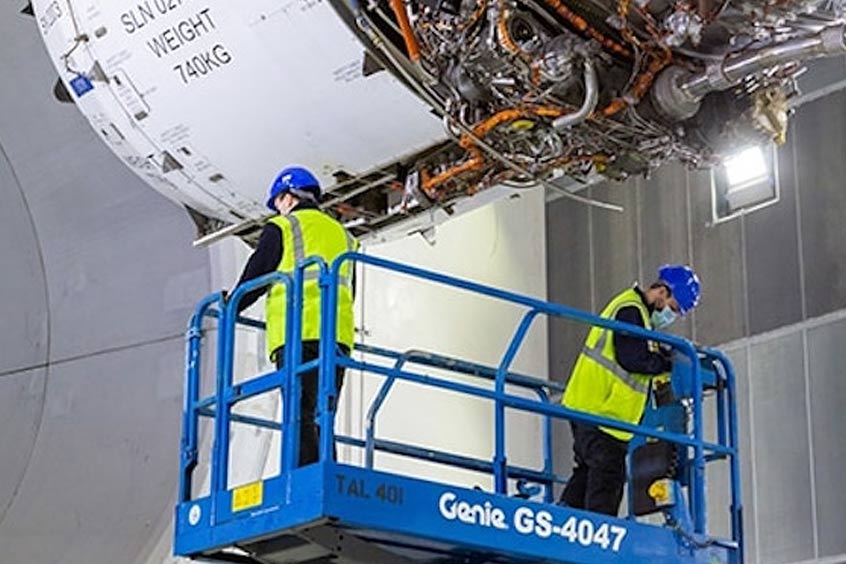
In addition, Air bp will provide the fuel for the very first run of the Rolls-Royce UltraFan demonstrator engine, which will be carried out entirely on 100 per cent SAF later this year. The UltraFan will deliver new levels of aviation sustainability in terms of improved fuel burn efficiency and 100 per cent SAF capability. The demonstrator will be the largest aero engine in the world.
R-R president, civil aerospace Chris Cholerton says: “This agreement delivers on a commitment we made that the fuel for testing and development is a 10 per cent sustainable aviation fuel blend by 2023. We want to encourage the use of SAF throughout the aviation industry, and this agreement is an example of the firm commitments fuel producers require to support its continued production investment.
“I will be proud and excited to see the UltraFan on our state-of-the-art testbed running for the first time on 100 per cent SAF, creating a new chapter in engineering excellence and sustainable aviation history.”
Air bp sustainability director Andreea Moyes adds: “We are delighted to be supporting Rolls-Royce to achieve its sustainability goals. As bp transitions to an integrated energy company, we are leveraging our expertise in the sourcing of renewable feedstocks, SAF production, logistics and end customer supply. Our ambition is to be the decarbonisation partner in the aviation industry, and we are working at pace to promote SAF availability, accessibility and affordability to support global aviation in realising its low carbon ambitions.”
The three Rolls-Royce testing centres of excellence cover engines for different aerospace sectors: Derby for civil aviation; Bristol for defence; and Dahlewitz, near Berlin, for business aviation. Engines from the Trent, EJ 200 and Pearl families are routinely tested before delivery to customers, while product improvement tests are also regularly conducted.
Rolls-Royce has previously committed to ensuring all of its Trent and business aviation engines are compatible with 100 per cent SAF by 2023. All Trent and business aviation engines are already certified and ready to operate on a 50 per cent SAF blend with traditional fossil-based aviation jet fuel.












 The bimonthly news publication for aviation professionals.
