


 The bimonthly news publication for aviation professionals.
 Read this story in our September 2019 printed issue.
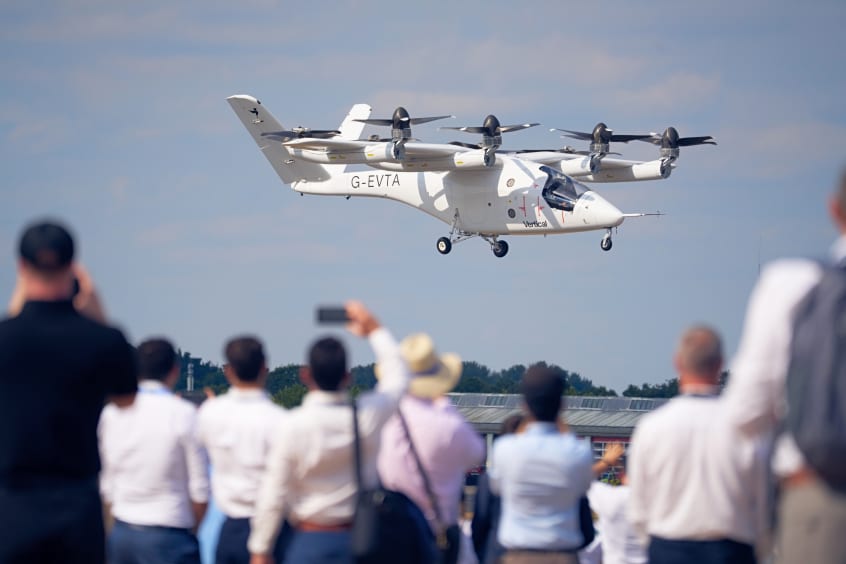
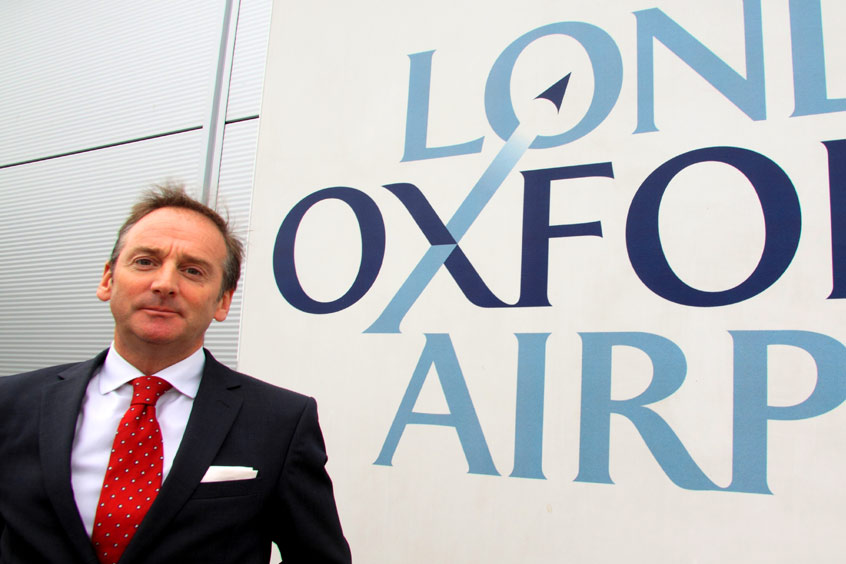
With over 120 designs for eVTOL aircraft already under development, it’s only two or three years now at most before the first models are certified. London Oxford airport and the London Heliport’s James Dillon-Godfray say his best bet is for the first production, certified aircraft to be on the market by 2022. He talks here about what’s important for the successful progression of development.
Battery technology: Electric motor and battery tech-nologies are evolving entirely separately and arguably at a faster pace than the airframe designs, so what’s possible today could be revolutionised again in just a few years: lighter, more powerful motors and batteries with far higher energy densities will emerge that haven’t even been invented yet, and motor magnets will offer extraordinary advances in capability.
The global automotive industry has hundreds of in-house battery design and manufacturing plans, but each manufacturer is fiercely protecting their intellectual property rather than pulling together to find common advances in technology to the benefit of both industries.
A side issue is the ongoing supply and availability of certain precious metals and rare-earth minerals to be utilised in some of the more innovative battery designs. Old mines in Cornwall have been opened up, while President Trump tried to buy Greenland, reputedly stuffed with such minerals. Energy density is as crucial a holy grail to the automotive sector as it is the aerospace industry.
Infrastructure and noise: For now, Europe’s eVTOLs will have to use helicopter airspace, routes and landing sites. There are significant issues with planning constraints, especially in the UK, for permission for central city or urban landing sites.
Safety aside, noise is the big challenge; the footprint, both actual measured and perceived, has to be demonstrably far quieter than the best of the modern helicopters. Otherwise the chances of any eVTOL gaining new planning permissions for downtown urban use will be near impossible, and in Europe there are barely any established heliports in major cities.
London planning policy today prohibits the establishment of any further landing sites, although the wording in the next draft plan refers to heliports and helicopters. Of course, eVTOL are not helicopters.
Other cities around Europe might be more flexible, but the next challenge will be the redesign, control and use of the lower airspace above those urban environments. Nothing insurmountable, but we are very far from an adequate redesign to accommodate this revolution.
As for infrastructure, new licensed landing sites will need power charging facilities, unless using quick-swap-out battery solutions. But there will be massive issues with power supply: a standard twin Tesla vehicle Supercharger alone needs a 135Kw supply – eVTOLs will need more for a fast charge. Nobody is likely to have that kind of power supply ready to go,
it needs to be laid into those sites or up to those rooftops. The standard industrial power socket you might get in a typical aircraft maintenance hangar is not likely to have enough ‘juice’.
Fire and rescue service/capability will be needed at each licensed site. Raised, rooftop landing sites might also need deck integrated fire fighting systems, despite the fact that these specific craft are not carrying fuel. Batteries can catch fire, of course, if incorrectly charged.
Costs, insurance and liability: Multiple systems redundancy may make most eVTOL designs inherently safer than even a twin engined helicopter, but the insurance industry will have a hard time evaluating the risks and calculating associated insurance premiums and they won’t be cheap.
So far, little evidence has emerged about the costs of certification or production. New helicopter certifi-cation costs can reach hundreds of million of pounds and it is unlikely that the eVTOL designs all have that kind of funding behind them to make it into production.
Some business models simply don’t stack up when the end user/hire/charter costs per seat mile may not be that much less than a helicopter. And who knows how market depreciation will go? The faster the technology evolves, the quicker the first models will depreciate in value.
So far as London access is concerned, limited heliport move-ment allowances means current pricing is high. If an airport is almost at capacity, it can charge nearly UK£1,000 for a Sikorsky S76 landing. They won’t turn away helicopters to create new capacity for eVTOLs wanting to only pay around UK£50 per landing.
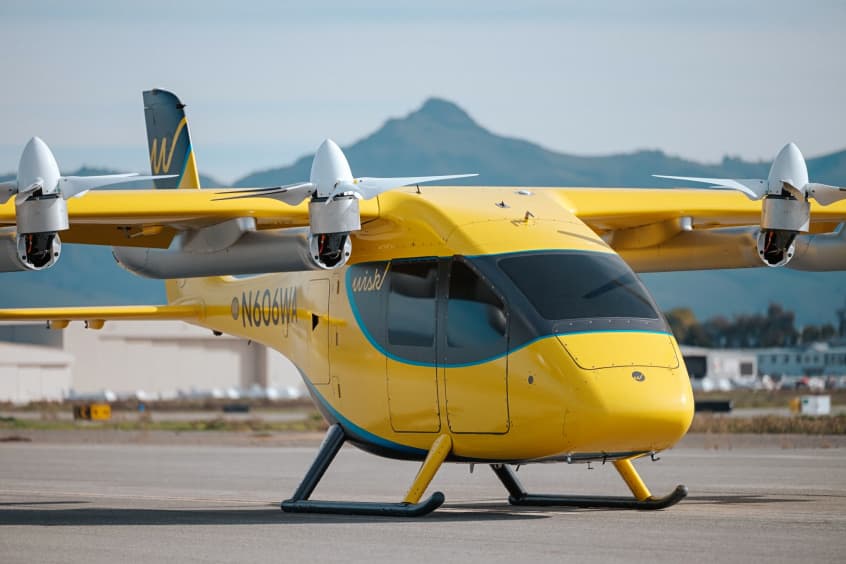
For urban air mobility access to an airport, many have neither slot availability nor airspace design; Heathrow charges around UK£5,000 for helicopter access. And the craft need to be easily movable, wheeled not skidded, to maximise use of space and to get them to the recharge or battery swap-out points. Too many designs look to be skidded right now.
The bottom line is that eVTOL will revolutionise short trip, airborne transportation in the not too distant future, but there are massive barriers to be overcome for mass adoption of the technology. Where cities like Singapore, Dubai and Abu Dhabi might embrace eVTOL use a lot more quickly, the rest of the world could drag its heels for decades hence.