• Civil Aviation Safety Authority
• McDermott Aviation
Charter
• Bell 214
BAN's World Gazetteer
• Australia The bimonthly news publication for aviation professionals.
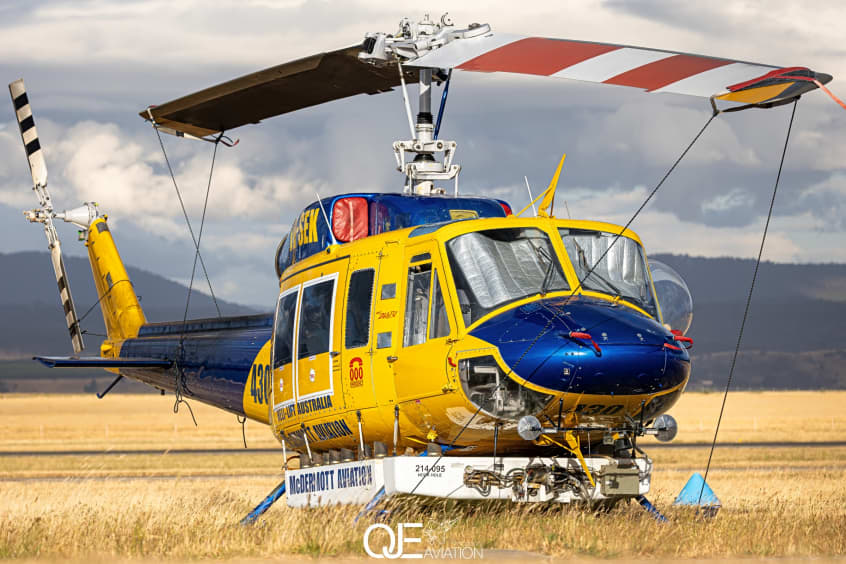
McDermott Aviation, the largest operator of the 214B and holder of the aircraft’s type certificate, has started a project to improve the supply of replacement parts for the worldwide fleet. Long afflicted by parts scarcity, the airframe was last manufactured in 1981, production having ended after approximately 70 were built.
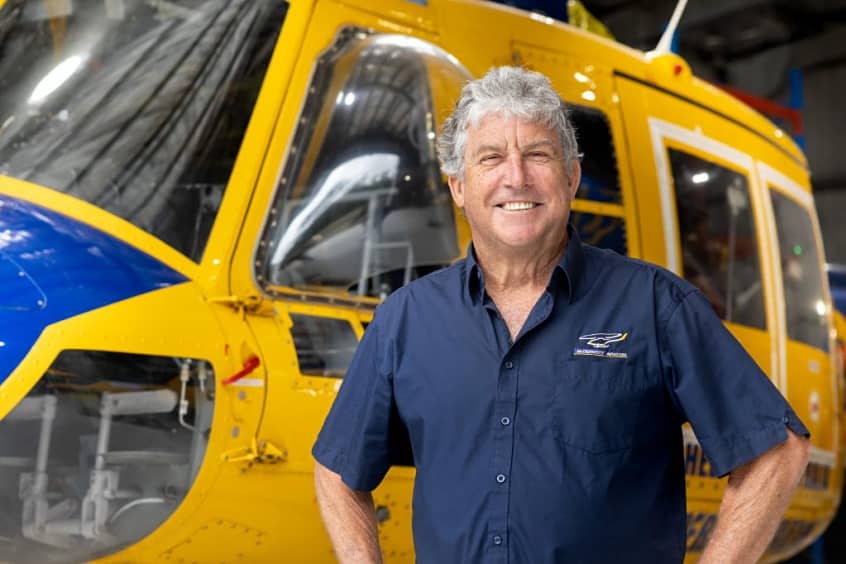
“An aircraft waiting on a component you can’t easily get hold of is an aircraft that isn’t working,” says founder and president John McDermott. “Being able to have approved parts made here in Queensland gives us far more control over that.”
Its March 2025 acquisition of Canadian Bell operator and MRO Transwest Helicopters, now McDermott Canada, does add manufacturing and overhaul of components and engines capability to the parts-supply picture in North America.
The company has, where practical, also manufactured large numbers of parts that can be interchanged between the 214B and the 214ST models. Commonality of parts will save operators ‘huge dollars’ and make manufacturing more viable. As type certificate holder it controlled the engineering data for the aircraft, and this access to original design data in making the reverse-engineering and APMA process achievable was very useful. “That said,” adds McDermott, “a lot of work Plane Support accomplished was commenced before we held the TCDs.”
McDermott has also begun the manufacture on the New Generation McDermott 214ST; indeed, Avincis signed LoIs in September for five following a heavy European wildfire season where it logged over 12,600 firefighting flight hours and dropped more than 225 million litres of water. McDermott currently has plans for 50 new builds to replace and enhance the shortage of suitable medium-heavy utility helicopters for specialist missions requiring standard category helicopters. This programme has a great many challenges, including converting the original 1980s two dimensional drawings to 3D CAD drawings and models, which has significantly slowed progress, but once complete, manufacturing will be very much simplified.
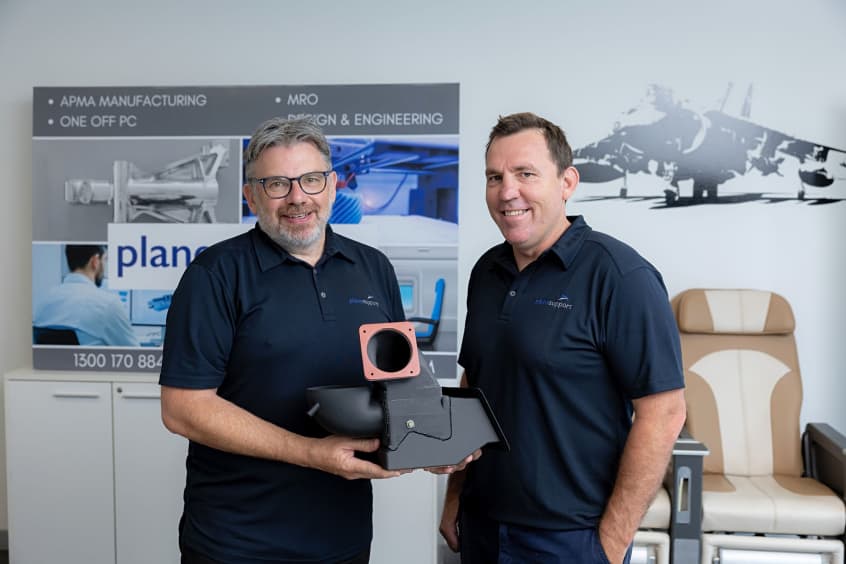
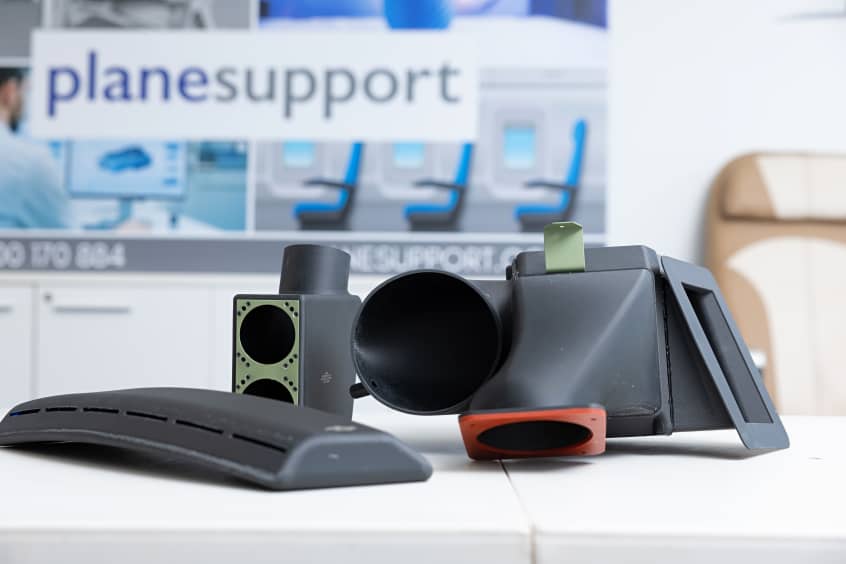
Australian aerospace engineering company Plane Support received approval under CASA’s Australian Parts Manufacturer Approval (CASA.APMA.0013 Revision 4) framework to manufacture the ducting using additive manufacturing, commonly known as 3D printing.
Ducting may be a non-structural, cabin component but the approval process required that the additive manufacturing process demonstrate consistent production of parts that met the applicable airworthiness and operational requirements. The most significant aspect was the level of process validation and repeatability evidence CASA expected. Rather than simply approving a single part, the approval focused heavily on demonstrating that the manufacturing system, materials, quality controls and inspection processes would consistently produce conforming articles.
“We welcomed that approach because it establishes a robust foundation for future additive manufacturing approvals,” says Plane Support director of engineering Jason Hazell. “The project wasn’t simply about proving that one duct met the requirements. It was about demonstrating that the entire production system could repeatedly manufacture airworthy parts with a high degree of consistency, traceability and quality assurance.”
To produce the components, 3D scanning captured original ducting and created accurate digital models. The parts were then reverse engineered and redesigned for additive manufacturing while retaining their original form, fit and function. Plane Support established a dedicated aerospace additive manufacturing laboratory for the project, built around the Markforged FX10 industrial 3D printing platform, and developed the quality systems, production controls and inspection methods needed to meet CASA airworthiness requirements.
Markforged ONYX FR was selected for the approved components, chosen because it offers an excellent combination of mechanical performance, manufacturing repeatability and flame-retardant properties suitable for cabin interior applications. As part of the certification programme, it was necessary to demonstrate compliance with the applicable FAR Part 29 airworthiness requirements, including substantiation of the component’s capability for its intended installation and operating environment.
A key outcome of the project was demonstrating not only that a single part met the regulatory requirements, but that the entire additive manufacturing process, from material control and printer configuration through to inspection and quality assurance, could reliably produce airworthy components. That process-based approach provides a foundation for future approved additive-manufactured aircraft parts.
Hazell confirms that the project required new processes to be developed and validated from the ground up: “Ducting sounds simple until you try to reproduce it. These are complex shapes that have to fit exactly and perform in the aircraft just as the originals do, and we had to prove every step of that to CASA. We didn’t have an established process to follow, so we developed our own procedures, quality systems and inspection methods and worked them through with CASA. That groundwork now gives us a pathway for other components and other aircraft types.”
Plane Support already holds a number of CASA Part 21K APMA approvals for replacement aircraft parts that have traditionally been manufactured using conventional sheet metal fabrication and machining processes.
The real significance of the approval lies in establishing an approved certification and manufacturing pathway for additive manufacturing within the organisation. The door has been opened to a much broader range of applications, and the company already has a further additive manufacturing approval application under assessment with CASA and several additional candidate components identified for future submissions.
McDermott says the project reflected the company’s responsibility as type certificate holder for the long-term support of the 214B: “We own the type certificate for this aircraft, so keeping it supported sits with us. Jason and his team have spent almost two years getting this right, and to now have received CASA approval is tremendously exciting news, not just from our perspective but in terms of the manufacturing capability we are developing here in Australia.”
Hazell adds that the result relied on the experience and expertise of both companies: “McDermott Aviation brought decades of knowledge of operating and maintaining this aircraft, and we brought the engineering, manufacturing and approvals side. It was a joint effort from start to finish, and demonstrates the results that can be achieved when we look for solutions that simply didn’t exist a decade ago.”
With APMA approval for the ducting achieved, McDermott is exploring where else it can successfully use 3D. It has already experimented on specialist metals, but priority is based on need and demand.
Most importantly, the ducting project establishes a regulatory pathway that can be applied to future opportunities. While every component and aircraft type must be assessed on its own merits, Plane Support is already exploring where lessons learned from this programme may help support operators of other aircraft types facing similar obsolescence challenges.
Ultimately, this approval creates a sustainable pathway to keep legacy aircraft flying safely and economically when conventional parts sources are no longer available. This is particularly important for specialist utility, firefighting and aerial work operators who often rely on aircraft types that remain highly capable but are increasingly difficult to support through traditional manufacturing channels.