


 The bimonthly news publication for aviation professionals.

Growing demand for rapid aeromedical and critical care across Queensland has seen LifeFlight crews help their 100,000th patient since the life-saving service began more than 46 years ago.
The historic airlift was reached in the past financial year, when 8,982 people were helped by LifeFlight in the wake of motor vehicle crashes, farming accidents, search and rescues and cardiac incidents, alongside many other missions.
LifeFlight's origins trace back to the Gold Coast Helicopter Rescue Service, established in 1981, which later merged with the Sunshine Coast Helicopter Rescue Service (founded in 1979), and has since expanded to include bases in Brisbane, Bundaberg, Mt Isa, Toowoomba and Roma.
It took 39 years for LifeFlight to help their first 50,000 patients, but only seven more years to reach 100,000, a sign of growing demand for LifeFlight's emergency medical response across Queensland and beyond.
The new figures come as LifeFlight enters traditionally its busiest time of year. August was the most active month for LifeFlight's crews in the past year, when they helped a record 885 people, an average of about 29 people per day.
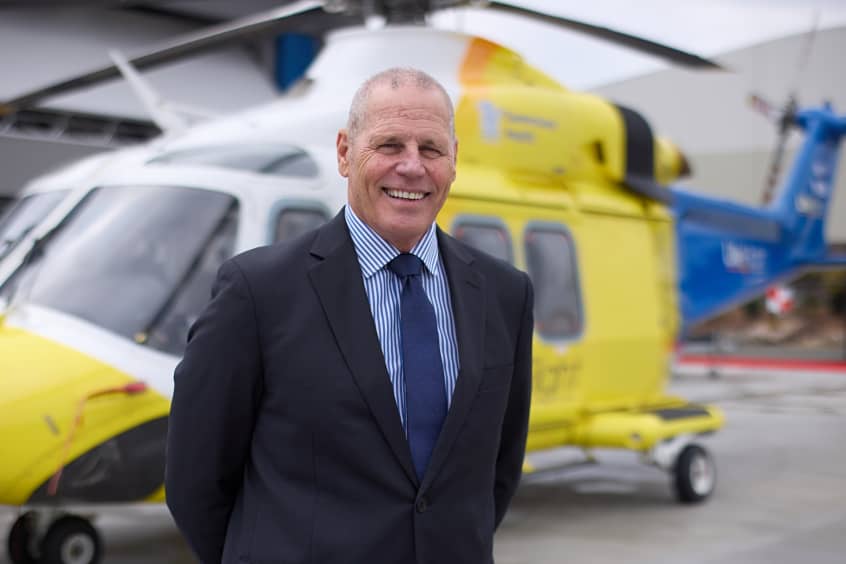
LifeFlight COO Pete Elliott says every number represented a person, a family and a community affected by serious illness, injury or disaster: “LifeFlight started as a community rescue helicopter service when the pioneers recognised there was a need to bridge the gap between regional healthcare and the major city hospitals. It's a mission we continue to hold close to our heart and one we've never lost sight of regardless of how many years have gone by. Behind each patient is a story of strength in the face of adversity and hope of a brighter future.”
Elliott adds that the milestone was achieved thanks to the Queensland Government's significant investment in the aeromedical network, underpinned by the 10-year service agreement signed in 2024, alongside a host of partners, volunteers and supporters who have backed LifeFlight's committed aeromedical teams over five decades.
“The Queensland Government's investment into ensuring equity of care across the state has ensured we could help all of these people through aeromedical retrieval,” he continues. It spurs us on every day to make improvements to how we operate, whether that's in training, operational support or technology. We're also fortunate to have incredible staff across operations, engineering and training, who are all fiercely committed to equity of healthcare.”
Elliott explains that LifeFlight is steadily expanding its aeromedical services across Australia, particularly in response to natural disasters.
In March one of LifeFlight's special mission helicopters, supporting the New South Wales State Emergency Service (NSW SES) from Broken Hill, rescued a truck driver caught in floodwaters in South Australia.
“We have 46 years of aeromedical experience to draw upon when deploying around Australia for disaster response and other deployments,” he shares. “This is invaluable because operational depth and experience, from training through to equipment and aircraft, is key to ensuring positive patient outcomes.”
LifeFlight chief medical officer Dr Allan MacKillop says LifeFlight's aeromedical teams are world-class, having undergone rigorous training routines before deployment: “LifeFlight's helicopters bring a specialist medical team directly to the patient no matter where they are located, whether out at sea or stranded in the outback. That direct intervention can often be the difference between life and death.
“In the morning they could be treating a patient after a serious car crash, while in the afternoon moving on to stabilise a patient midair following a cardiac incident. That variation means crews need to be prepared for any eventuality and trained to the highest standards of care.”
The number of people helped during SAR missions has risen 89 per cent to 70 and animal-related incidents have risen 24 per cent to 206.
The financial year included a raft of major milestones in addition to the 100,000th patient each supported by record funding investment from the Queensland Government.
This included the expansion of 24/7 doctor coverage to the Bundaberg base, the opening of new aeromedical bases in Mount Isa and on the Sunshine Coast, and the delivery of new AW139 helicopters.
LifeFlight now operates 17 AW139 helicopters, bringing the organisation closer to its goal of having one of the largest fleets in Australia by 2027.
LifeFlight also commenced aeromedical operations in Tasmania through LifeFlight's joint venture with Linfox called StarFlight.
The AW139 was first operated in Australia in 2008 and has become the preferred choice for aeromedical, search and rescue, law enforcement and rapid deployment missions.