


 The bimonthly news publication for aviation professionals.
A helicopter has taken off from ONE53, the luxury condominium and hotel development at the heart of Hangzhou's Qianjiang New City, and landed smoothly at the Fuchun Resort approximately 10 minutes later. This marks the successful completion of the inaugural flight by Sino Jet's Zhejiang Low-Altitude Mobility Company, signifying that the Chinese business aviation group's strategic deployment in the low-altitude economy has progressed from qualification preparation to the stage of substantive operations.
Since the low-altitude economy was first written into China's Government Work Report in 2024 and designated as a strategic emerging industry, supportive policies have been rolled out across multiple regions in China, creating historic growth opportunities for the sector. Against this backdrop, what ultimately determines how far an enterprise can go is not merely the policy tailwinds themselves, but whether it has the capability to translate these opportunities into a sustainable commercial model.
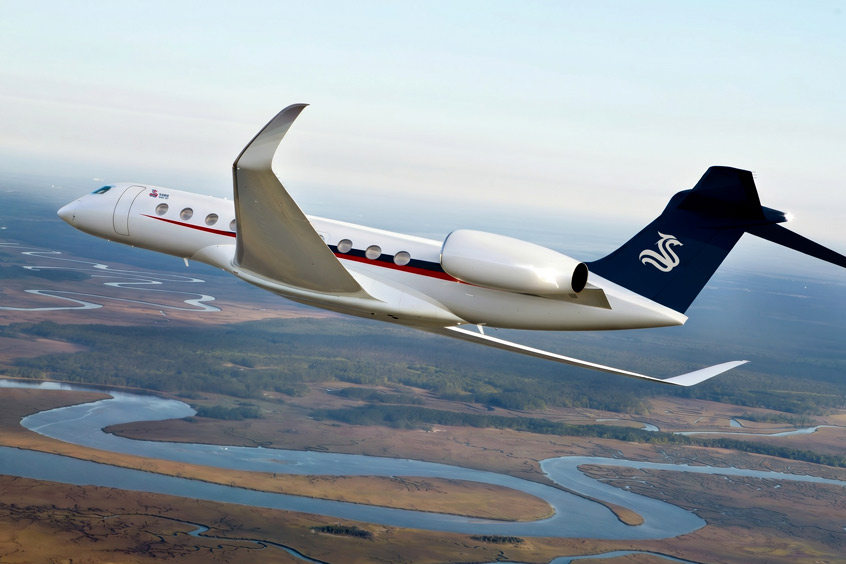
The successful inaugural low-altitude flight by Sino Jet serves as a compelling validation of this proposition. As the largest business aviation company in the Asia Pacific region, Sino Jet holds IS-BAO Stage III, the highest global safety standard certification in business aviation. The company operates a fleet of nearly 50 aircraft, with a service network spanning the globe. The newly launched Zhejiang Low-Altitude Mobility Company represents a strategic extension of Sino Jet's 15 years of expertise in premium aviation operations, systematically applying its operational experience and safety standards to the low-altitude mobility sector.
In January 2026, the company was officially granted a CCAR Part 135 Air Operator Certificate and Operating Licence by the Civil Aviation Administration of China (CAAC), becoming the first general aviation enterprise in East China to complete the joint certification process. These qualifications represent not only the regulatory threshold for conducting commercial passenger operations, but also serve as a strong endorsement of Sino Jet's core capabilities in building competitive barriers within the low-altitude economy sector.
As the low-altitude economy moves from concept to practical implementation, the market's imagination for low-altitude mobility continues to expand. The inaugural ONE53-Fuchun Resort route operated by Sino Jet is specifically designed to address the core demand of high-net-worth individuals for efficient travel in real-world use cases.
The journey, which previously took approximately 90 minutes by road, can now be completed in just 10 minutes by air. This route, connecting the urban core of Hangzhou with a high-end resort destination, truly enables efficient and seamless connectivity between the two locations.
This ‘scenario-driven product definition’ approach stems from Sino Jet's 15 years of experience in business aviation. Time efficiency and service excellence have always been the core priorities of high-end clientele. Extending these principles into the low-altitude mobility sector means establishing a user-value-centred commercialisation pathway from the outset, responding to diverse needs across different scenarios, whether for sightseeing experiences or time-sensitive travel.
The true challenge of the low-altitude economy lies not merely in getting aircraft off the ground, but in ensuring operations that are safe, efficient and sustainable. This is precisely where Sino Jet's core strengths come into play.
Building on 15 years of global operational experience, Sino Jet has established a safety management system aligned with international standards, along with robust asset management capabilities and a digitalised service network. Anchored in this long-term, rigorously validated framework, the company is now providing a replicable management model for the low-altitude mobility sector, from crew qualification standards and operational control procedures to customer service touchpoints and emergency response capabilities across the entire operational chain.
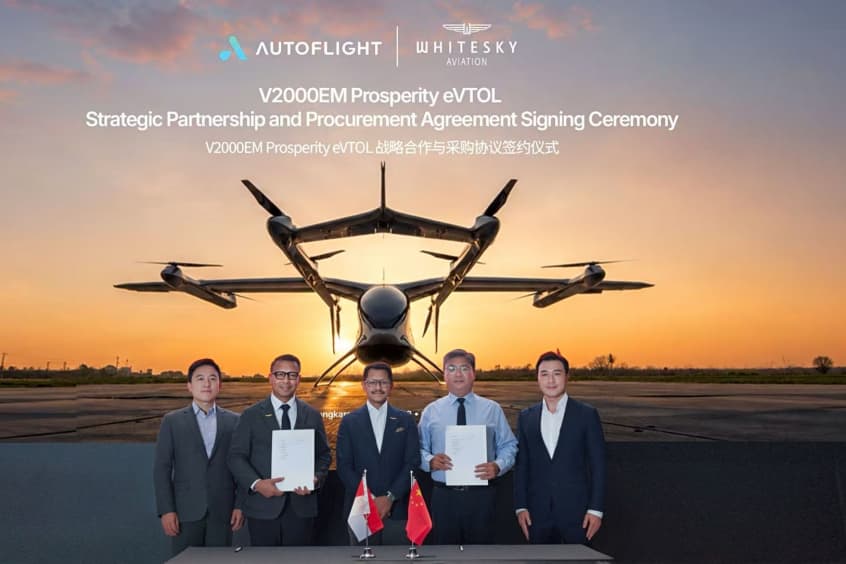
In terms of capacity planning, Sino Jet signed a firm purchase agreement in 2025 with Aerofugia for 50 AE200 electric vertical takeoff and landing (eVTOL) aircraft, representing the largest publicly disclosed firm commercial eVTOL order in China to date. This forward-looking deployment lays a solid capacity foundation for the group's future scaled operations in the urban air mobility sector.
Looking ahead, Sino Jet plans to replicate its proven three-dimensional mobility model across key cities in central and western China, the Guangdong-Hong Kong-Macao Greater Bay Area and the Hainan Free Trade Port. By integrating operational base resources across China, the group aims to develop diversified low-altitude mobility scenarios tailored to different regional needs.
The strategic objective is clear: to bridge the last 100 kilometres of three-dimensional mobility and establish a low-altitude transportation network connecting China's major urban clusters, making low-altitude travel a new norm for premium mobility.
As the low-altitude economy evolves from a policy buzzword into tangible industrial reality, Sino Jet has chosen a path anchored in safety, guided by client demand and driven by sound commercial logic. The success of this inaugural flight stands as a testament to that strategic vision.