 The bimonthly news publication for aviation professionals.
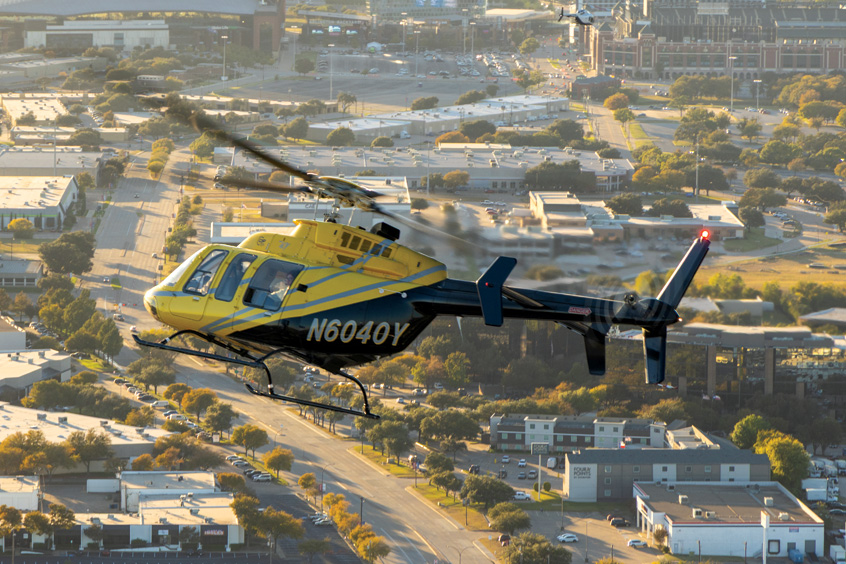
The National Transmission Company South Africa (NTCSA) has signed a purchase agreement for seven Bell 407GXis for utility operations, including high voltage power line maintenance, emergency management and operational support.
“The NTCSA is eagerly anticipating the arrival of the seven new Bell 407GXi helicopters, in line with our agreement with Bell Textron Inc. As we renew and modernise our aviation fleet, their delivery could not be timelier. We are undertaking one of the largest build programmes in our history, constructing more than 14,000 kilometres of high voltage and ultra-high voltage transmission lines across the country to support new generation capacity. At the same time, maintaining the integrity of our existing transmission grid remains critical. A dependable aviation service is central to this work, and the Bell 407GXi helicopters will play a pivotal role in strengthening our operational capability,” says Monde Bala, chief executive officer, NTCSA.
“Bell is proud to work with the NTCSA as it expands its utility operations with Bell aircraft,” adds Tim Evans, managing director, Middle East and Africa. “The Bell 407GXi is an ideal aircraft for utility operators across the region because it's a multi-mission workhorse. The NTCSA is joining hundreds of operators across the world who rely on the platform for critical utility use.”
The NTCSA is a key operator of the country's national electricity transmission grid and is responsible for building a sustainable energy future for South Africa and beyond.
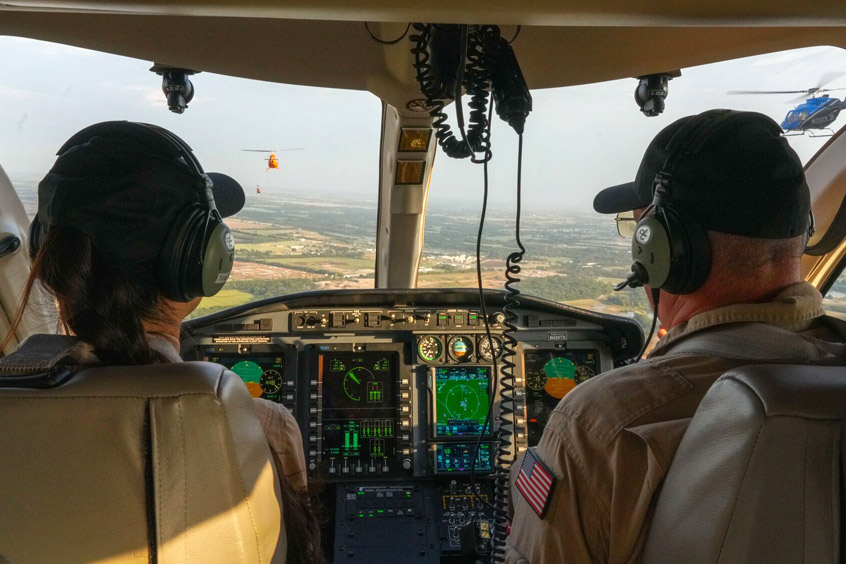
Equipped with single-pilot IFR capability and adjustable cabin space that seats up to five crew members, the Bell 407GXi allows operators to perform in demanding environments while transporting essential equipment. The helicopter's advanced Garmin G1000H NXi flight deck improves situational awareness and reduces pilot workload by presenting critical safety information on its all-glass avionic suite. The platform is favoured during various missions, including utility, SAR and emergency medical services.