 The bimonthly news publication for aviation professionals.
Duncan Aviation's parts and rotables sales and component services department is adjusting its prices for component repairs and exchanges. This change introduces a new tiered repair pricing model designed to provide operators with cost predictability and superior value, directly addressing the risks associated with the unknowns of lower-cost parts flooding the market.
The new structure for component maintenance and repair is closely tied to the expected parts requirements for the repair and offers three distinct levels of service: Essential coverage (Minor maintenance repair) – most common unit failures are covered; Expanded coverage (Major maintenance repair) – more unit failures are covered. Comprehensive coverage for complex issues; and Universal flat rate – everything is covered with a single guaranteed rate. Operators know the cost up front.
“The aircraft component market is changing,” remarks Chris Gress, Duncan Aviation business development manager. “We took a hard look at industry trends, specifically the influx of as-removed parts, and made changes to remain competitive while maintaining our standard of quality.”
Gress warned against the trend of buying part-out components. He notes that while these parts often carry an 8130 tag, most have only undergone visual inspections; consequently, installing a unit with undetected internal faults could lead to electrical damage across other aircraft systems.
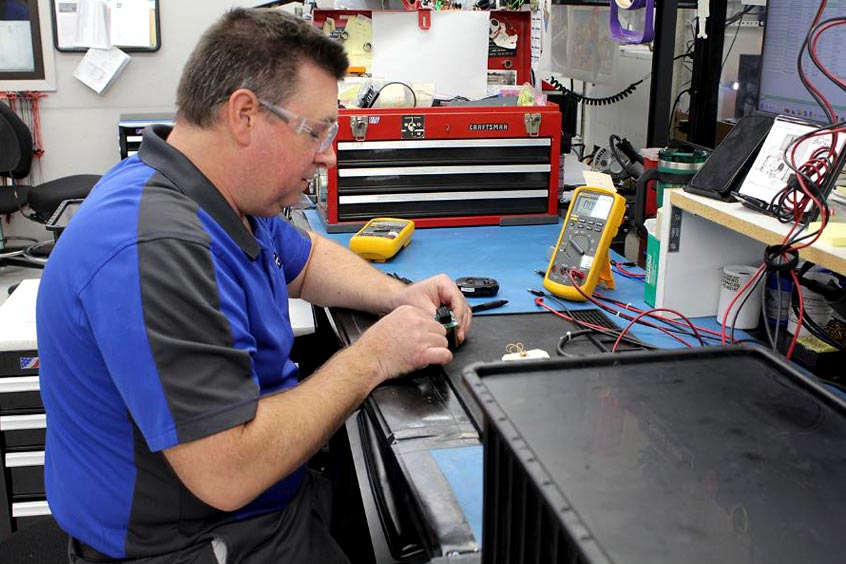
“That is a risky move,” Gress emphasises. “Most critical damage, corrosion, blown fuses or degraded wiring, can only be identified if the unit cover is removed and a skilled technician performs a thorough inspection. An 8130 based solely on a visual check is simply not enough confidence for flight-critical components.”
Duncan Aviation ensures a higher standard of quality and safety for every component sold. “You can be confident in all of the parts we sell at Duncan Aviation,” Gress goes on. “Each unit has been function-tested, the cover has been removed for a complete internal inspection and all necessary repairs have been performed. We also inspect and replace batteries nearing expiration.”
Duncan Aviation is also changing how exchanges operate. With the new structure, customers can choose the path that best fits their risk tolerance: Standard exchange rate – a lower upfront cost with the possibility of additional charges after the core is evaluated; or Flat rate exchange – a slightly higher upfront price that includes all repairs necessary to return the core to service. As long as the core is free of physical damage (such as from water, corrosion or evidence of being dropped), there are no follow-up charges.