 The bimonthly news publication for aviation professionals.
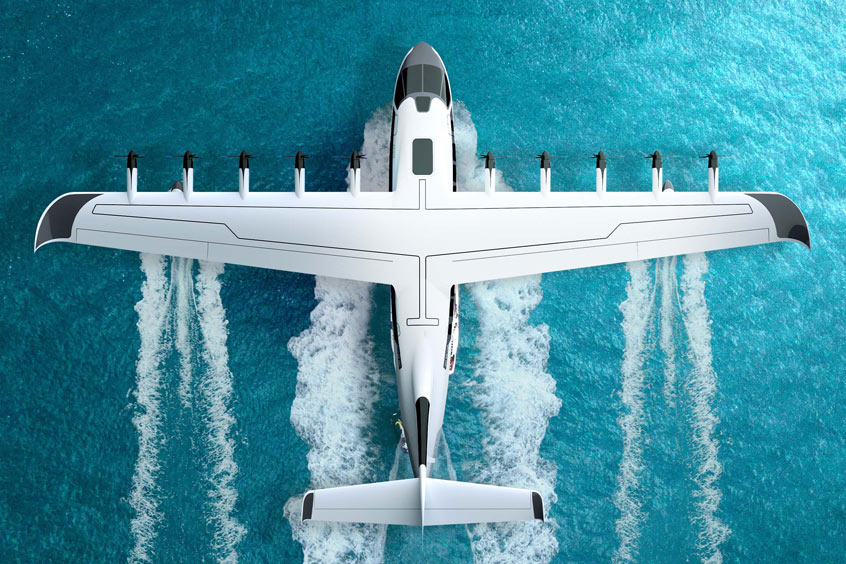
Jekta has started flight tests of a 1:9 scaled prototype of its all-electric PHA-ZE 100 amphibious aircraft. The remotely piloted model uses distributed electric propulsion powered by batteries and is being used to verify aerodynamic and hydrodynamic performance against previous digital simulations.
Testing is being carried out at an undisclosed site and is expected to conclude in September. The flight trials are aimed at assessing aircraft behaviour during water-based landings, taxiing and take-offs.
Jekta engineers will then move on to modified ultralight amphibious aircraft which serve as proof-of-concept test beds. These will validate data gathered from the scaled model and guide future design changes before full-scale prototype development.
CEO and co-founder George Alafinov of Jekta says: “After extensive virtual trials and simulations, our engineers are excited to begin flying the 1:9 prototype. The flight testing marks an important milestone on our journey to bring next-generation electric amphibious aircraft to operators globally.”
He adds: “Flying the scaled models and modified ultralights moves Jekta one step closer to flying a full-scale prototype of the PHA-ZE 100, confirming that we're on track with plans to introduce our new aircraft to the global air transport network in 2030. Testing presents an excellent opportunity for us to showcase progress to date and the future potential of the PHA-ZE 100 to investors and customers.”
The Swiss company has more than USD$1 billion in forward orders for the PHA-ZE 100 and plans to begin full production in Payerne in 2028 or 2029.
Alafinov concludes: “We are drawing on years of amphibious aircraft experience by basing our full-size test beds on ultralight aircraft of our design. That experience means our customers can be confident that the PHA-ZE 100 is built on solid foundations by engineers who understand how to trial the real-world application of amphibious aircraft design successfully.”