


 The bimonthly news publication for aviation professionals.
 Read this story in our May/June 2025 printed issue.
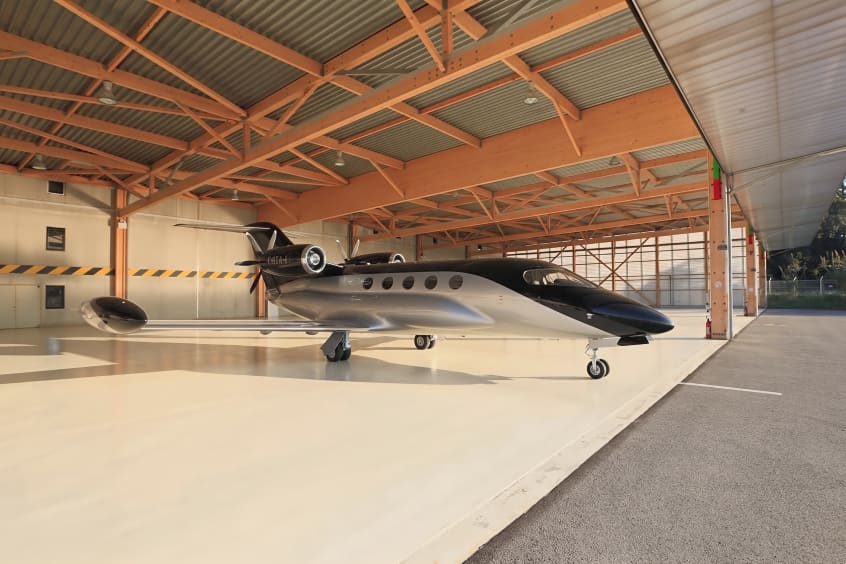
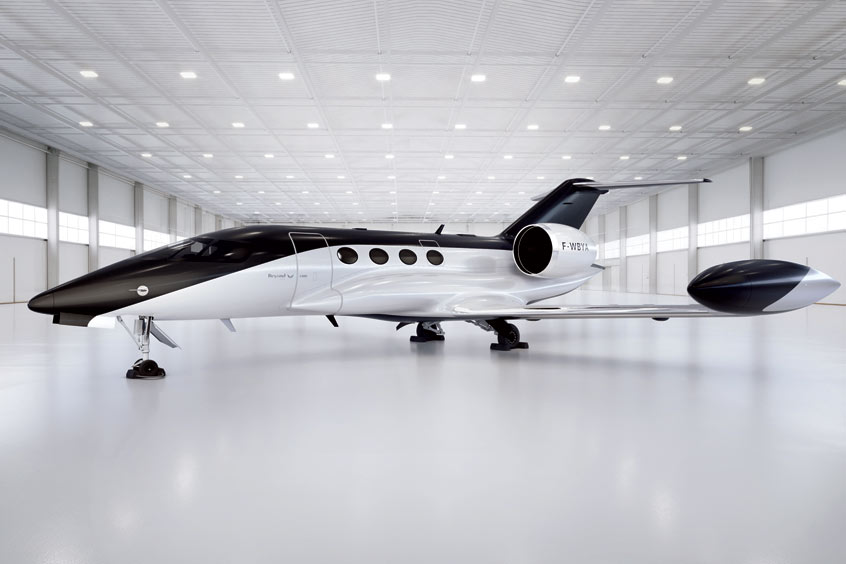
Beyond Aero has refined its BYA-1 hydrogen-electric light jet, incorporating key design improvements to accelerate certification and market entry. The company has strengthened the aircraft’s propulsion, safety and operational efficiency, while securing validation from an expert advisory panel.
The BYA-1 features a battery-free hydrogen fuel cell system with two modular electric engines, increasing failure resilience and scalability. The fuel cell stack capacity has been raised to 2.4MW. Optimised tank placement above the wing box enhances crashworthiness, eliminating high-pressure fuel lines within the pressurised cabin.
A new thermal management system improves propulsion performance, while a FADEC-controlled engine ensures efficiency across flight phases. The all-electric powertrain significantly reduces maintenance complexity, cutting operational costs by up to 55%. Hydrogen fuel is also expected to offer substantial savings compared to SAFs and Jet A-1.
An advisory committee, including former executives from EADS Socata, Air France and HondaJet, has confirmed the aircraft’s technical feasibility and readiness for certification. The BYA-1’s range of 800 nm meets over 80% of European flight routes and its design supports operations at constrained airports such as London City.
Beyond Aero is working with EASA to define a certification framework for hydrogen-powered aircraft. Since submitting its Design Organisation Approval (DOA) application in April 2024, it has advanced discussions to establish regulatory pathways for hydrogen-electric propulsion.