


 The bimonthly news publication for aviation professionals.
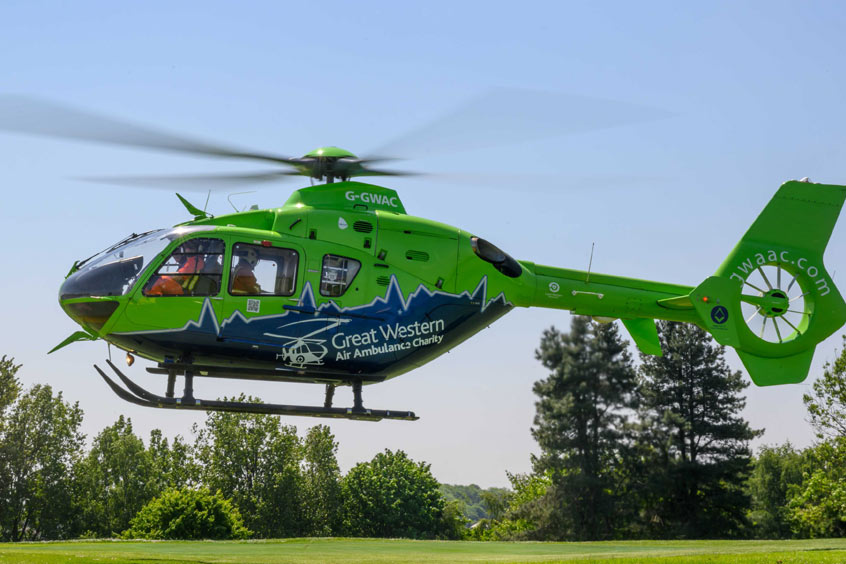
UK aeromedical organisation Great Western Air Ambulance Charity (GWAAC) was called to a record number of incidents in 2024. Its specialist crew responded to 2,272 people in urgent need of critical care, representing an increase of around 15 per cent compared to 2023.
Since it was founded in 2007, incident numbers have been steadily increasing and the demand for the service is now higher than ever. With an Airbus EC135 helicopter and three critical care cars, GWAAC's specially trained crew respond to people in urgent need with the skills and kit usually found in a hospital emergency department. By getting to the patient fast and providing treatment before they get to hospital, its work can be lifesaving.
Ops officer Tim Ross Smith says: “We're now seeing six patients a day on average within our operating hours. Demand generally across the NHS is up, and we're getting more requests for assistance from our local land ambulance crews on top of the traditional air ambulance call-outs for incidents like road traffic collisions and cardiac arrests. This could be due to the outreach work our crew are doing, educating land paramedics, but also because, over time, our ambulance service colleagues have an increased recognition that our team can support with more nuanced decision-making in complex situations.”
GWAAC was called to 501 people in cardiac arrest (22 per cent of all missions), meaning it is still the biggest single reason that GWAAC's service might be needed. That is one reason why it has focused its efforts on its Great Western Hearts programme, which helps communities prepare to help someone in cardiac arrest.
Its crew was also tasked to more babies, children and teenagers in urgent need of critical care than ever before. Despatches to young people have risen year on year for the last three years, and in 2024 they reached a new level when the crew was called to help 379 people within that age group (17 per cent of GWAAC's total call-outs).
The next most common type of incident that the crew responded to was road traffic collisions, with 338 people needing GWAAC's help at the roadside.
Overall, serious medical-related incidents accounted for 55 per cent of its total missions in 2024, while trauma-related injuries accounted for 45 per cent of missions.
Bristol and Gloucestershire were the two regions it was called to most in 2025, with 656 and 621 people respectively needing the skills of GWAAC's specialist team (29 per cent and 27 per cent of GWAAC's total call-outs). The next busiest was South Gloucestershire with 345, then North Somerset with 277, Wiltshire with 124 and Bath and North East Somerset with 123. The crew responded to 126 incidents out of GWAAC's region including Wales and Somerset.
CEO Anna Perry comments: “I'm very proud that our specialist crew has been able to help a record number of patients in urgent need of critical care in 2024. Everyone who supports GWAAC has worked really hard to raise the funds needed so we could be there to help keep families together. But we do have a tough challenge ahead of us, especially with operating costs rising by around 10 per cent over the last year and additional costs coming our way such as increased employer National Insurance contributions. However, we're hopeful that our local community will recognise the support we need from them due to this increased demand and will help us be there for those who need us in the future. There are so many ways you can support us, from donations to volunteering to buying something from our shops. Thank you to those who have supported us in the past and to those who will support us in the future, you are helping save lives.”