


• Airbus Helicopters
Aircraft
• Babcock MCS Onshore
Charter
• Scotland's Charity Air Ambulance
BAN's World Gazetteer
• France The bimonthly news publication for aviation professionals.
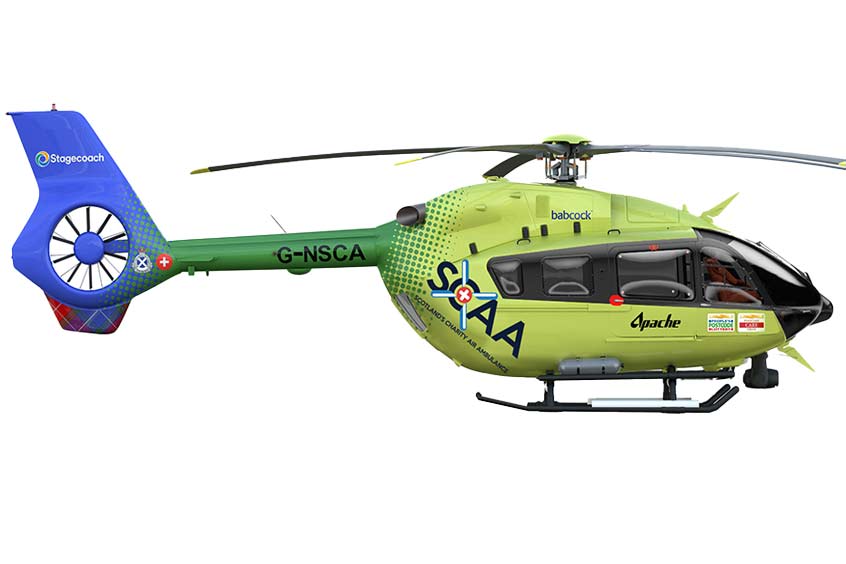
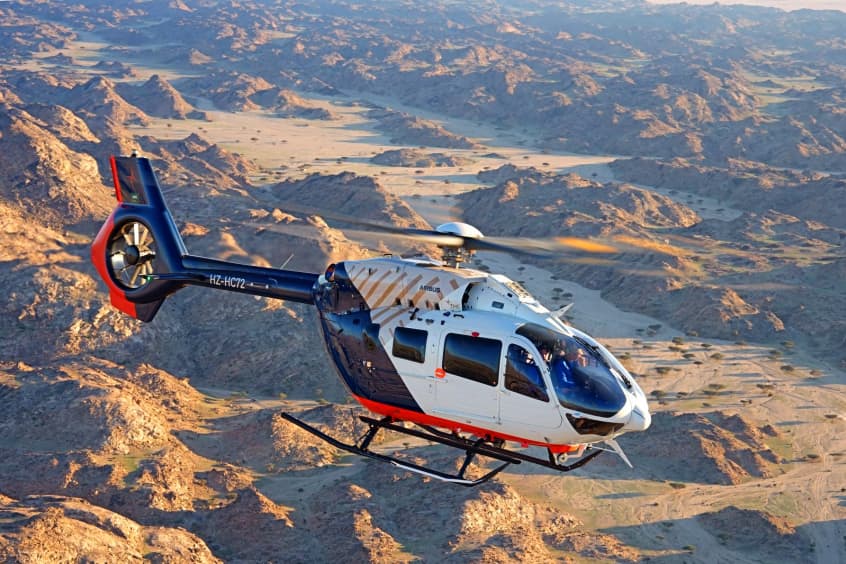
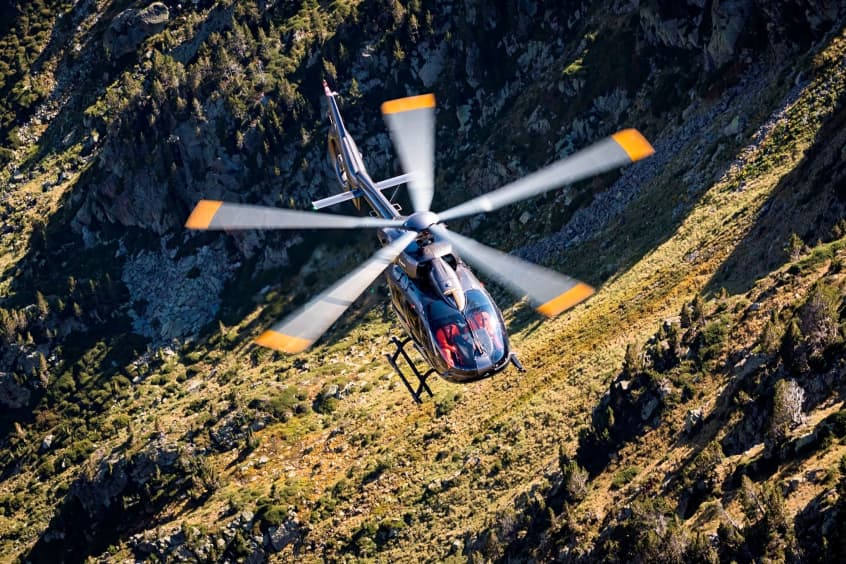
UK aeromedical organisation Scotland's Charity Air Ambulance (SCAA) is launching the UK's most advanced helicopter air ambulance of its type. The new Airbus H145 D3 is currently in production and will receive its customised aeromedical fit-out, along with some modification, before being ready for operational service with SCAA later this year. The twin-engine, five-rotor aircraft will replace an existing EC135 at the charity's Aberdeen base.
SCAA chief executive David Craig says the new aircraft announcement forms part of the most significant operational investment by the charity in its 12-year history. “The H145 D3 is an aircraft that will help fly SCAA into the next decade,” he remarks. “No one in Scotland should die because help can't get there in time, and this new helicopter will offer greater range, endurance and capacity, which significantly enhances our life-saving service and our ability to meet the ever-growing demand on pre-hospital emergency response teams.
“When our new H145 D3 takes to the skies, it will be the most capable air ambulance of its kind in the UK, operating in the most challenging environment. It will be a lifesaver.”
SCAA currently operates two helicopter emergency response air ambulances, one based at Perth since 2013 and another at Aberdeen since 2020.
“The decision to strategically focus on introducing a new aircraft at our Aberdeen base was driven by reviewing our operational data across all of Scotland over the last five years,” continues Craig. “Working closely with the Scottish Ambulance Service and its doctor-led ScotSTAR North EMRS (Emergency Medical Retrieval Service), this enhanced and more capable aircraft will ensure that, when critical care is required anywhere in Scotland, we can provide a team of specialist doctors and two SCAA paramedics to the scene of an emergency. This will deliver a robust specialist and extensive multi-disciplinary team to any incident.”
A new 10-year contract with aviation partner Babcock will also see crews at both Aberdeen and Perth equipped with night vision imaging system (NVIS) technology to maximise operational capability.
Mr Craig adds that NVIS has recently been introduced at SCAA's Perth base, enabling the charity to respond more safely to emergencies, increasing its ability to reach more patients during Scotland's winters.
“SCAA is now able to deploy to non-surveyed locations anywhere in Scotland during darkness hours this winter using the very latest technology, to the benefit of both patients and crew,” he says. “This will ensure each duty shift is unimpeded (by aviation restrictions) when the sun sets or skies darken, and SCAA will be available to respond whenever and wherever required by those most seriously ill or injured.”
Chloe Barker, managing director of Babcock’s UK aviation business, says: “SCAA delivers critical lifesaving care to communities across Scotland, saving thousands of lives every year. We’re proud to have been by the charity’s side for 10 years, delivering essential helicopter emergency services and are thrilled to continue our collaboration with the charity as it looks to further enhance its services.”
The operational enhancements will add an extra GBP two million a year to SCAA's current GBP eight million costs and today's announcement sparks a major nationwide 'Operation Skyward' fundraising campaign to support the upgrades and fly SCAA into the future.
“Other than the initial launch of our service, this new contract represents the single most significant operational investment for the charity,” explains Craig. “Funded entirely by public donation, without any Government contribution, SCAA has responded to more than 6,500 call outs since launching in 2013, with last year proving our busiest ever. In that time, the public has donated more than GBP 65 million; hugely generous support that has allowed us to plan and evolve and grow to meet demand with a sustainable enhanced service.
“In order to meet the constantly evolving and increasingly high standards of both air ambulance crew and equipment, donations will continue to be invested in delivering our charitable purpose and our frontline operation is a priority as that ultimately saves lives. SCAA last upgraded its aircraft in 2015 after two years in service and launched our Aberdeen operation in 2020,” adds Craig. “The time is right to advance yet again to ensure SCAA remains at the forefront of patient care and service delivery.
“Our patients will benefit hugely from the upgrade and our crews will appreciate the enhancements that a larger airframe with greater capacity and endurance brings to their life-saving work.
“But we can't do it alone and our appeal goes out to individuals, groups, organisations, businesses, trusts and foundations who share our ambition.”