This website uses cookies
More information
The monthly news publication for aviation professionals.
ACE 2026 - September 8th

Related information from the Handbook...
The bimonthly news publication for aviation professionals.

Request your printed copy

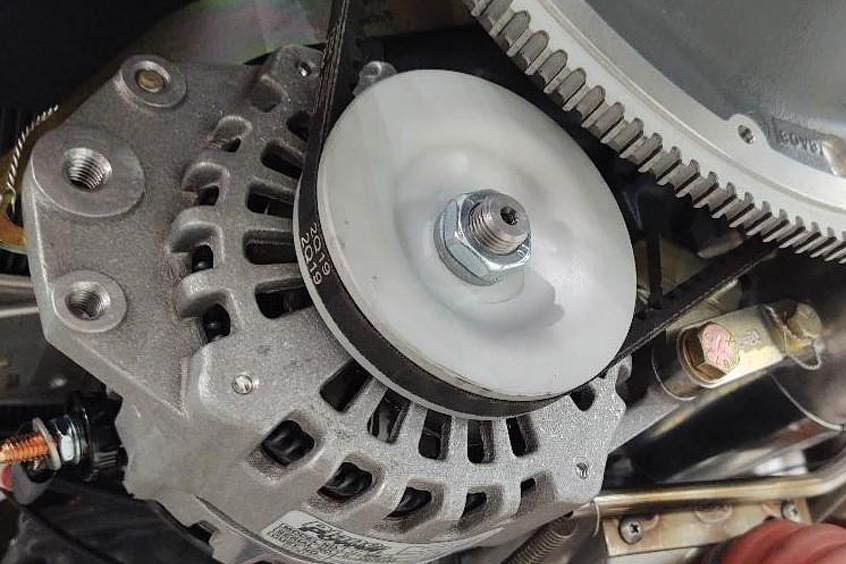
Hartzell Plane-Power alternator upgrades given EASA go-ahead
Aircraft covered by the EASA STC include a number of Aviat, Beechcraft, Cessna, Cirrus, Diamond, Extra, Mooney, Piper and Socata aeroplanes as well as Robinson helicopters, among others.
The US FAA has already said yes to Hartzell.

The European Union Aviation Safety Agency (EASA) has granted Hartzell Engine Tech STC approval for its Plane-Power ALT-FLX alternator upgrades in a wide range of twin and single piston-powered aeroplanes and helicopters. The upgrades were previously approved in the US by the FAA.

“The Plane-Power ALT-FLX alternators are now STC-approved by EASA for a variety of aircraft and provide up to 100 amps in a 12-volt electrical system and up to 150 amps in a 24-volt system,” says Hartzell Engine Tech president Keith Bagley. “Weights are comparable to replaced alternators, and kits provided contain all the brackets and hardware needed to complete the upgrade,” he adds.

Aircraft covered by EASA's STC include a number of Aviat, Beechcraft, Cessna, Cirrus, Diamond, Extra, Mooney, Piper and Socata aeroplanes as well as Robinson helicopters, among others.

Other News
 
Ascend gains from Starlink speedy connection
April 23, 2026
Customers can schedule the upgrade for installation on the Citation Ascend and 560XL series aircraft at North American Textron Aviation service centres and select international service centres.
Blackhawk submits XP66D upgrade data for EASA approval
April 22, 2026
Submission aims to extend access to higher-power TBM 700 upgrade, supporting better climb performance and faster cruise speeds for European operators.
Pilatus secures certification for PC-12 PRO pilot training simulators
April 22, 2026
Pilots can complete transition training from earlier PC-12 variants entirely in the simulator, reducing time, cost and aircraft dependency.