 The bimonthly news publication for aviation professionals.
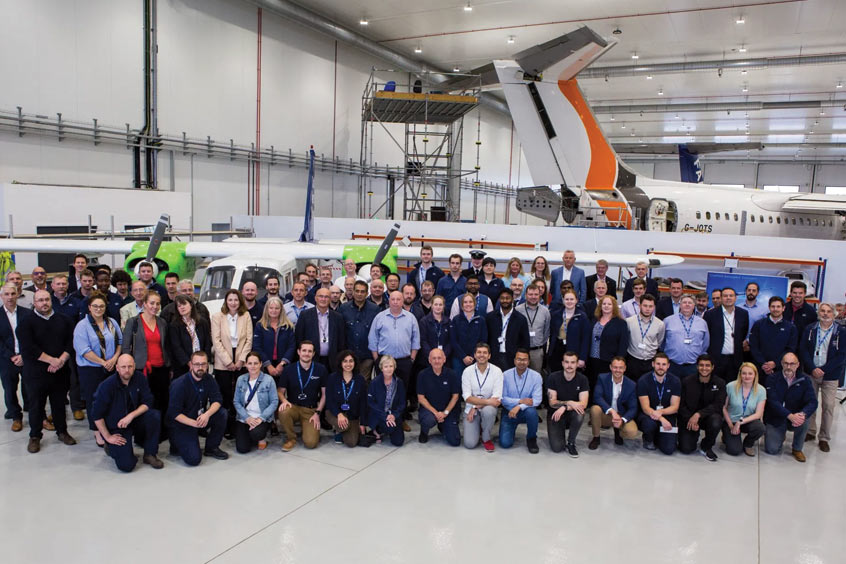
Cranfield Aerospace Solutions (CAeS) has unveiled its newly refurbished hangar and R&D facility at the heart of Cranfield University campus in the UK.
The facility, leased by CAeS, has undergone major refurbishments as part of Cranfield University’s decarbonisation plan, with significant investment into reducing the building’s carbon footprint.
The modernised and more environmentally-friendly hangar will be used to modify CAeS’ Britten-Norman Islander. CAeS is developing a hydrogen-electric propulsion system for the Islander, with the aim of delivering the world’s first, zero-emissions, regulatory certified passenger aircraft solution by 2026. The company’s ultimate goal is to become an airframer of low and zero carbon sub-regional and regional aircraft and to play a critical role in the decarbonisation of the aviation industry.
The hangar will also be used by CAeS to develop the procedures and processes required for the maintenance of future hydrogen-powered aircraft, while still maintaining its conventional MRO function, specialising in wide-bodied and light aircraft such as the Diamond DA 40/42 series and Piper single and twin piston engine types.
CEO Paul Hutton says: “This modernised hangar becomes a classroom of possibilities, where we will not only deliver the intricacies of zero emissions propulsion but also pioneer maintenance procedures for hydrogen-powered aircraft. Our engineers and technologists, fuelled by curiosity and a passion for sustainability, stand ready to lead the charge at the most exciting stage of our growth yet.”
Aviation Minister Baroness Vere adds: “Cranfield is a historic site for UK aviation: from training RAF pilots and the formation of the College of Aeronautics, to now being at the forefront of emerging technologies like hydrogen fuel-cell aircraft. It is apt therefore that these facilities open a year on from publication of the Jet Zero Strategy. Decarbonising aviation will be challenging, but the experience and ingenuity of UK engineers will see us through. And I am proud to see UK companies leading the way.”
This refurbished hangar constitutes the beginning of a bright trajectory for CAeS as it closes in on a proposed merger with Britten-Norman and looks to build on the conversion of the BN Islander with a series of future aircraft optimised around zero-emissions technology.