

 The bimonthly news publication for aviation professionals.
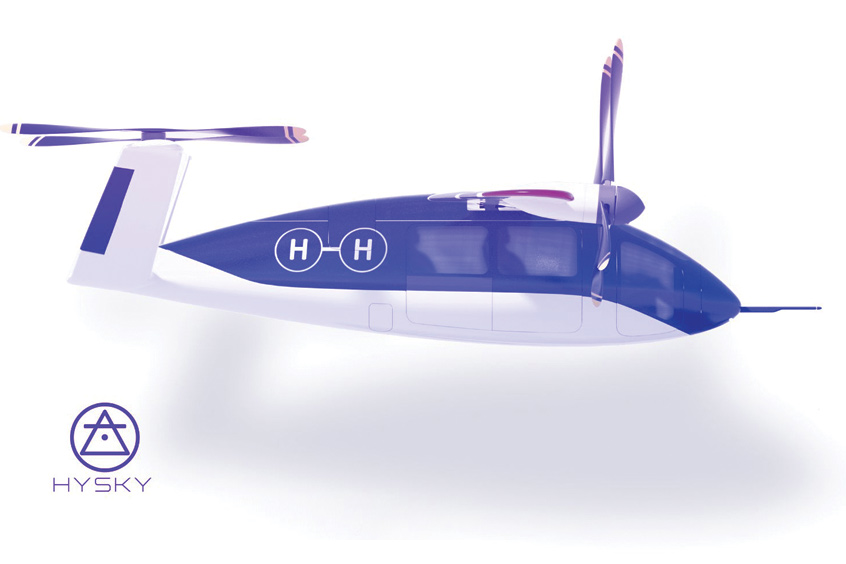
The Vertical Flight Society has spun off of its highly successful H2eVTOL Council into its own independent non-profit organisation, the HYSKY Society. The VFS Hydrogen-Electric Vertical Take off and Landing (H2eVTOL) Council was formed in 2020 to promote the development and advancement of hydrogen fuel cell technology in electric aircraft and has since has grown to over 400 participants and become a leading voice in the hydrogen-electric aviation community.
The HYSKY Society will continue to focus on the advancement of hydrogen fuel cell technology in the eVTOL sector but will now have the autonomy and resources to expand its reach and impact. The H2eVTOL Council's monthly meetings, which have been held on the third Monday of each month, will now be known as HYSKY Monthly and will feature distinguished speakers from the hydrogen, aviation and eVTOL aircraft sectors.
The HYSKY Society is founded and led by Danielle McLean, a leading expert in the field of hydrogen fuel cell technology and eVTOL aircraft. McLean brings over a decade of experience in the industry and a passion for advancing clean and sustainable transportation solutions.
“We are thrilled to see the H2eVTOL Council, started in May 2020 by VFS member Danielle McLean, now grow and evolve into its own independent organisation,” says VFS executive director Mike Hirschberg. “The HYSKY Society, under Danielle's leadership, will continue to be a vital partner of the Vertical Flight Society, and we look forward to working together to advance the eVTOL industry.”
The HYSKY Society's mission is to promote the development and advancement of hydrogen fuel cell technology in eVTOL aircraft and to advocate for the use of hydrogen as a clean, sustainable and safe energy source for the aviation industry. The organisation will also work to educate and inform the public about the benefits of hydrogen-powered eVTOL aircraft and the role they will play in shaping the future of transportation.
In addition, VFS is hosting its highly anticipated 10th Biennial Autonomous VTOL Technical Meeting and 10th Annual Electric VTOL Symposium. The event features distinguished speakers and panel discussions from the industry, including McLean, who will be hosting the event's annual Hydrogen Electric Aircraft Panel with representatives from the US Department of Energy's National Renewable Energy Laboratory (NREL), Piasecki Aircraft and ZeroAvia. Although the in person event is sold out, virtual tickets are still available for those who would like to participate remotely.
The HYSKY Society, a 501(c)(3) charitable educational non-profit, is now officially open for memberships and is accepting donations.