


 The bimonthly news publication for aviation professionals.
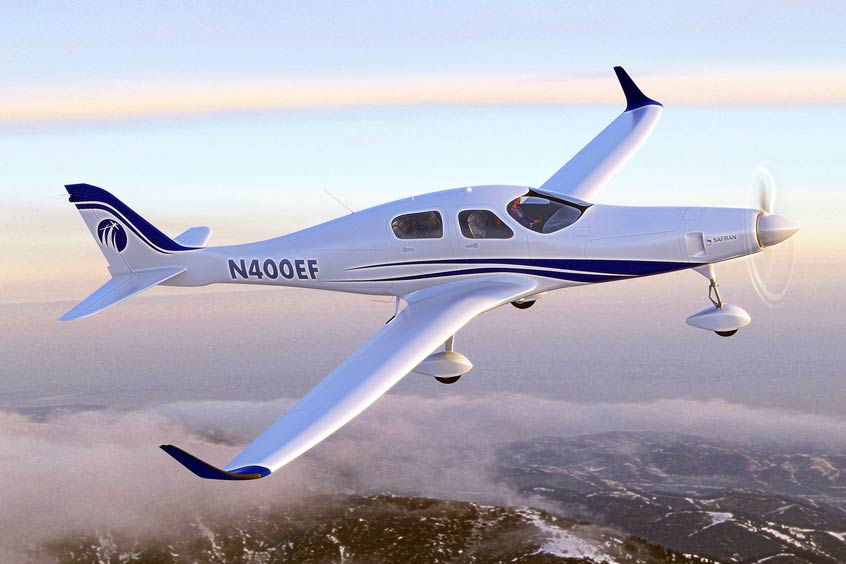

Reykjavik Flight Academy, an Icelandic pilot school, has agreed to purchase three all-electric Bye Aerospace eFlyer training aircraft. The school will be breaking new ground in Iceland, where for the first time students will be offered instruction on aircraft that run on electricity only.
The aircraft are being developed in the United States by Bye and are of two types: two eFlyer 2, which is a two-seater primary training aircraft; and one eFlyer 4, a four-seater advanced training aircraft. In addition, an agreement is under negotiation for the option to purchase two additional eFlyer aircraft.
Until now, the limited flight endurance of electric aircraft has been the main bottleneck in their uptake in the general aviation market. However, with recent advancements, Bye Aerospace has taken the lead in this market by ensuring three hours of flight endurance including reserves. This exceeds the main competitors in the market, most of which are limited to only a single hour at the moment. The success of Bye has received a great deal of attention and hundreds of orders for its aircraft. Depending upon the aircraft and certification completion, estimated delivery will be after two to three years.
The use of electric aircraft for training is a great advantage. Electric motors can deliver a relatively high power output and the eFlyer 2 will deliver 150HP/110kW which is about 40-50 per cent more than an equivalent class of combustion engine with no density altitude losses. The biggest difference is replacing fossil fuels with electricity, which results in significant savings in operating costs, estimated to be only about one fifth of the operation cost of comparable conventional aircraft that use aviation gasoline fuels. The environmental impact is obviously very positive, as the carbon footprint of the new training aircraft will be negligible and the noise impact will be almost undetectable.
The eFlyer machines are equipped with tGarmin navigation equipment, and parachutes attached to their fuselage. The covers can be released with one handle and they glide safely to the ground. This comes as standard equipment on these training aircraft and greatly increases student safety.
Reykjavik Flight Academy principal Hjörvar Hans Bragason says: “Investment in electric aircraft for training is a major step, both in the history of aviation in Iceland in general and as part of environmental initiatives that are currently taking place. With the new aircraft, Reykjavik Flight Academy will be a leader in its field and will proudly be able to offer first-class equipment for training and instruction. Increased safety, lower costs and more environmentally friendly options will be a guiding principle in our service to the pilots of the future.”
Bye CEO George E. Bye adds: “We are grateful to our partners at Reykjavik Flight Academy for their leadership in Iceland, and for recognising the many important benefits of electric aviation. We look forward to many eFlyer deliveries of Reykjavik Flight Academy in the coming years.”