


• LifeFlight Engineering and Technical Services
Maintenance
• LifeFlight Rescue Air Ambulance
Charter
• External Load/Cargo Equipment
BAN's World Gazetteer
• Australia The bimonthly news publication for aviation professionals.
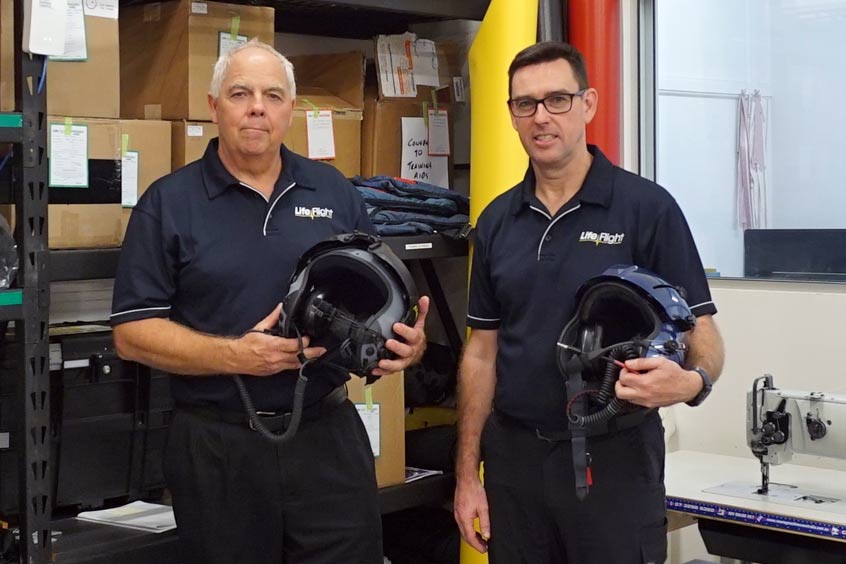
LifeFlight Australia's fleet of rescue helicopters are known for saving lives, and the process begins with engineering. The Brisbane, Queensland-based operation has added another feather to its cap: LifeFlight Engineering has been granted approval by Australia's Civil Aviation Safety Authority (CASA) as the only AMO that can carry out and certify work on a large range of helicopter and rescue crew equipment.
Engineering operations manager Michael Dopking says it's another significant milestone in the growth and capability of LifeFlight Engineering: “LifeFlight is the only AMO in Australia to have been granted such a wide-ranging approval.” Dopking refers to the specialised equipment as 'hero gear’: “The hero gear includes all the equipment that pilots, aircrew officers and medical staff wear and use while on a mission.” The list includes helmets, life vests, rescue baskets and strops, harnesses for crew, passengers and children, rescue litters, emergency egress breathing systems (EBS) as well as winching harnesses and restraint straps. Any staff member who flies on a rescue aircraft, be it RACQ LifeFlight Rescue, LifeFlight Surat Gas Aeromedical Service or Land Rover LifeFlight, will use hero gear.
The new CASA certification led LifeFlight to employ specialist aircraft safety equipment engineer Simon Jamieson. Until now, a lot of the hero gear had to be sent to various external workshops around Australia to undergo repairs. Jamieson has a dedicated workshop at LifeFlight's heavy maintenance facility at Archerfield airport in Brisbane and will also be roving to bases across Queensland to conduct repairs and provide support to flight crews, as well as education on how to best look after their gear.
There are nearly six hundred pieces of hero gear equipment, in LifeFlight's inventory. “That includes more than 200 flight helmets, which are valued at around $3,500 each,” Jamieson notes.
LifeFlight retrieval medicine director of clinical services and governance Dr Mark Edwards says the sharing of expert advice has already proven valuable to the critical care doctors employed by the organisation “Jamo [Simon Jamieson] is known as the helmet guru, and our staff especially appreciate the expertise he shares about the care and use of flight helmets,” Edwards comments.
While obtaining CASA approval for the correct maintenance of all the gear was not necessary, Dopking says it is just another example of LifeFlight Engineering striving to be the best. “Establishing the process, procedures and applying the same standards CASA expects for the maintenance of the aircraft to all the hero gear, means all LifeFlight equipment is maintained to the highest standards,” he concludes.