


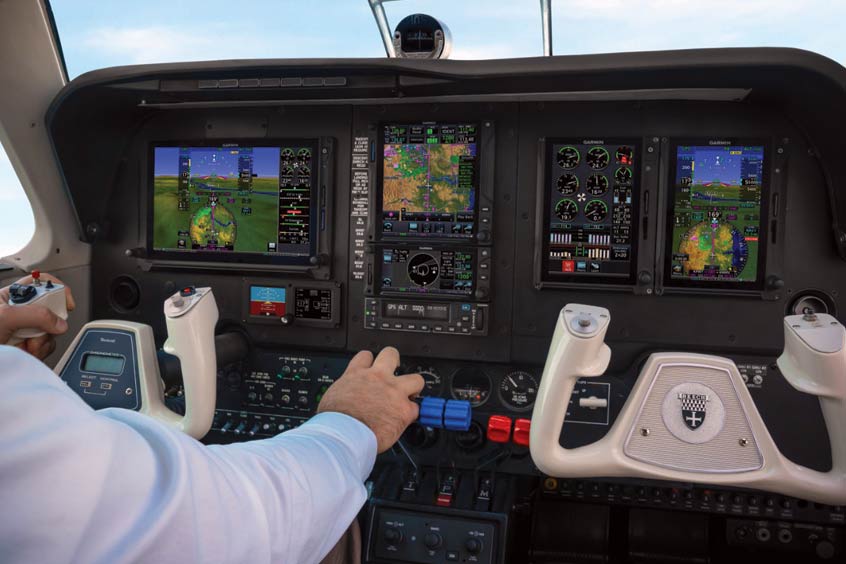
Garmin International has announced upgrades to the GFC 600 digital autopilot including the addition of Smart Rudder Bias for select piston twin-engine aircraft. Smart Rudder Bias provides additional assistance against the hazardous effects of a one-engine inoperative event when appropriately equipped.
The addition of Smart Rudder Bias to the Garmin Autonomi family of automated flight technologies provides pilots with assistance in maintaining control of the aircraft while determining the next course of action, simultaneously reducing workload in a high-stress and time-critical flight environment. Additionally, the GFC 600 autopilot recently received STC approval on the Piper PA-31, further growing the list of GFC 600 compatible aircraft.
“We are proud to be able to offer a new safety tool for twin-engine piston aircraft with the introduction of Smart Rudder Bias, making the GFC 600 digital autopilot the most advanced solution for this class of aircraft on the market today,” says Carl Wolf, Garmin VP of aviation sales and marketing. “With the introduction of Smart Rudder Bias technology, working together with the other Garmin systems on board, pilots can react to an engine failure by quickly and accurately detecting the issue while simultaneously receiving automatic assistance applying the correct flight control input, providing an additional safety tool not seen before in twin-engine piston aircraft.”
Twin-engine aircraft inherently have aircraft controllability concerns in the event of an engine failure and pilots can expect a significant yaw toward the inoperative engine, resulting in an unstable aircraft state. In addition, due to a sideslip condition and a windmilling propeller, there can be decreased lift on the wing associated with the inoperative engine and simultaneously an increase in drag, all factors contributing to degraded performance and a critical loss in airspeed. Through close integration with multiple onboard Garmin systems, Smart Rudder Bias helps address these major concerns and immediately assists with controllability issues. This gives the pilot time to take the correct action required in order to better maintain positive aircraft control and help keep the aircraft in a safe flight condition.
Garmin's Electronic Stability and Protection (ESP) functions independently of the autopilot, working in the background to help pilots avoid inadvertent flight attitudes or bank angles and provides airspeed protection while the pilot is hand-flying the aircraft. Smart Rudder Bias applies enhanced ESP settings tailored to engine-out flight. Roll protection is modified to help correct for the roll tendency caused by the inoperative engine, while underspeed protection activates at a higher airspeed to help keep the aircraft away from the critical VMC speed and the associated loss of positive aircraft control.
The GFC 600 is now certified on select Piper PA-31 aircraft, and an automatic yaw trim option is available. Similar to pitch trim, yaw trim allows for manual rudder trim control with the press of a button, and automatic control of the rudder trim when the GFC 600 autopilot or yaw damper is engaged.
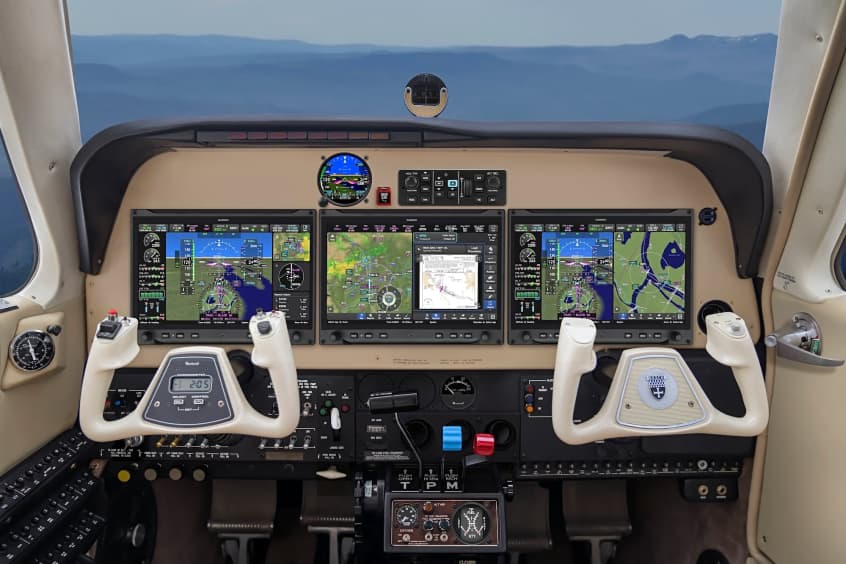
Smart Rudder Bias requires a G500 TXi or G600 TXi configured as a primary flight display with EIS, which can be shown as a strip on the G500 TXi or G600 TXi, or on a separate TXi display. Additionally, a GFC 600 digital autopilot with the yaw axis option must be installed. Initial certified aircraft with Smart Rudder Bias capability include the Beechcraft Baron 58 and 58A, as well as the Piper PA-31-300, PA-31-310, PA-31-325, and PA-31-325CR. Additional certifications of the Bias will be forthcoming.













 The bimonthly news publication for aviation professionals.
