


 The bimonthly news publication for aviation professionals.
 Read this story in our October 2020 printed issue.
Protium, a UK-based green hydrogen project developer, has signed a Heads of Terms with ZeroAvia, a UK and US-based advocate of decarbonising commercial aviation. The agreement will see Protium working closely to develop and expand UK green hydrogen infrastructure for aviation, to support the development of ZeroAvia's technology.
The collaboration brings together two specialists by combining the future of aviation with green hydrogen as an energy alternative, revolutionising the future of aviation while simultaneously working towards achieving net zero.
The agreement demonstrates that the UK aviation sector can recover its positive growth trajectory and become 100% renewable via the deployment of green hydrogen, while also signifying that green hydrogen infrastructure can be provided by multiple companies, not just solely incumbent operators.
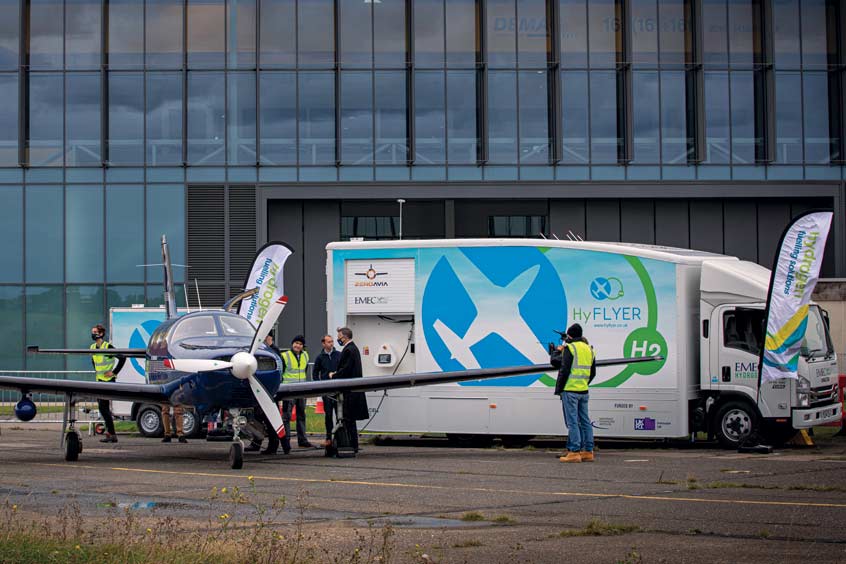
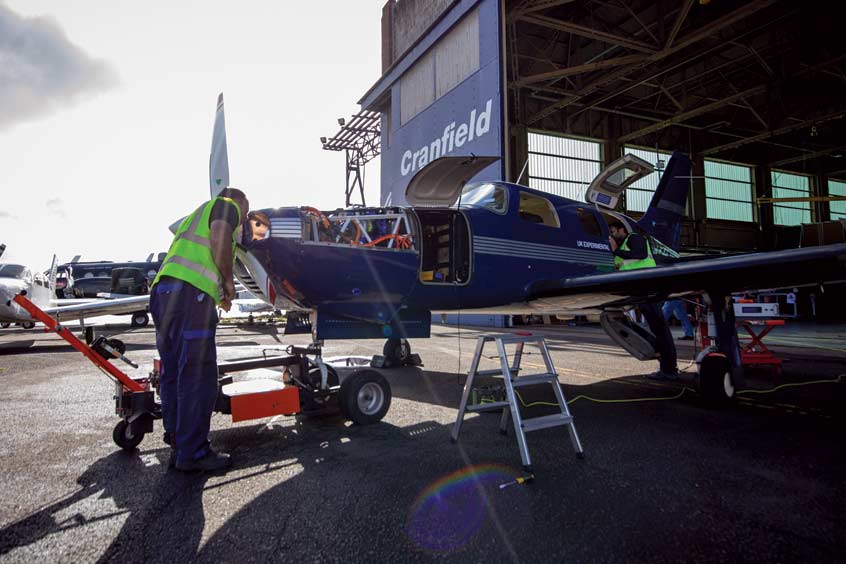
This announcement comes shortly after ZeroAvia's first successful zero emission flight was piloted at Cranfield in Bedfordshire last week, as reported by Business Air News, with a six-seater aircraft taking flight across the skies of southern England. The use of hydrogen was key in this flight, with the craft solely using hydrogen and atmospheric oxygen in a fuel cell system to create electricity and propel the craft through the skies, whilst only emitting water vapour. ZeroAvia's flight milestone is a significant step towards making zero emissions passenger flights a reality in the years to come.
With a legal imperative to achieve net zero by 2050, many aviation experts are turning to alternative solutions and energy innovators to help secure the sector's long-term growth; the 'third aviation revolution' has been coined with this notion in mind, focusing on the transition from heavier-than-air-flights to transatlantic flights and now, electric flights.
The collaboration represents a landmark milestone for Protium, whose technical acumen and project expertise enables ZeroAvia to continue revolutionising and commercialising the green aviation market.
Commenting on the news, Chris Jackson, CEO of Protium, says: “We are extremely pleased to be working with ZeroAvia, the pioneer of decarbonisation in aviation, and look forward to providing it with 100% renewable 'green' hydrogen for the future of zero emission flights.”
Val Mifthakov, CEO of ZeroAvia, adds: “We are delighted that Protium will work with us on tackling one of the biggest challenges for the widespread use of hydrogen in aviation: cheap and green hydrogen availability at airports.”