 The bimonthly news publication for aviation professionals.
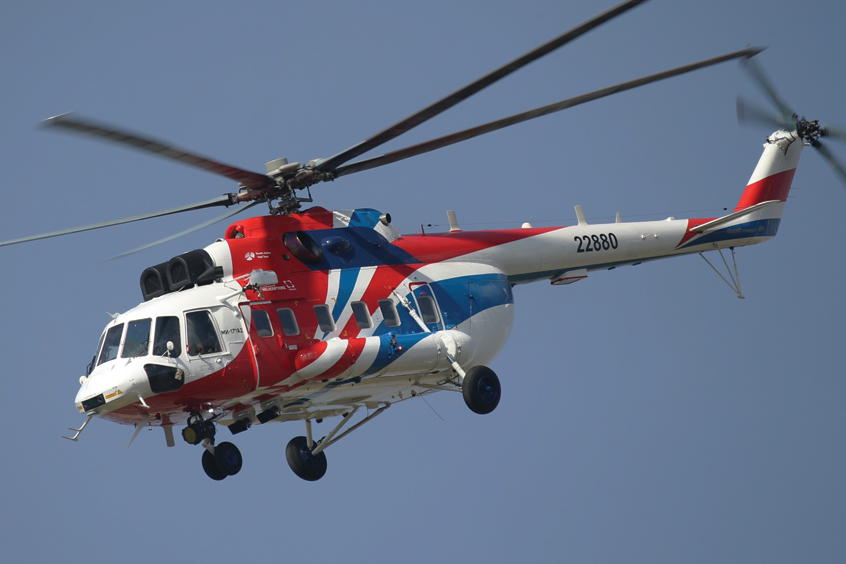
Russian Helicopters holding company, part of State Corporation Rostec, and the Federal Air Transport Agency (Rosaviatsia) have delivered the technical and operational documentation for the Mi-171A2 helicopter to ANAC, the Brazilian civil aviation authority, as part of an application for type certification by the Brazilian aviation authorities.
“Brazil is our long-time partner and one of the key countries in South America for the promotion of Russian helicopter products,” says general director of Russian Helicopters Andrey Boginsky. “Mi-171A1 helicopters have been successfully operating in the country for more than 10 years, and I am sure that the new helicopter will soon also have the opportunity to earn a positive reputation. Brazil's certification authority is processing the documentation it received for the Mi-171A2 and, considering our experience of certifying the Mi-171A1 helicopter, I think that this issue will be resolved in a short time.”
Director of the Rostec aviation cluster Anatoly Serdyukov adds: “In light of Brazil's strong demand for mid-class multipurpose helicopters, we are bringing to the local market a new machine that is modern, roomy and reliable. The Mi-171A2 helicopter provides long range, which is important for a country where rotorcraft are operated in hard-to-reach areas. We intend to develop after-sales service as part of an international partnership to guarantee the type's maximum operational life and as a prerequisite for flight safety.”
The Mi-171A1 helicopter, optimised for the requirements of European commercial operators and FAR-29 aviation regulations, received Brazilian type certificate approval in 2005, with the first delivery to the country taking place the same year.
In 2010, Atlas Taxi Aereo won a tender by Brazilian state oil and gas company Petrobras to carry out aerial work in the harsh environmental conditions of the Amazon rainforest using Mi-171A1 helicopters. During a year of intensive operation, one helicopter completed more than 1,000 hours, moving around 600 tons of cargo including drilling equipment on an external mount.
The T-HUMS onboard monitoring and diagnostics system was also installed in the new Mi-171A1 helicopter for the first time by the Brazilian company. This provides automatic monitoring of a broad range of nodes in real time, which can enhance flight safety, reduce maintenance costs and increase aircraft availability.
The Mi-171A2 incorporates 80 changes to its predecessor, the Mi-171A1. The helicopter is equipped with VK-2500PS-03 engines, a civilian version of the engines installed on the Mi-28 combat helicopters, with a digital control system. One of the most important differences between the Mi-171A2 and the helicopters of the Mi-8/17 family, however, is the carrier system. The helicopter has a more efficient X-shaped tail rotor and a new main rotor with integral composite blades with an improved aerodynamic layout. In August 2017, the helicopter received a Type A certificate from the Russian Federal Air Transport Agency, indicating that the type meets the country's most stringent safety standards.