


• Aerofugia
Aircraft
• Jekta Switzerland SA
Aircraft
• Sino Jet
Charter
• Solyu
• Unity Airlines
Charter
BAN's World Gazetteer
• China


Simple and fast. Send us your logo and 150 characters to advertise cost-effectively to your potential customers. Start today!

 Read this story in our January/February 2025 printed issue.
In recent years, China has introduced a comprehensive set of policies and regulations that formally incorporate eVTOLs into a national comprehensive three-dimensional transportation network plan, setting clear development objectives and timelines; implementing stringent airworthiness certification processes and safety standards; and publishing industry standards for the technical specifications of take off and landing sites. Local governments have been quick to offer robust policy support for the research, testing and commercial application of eVTOLs.
Even before these policy shifts, fossil fuel prices had been trending upwards says Asia Pacific-based business aviation company Sino Jet, driven by factors such as global energy market dynamics, geopolitical tensions and increasingly strict environmental regulations. As a clean and sustainable transportation, it believes eVTOL technology is gaining momentum and has a bright future ahead. Continuous technological advancements are helping to reduce costs, government backing for the low-altitude economy is growing stronger and market demand is on the rise as urbanisation accelerates.
“eVTOLs show great promise for rapid intercity travel,” says a SinoJet spokesperson. “However, realising this potential will require overcoming challenges related to technology, infrastructure, market acceptance and regulations. The development of mature technology and obtaining airworthiness certification are crucial first steps. Additionally, we need to enhance infrastructure such as landing sites, charging stations and air traffic management systems.” As eVTOL technology continues to advance, regulatory frameworks are effectively implemented and real-world operational experience grows, the company believes public confidence in their safety will naturally increase.
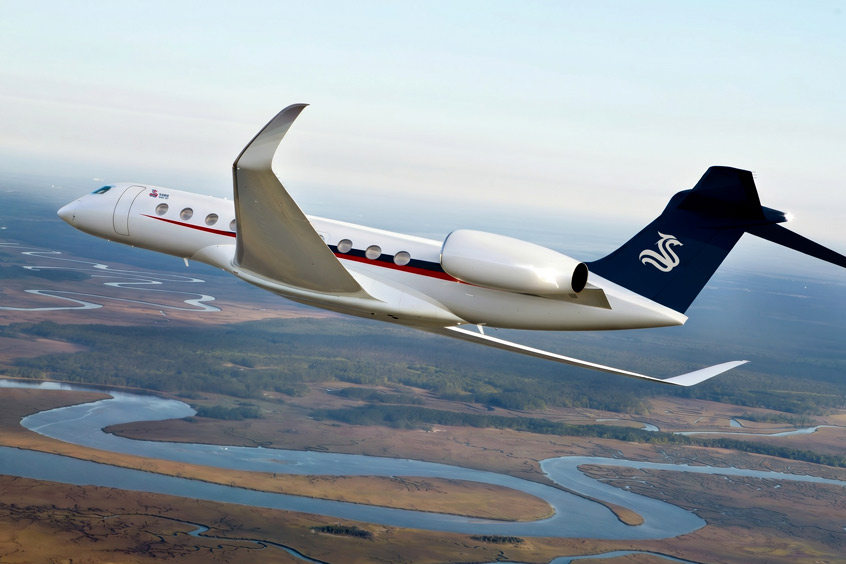
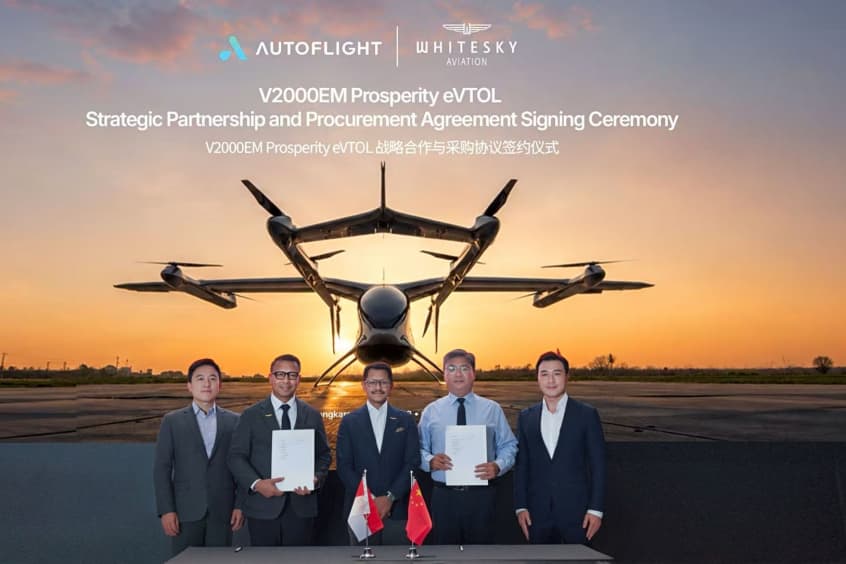
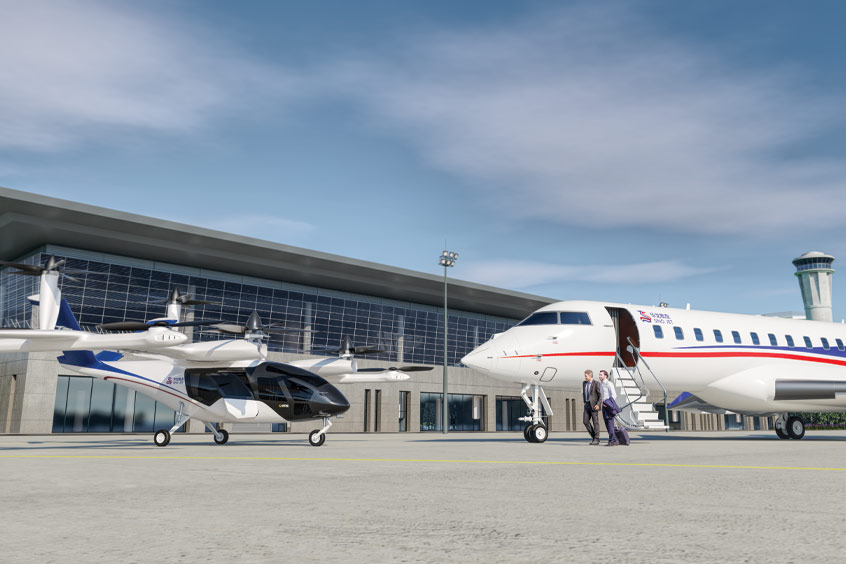
Sino Jet is a leading operator in the integration of low-altitude flight. It has committed to purchase 100 AE200 tilt rotor eVTOLs from Aerofugia, a subsidiary of China-based auto manufacturer Geely Technology Group. It recognises however that business jets and eVTOLs will be complementary rather than competing solutions, so continues its procurement of business jets alongside. “In the mean time, when adding new business jets to our fleet, Sino Jet will place a strong emphasis on fuel efficiency and SAF compatibility,” the spokesperson continues.
In the short term, Sino Jet believes eVTOLs will likely take over some of the current roles of light helicopters, especially for urban air mobility. However, due to ongoing limitations in battery technology etc, heavy helicopters will continue to be indispensable for the time being. It finds the global readiness of eVTOL infrastructure varies, and the rollout will be heavily influenced by the level of policy support, the scale of investment and the rate of technological advancement. Six cities in China have already been designated as the first wave of eVTOL pilot locations: Hefei, Hangzhou, Shenzhen, Suzhou, Chengdu and Chongqing.
Also key to development is the fact that the Asia Pacific region is populated by island nations; Japan, Thailand, Indonesia, the Philippines and New Zealand are just a few that live, work and relax around coastlines. Given their topography, business aviation offers an efficient way of transporting executives both domestically and internationally.
Is the shift from fossil fuel within the budget of all operators? “I can’t say I have heard very much about any non-traditional alternative aircraft that sound remotely feasible for the long, over-water trips we undertake,” says Antony Deamer, CEO of Vanuatu-based Unity Airlines. “Twenty years ago there was talk of diesel-powered engines, but they never made it in to production for our 10 seat aircraft. And apart from the possibility of unleaded fuel instead of low leaded, there is nothing else at all in the foreseeable future.”
How, he asks, can a small, island nation airline afford the $3-4 million in interest payments? “If we could even get a bank to finance us, the interest would be prohibitive at 12 per cent,” he adds. “And we work on two-three hundred dollar aircraft.”
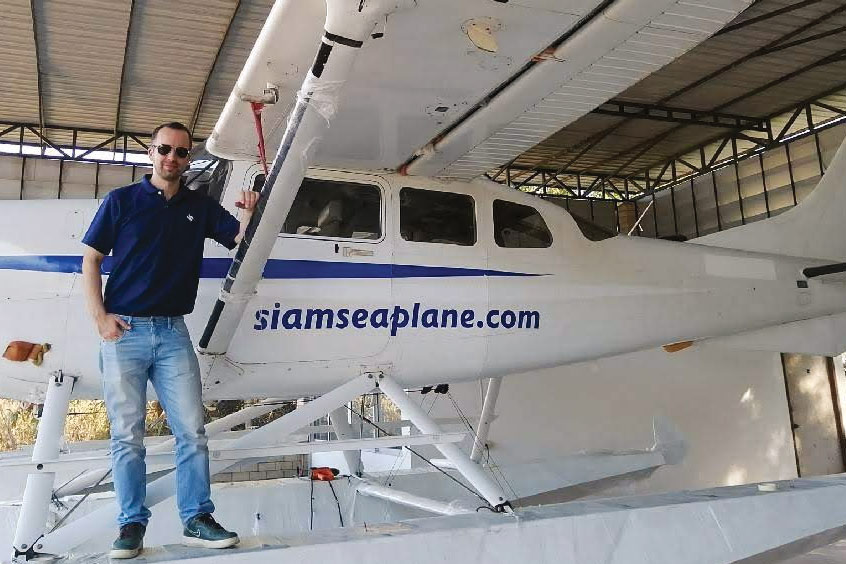
Amphibious, electric-powered aircraft create opportunities for operators to connect luxury resorts, business hubs and international airports with destinations currently isolated by water. Seaplane Asia in Thailand and Solyu Leasing of South Korea have agreements in place for nearly 50 PHA-ZE 100 amphibious aircraft from developer Jekta. “Compared to the hourly Jet A consumption of turboprops, the electricity used by the PHA-ZE 100 offers a significant fuel cost advantage, and its ability to operate into and from paved, unpaved and water airstrips brings increased operational flexibility,” says Jekta CEO George Alafinov. “But in fact, in the Asia Pacific region, there is much more focus on hydrogen as a fuel source.”
A key challenge for the energy transition is the technological gap. Current battery and hydrogen systems cannot yet match the speed, range and availability offered by traditional jet-powered business aircraft; there need to be substantial advancements in energy density, charging infrastructure and fuel cell reliability. However, this shift may still be a decade or more away given the current pace of research and development.
Today’s airport ecosystems are designed to support jet fuel operations, so will require substantial investment in new infrastructure such as high-capacity charging stations, hydrogen refuelling facilities and, potentially, new types of hangars and maintenance facilities. Such investment will likely occur only once there is clear demand from operators and travellers, further delaying widespread adoption.
“We envisage a future in the Asia Pacific region where business aviation operators will operate mixed fuel and electric/hydrogen fleets, increasing services and possibilities for the luxury tourism business and, most importantly, giving operators the chance to develop new offerings for their markets,” Alafinov notes. The evolving ecosystem will have traditional jets serving longer routes and high-speed needs, with eVTOLs and amphibious aircraft addressing shorter connections and niche demands. Together, these advancements could reshape the industry into a multi-modal, fully integrated network that combines efficiency, sustainability and unparalleled accessibility.
He believes the first electric amphibious operations in Asia are likely to start in regions where business aviation is still emerging, but where there is a pressing need for fast and efficient travel. A prime candidate is Indonesia, a nation comprised of over 17,000 islands and one of the fastest-growing economies in the world in terms of GDP per capita. There, the demand for rapid connectivity is driven by the sheer challenge of linking thousands of islands to major economic hubs and international airports. Currently, conventional transportation such as ferries and regional flights face limitations in terms of speed, accessibility and environmental sustainability. Electric amphibious vehicles, which can use water bodies as natural runways, have the potential to revolutionise this dynamic, significantly reducing travel times and connecting remote locations and larger urban centres or international gateways.
Infrastructure readiness for such operations will hinge on such factors as advancements in electric propulsion technology, the establishment of regulatory frameworks to ensure safety and efficiency. Given the rapid pace of technological innovation and the growing emphasis on sustainable transportation, Alafinov believes it is plausible that the foundational infrastructure for electric amphibious operations could be in place within the next five to 10 years. “Other regions in Asia with similar geographical challenges and economic growth trajectories, such as the Philippines, Vietnam or the Maldives, could also serve as early adopters of this technology,” he concludes.