

 The bimonthly news publication for aviation professionals.
German all-electric aircraft manufacturer Vaeridion has closed a €30m Series A2 round to build the first conforming prototype of its nine-passenger Microliner, with the build expected to be completed in 2027. In parallel, its Carolus project has been selected by the European Commission for a €94.5m Innovation Fund grant to support the establishment and ramp-up of a final assembly facility at Munich’s Oberpfaffenhofen airport. Together, the announcements support two critical development stages: building the first conforming aircraft and establishing the industrial capability to manufacture the Microliner at scale.
Once assembly is complete, the prototype will enter the flight-test phase as part of the certification programme. Vaeridion is targeting EASA type certification under CS-23 Level 3 in 2030, followed by entry into commercial service. The company plans to pursue FAA validation concurrently with the EASA process, and Design Organisation Approval process is also underway as part of broader certification activities.
Vaeridion completed its second EASA Pre-Application Contract in July 2026, working alongside GKN Aerospace to establish one of the first certification approaches for high-voltage electrical wiring interconnection systems in the CS-23 Level 3 category; the first PAC, completed in 2024, covered the distributed electric propulsion architecture.
So Vaeridion now has one firm Sales and Purchase Agreement with launch customer ASL Group covering up to 10 aircraft, including a pre-delivery payment arrangement; a planned 2027 assembly start; a 2030 type certificate target; and a grant agreement not yet signed, while the EU Innovation Fund call that selected Carolus was six-times oversubscribed, underlining how scarce this category of public industrial support is.
The equity round was led by Dutch impact venture capital fund Shift Invest and Invest-NL, with participation from existing investors World Fund, Project A and Vsquared Ventures, alongside PayBack founder and deep-tech investor Alexander Rittweger, among others. Including this equity round and earlier public funding, Vaeridion has raised approximately €60m to date.
Thijs Gitmans, a partner at Shift Invest who also sits on the Vaeridion board, says: “Regional aviation is one of the clearest cases where electrification makes both environmental and commercial sense. Vaeridion has chosen a certification pathway regulators already understand and has delivered real hardware on a disciplined budget. We are proud to lead this round and to back a European champion in electric flight with European funding.”
The Carolus grant comes from the EU Innovation Fund and is in addition to the equity raised. Specifically it arises from the IF25 NZT call, which the European Commission announced on 19 October, 2026, selecting 77 projects across 23 countries for €3.4bn from a pool of 358 applications requesting €17.5bn, six times the available budget. The selection of Carolus remains subject to completion of the grant agreement, expected to be signed in 2027.
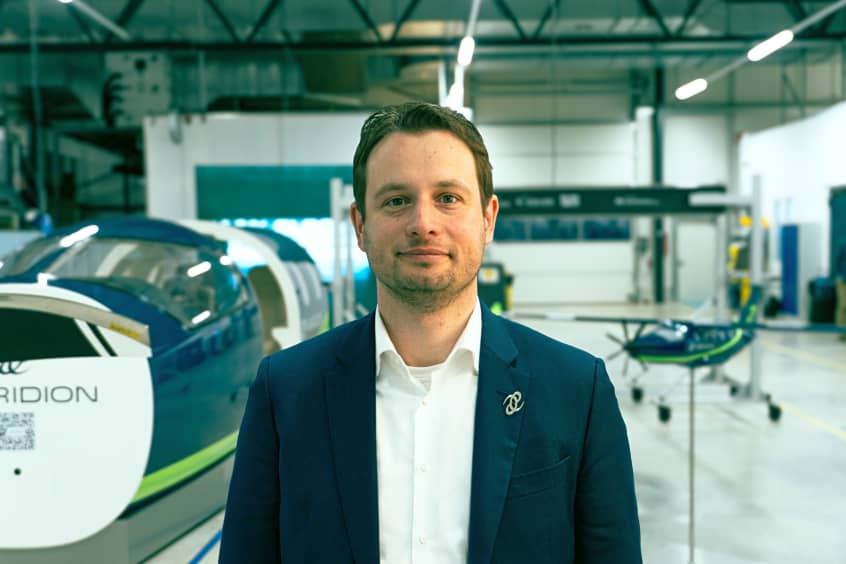
Ivor van Dartel, Vaeridion founder and CEO, says: “Over the past year, we have turned the Microliner from a validated design into hardware, with exceptional capital efficiency. Our propulsion and battery technology is now being tested at our own facility in Oberpfaffenhofen. This equity round enables us to build our first conforming aircraft. The Commission’s selection of Carolus supports the next step: establishing the industrial capability for Microliner production. Building out of Europe, our mission is to make regional flying commercially viable and accessible again, in Europe and for operators worldwide.”
- Why regional aviation needs a new aircraft
Regional aviation is particularly vulnerable to fuel price shocks. With jet fuel prices on the rise and the EU importing more than half of its energy, the region remains highly exposed to energy market volatility.
Additionally, Vaeridion claims, more than 21,000 small turboprop aircraft serve regional routes worldwide. Their average age is 23 years, and no new aircraft of this size has entered service in 30 years. According to the European Regions Airline Association (ERAA), around 120 regional routes in Europe were discontinued in the five years preceding June 2026, as fuel and rising maintenance costs make short routes increasingly difficult to operate economically.
Vaeridion is building its Microliner to change these economics. Targeted operating costs below €0.40 per seat-kilometre would allow operators to offer fares at the level of a first-class rail ticket while running profitable regional services. Germany alone has more airfields accessible to the Microliner than ICE high-speed rail stations; the company hopes the aircraft could therefore offer an economically resilient solution to restore direct connections where there are none today, and enable new ones, including routes operated under Public Service Obligation contracts. Its low noise could also enable night flights, subject to airport approval. But the opportunity extends beyond replacing existing aircraft: the company reports that McKinsey estimates the global market for regional air mobility could reach up to $115bn by 2035.
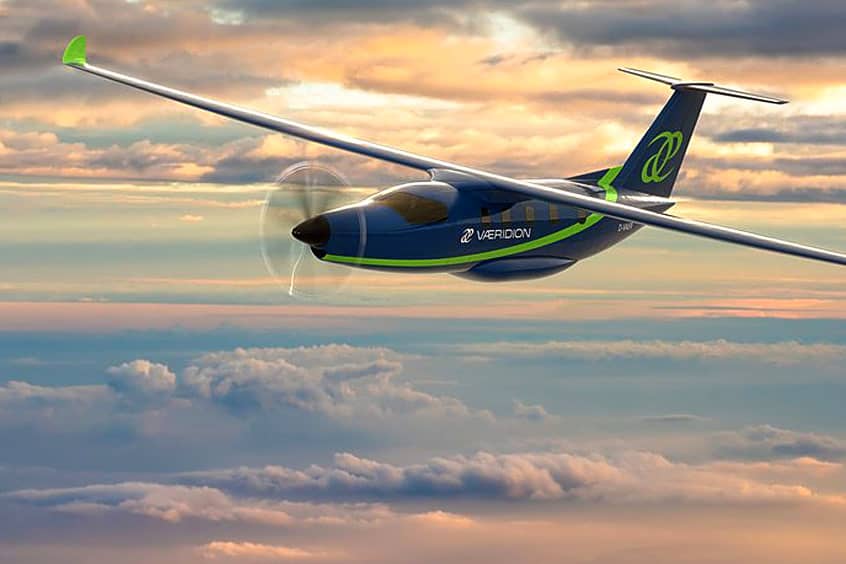
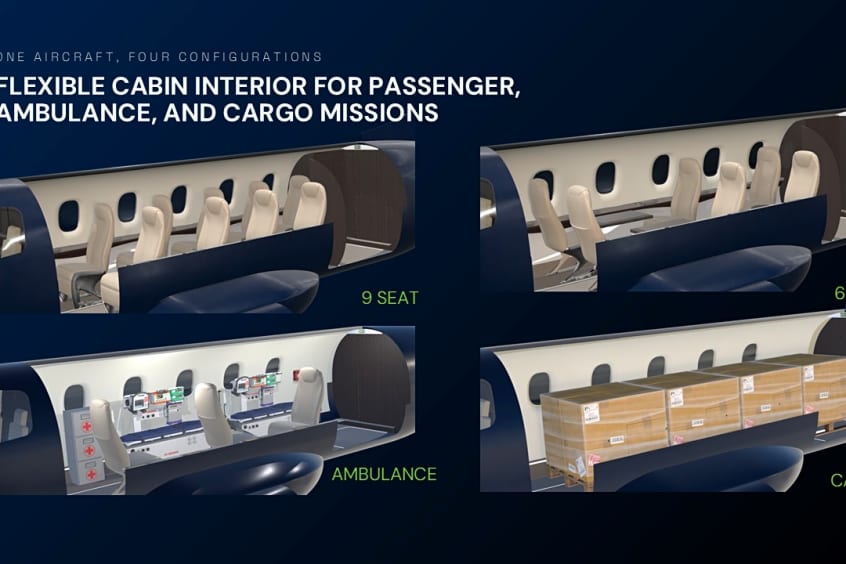
Designed for regional routes, the clean-sheet Microliner combines a glider-inspired wing with patented integrated modular batteries and multi-engine, single-propeller propulsion system. It targets 400km in range with nine passengers under Instrument Flight Rules, or up to 550km with four passengers under Visual Flight Rules, and is planned in passenger and cargo versions. Developed to EASA CS-23 requirements the aircraft has, in the past 12 months, completed its Preliminary Design Review and second Pre-Application Contract with EASA, de-risking the certification approach for its novel technologies.
While the equity round supports the first conforming Microliner and integrated propulsion testing, Carolus addresses the next industrial challenge: manufacturing and industrialisation, delivering electric regional aircraft at scale. This includes work towards a first conforming aircraft and the establishment of final assembly capabilities. The project is intended to establish an initial production capacity of approximately 40 aircraft per year, after which time the company aims to expand its manufacturing footprint to additional locations as it scales production; this would fall outside the scope of the Carolus project.
Customer demand is already in place, spanning regional airlines, charter operators, cargo carriers, flight schools and lessors, with commitments for more than 130 aircraft valued at more than €730m. Alongside its growing customer base, Vaeridion is supported by KLM, BayernLB and TrueNoord through its Market Advisory Committee.
Daria Saharova, managing partner at World Fund, notes: “For the past half century, Airbus has shown that Europe can build aircraft the world buys. Vaeridion is writing the next chapter with a fully electric aircraft, built in Bavaria, with a clear path to certification. Investing in the future of aviation is Europe’s power play, and I am proud to back Ivor and the team.”
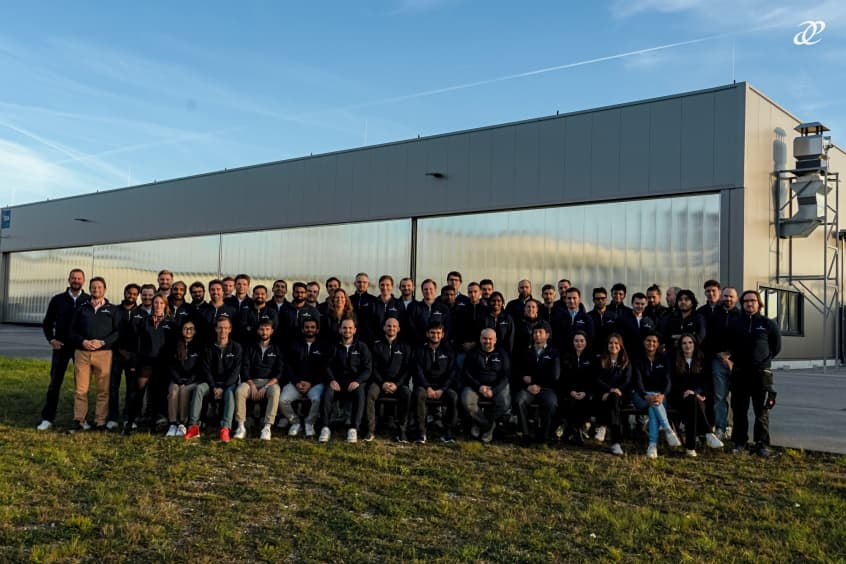
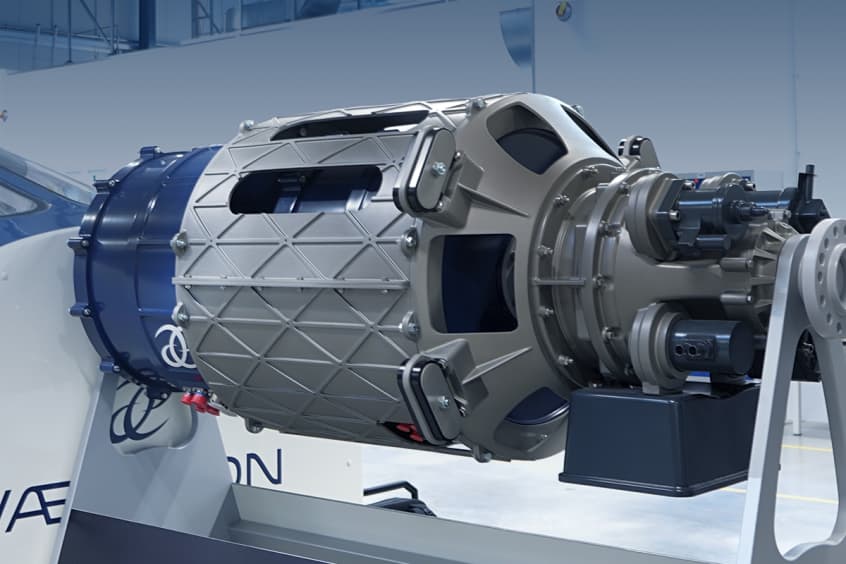
In March 2026, Vaeridion opened its production and test facility at Oberpfaffenhofen airport, where it recently powered on its electric engine for the first time. Next, the battery packs and propulsion system will be integrated on a ground-test rig known as the copper bird. Together with wind-tunnel testing, this will support development of the first conforming Microliner and preparations for flight testing. Results from the copper bird testing will provide additional validation and supporting evidence for the ongoing certification programme, particularly regarding the integration and performance of propulsion and battery systems.
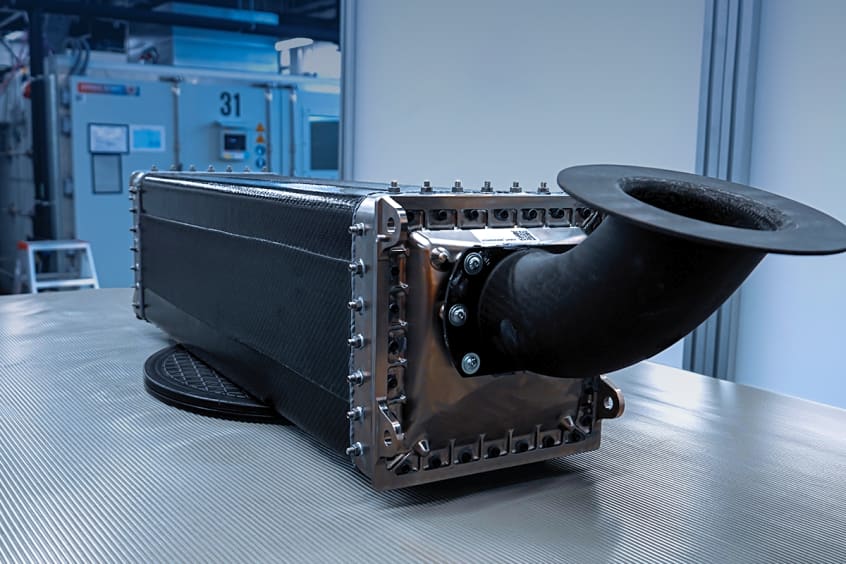
The battery technology is being developed specifically to meet performance requirements. Vaeridion has already completed the development of a second-generation battery pack and is progressing towards further system integration and validation.
The Microliner is engineered in Munich and Delft and will be built in Bavaria. Vaeridion will continue to expand its team across Europe, with a focus on scaling its technology, advancing aircraft industrialisation and certification, and it continues to engage with additional operators as it progresses towards commercial service in 2030.