

 The bimonthly news publication for aviation professionals.
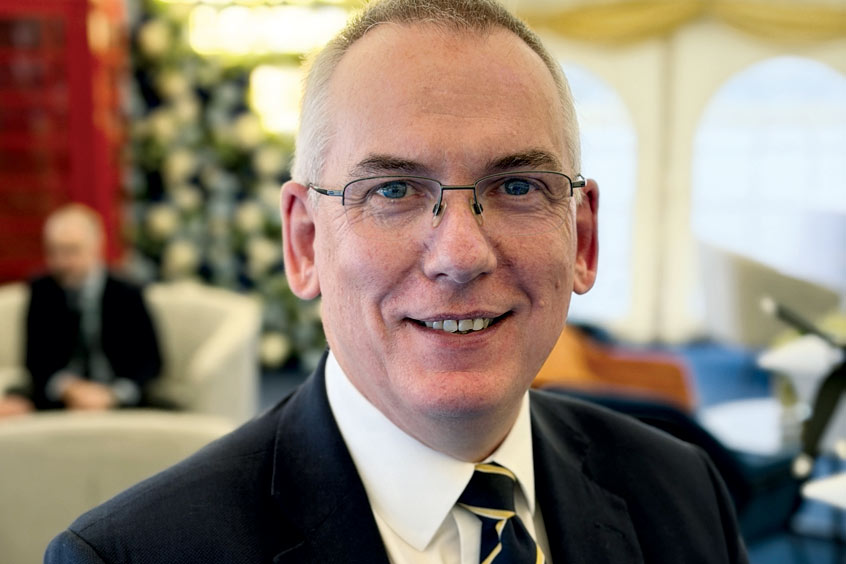
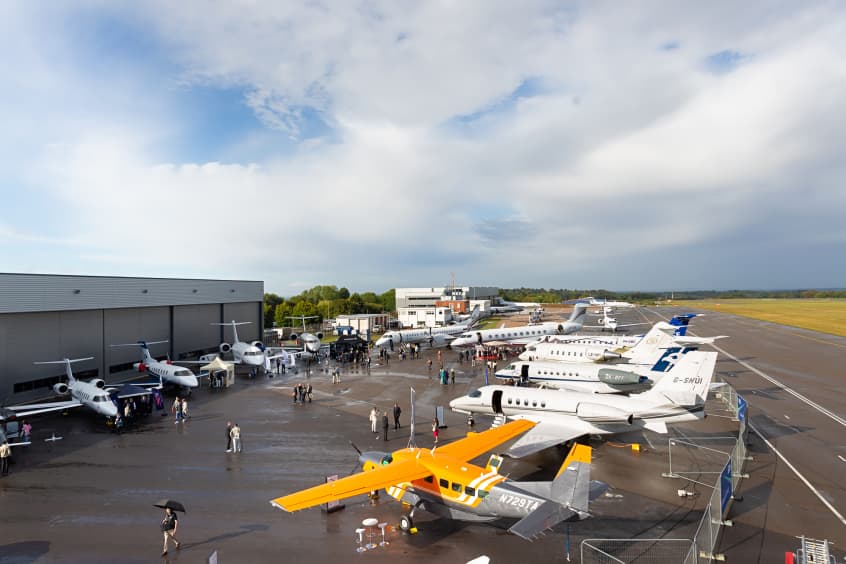
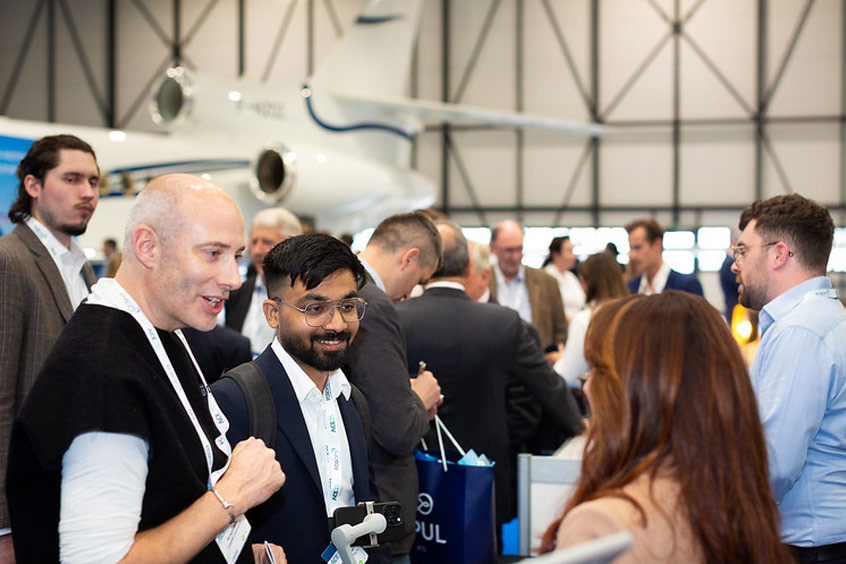
London Biggin Hill airport CEO David Winstanley has spoken openly at the recent Air Charter Expo (ACE26), held at the airport, about how the business aviation hub's 10-year plan is being executed.
He says: “I arrived seven-and-a-half years ago and the chairman and I came up with a ten year plan. To be frank, we are slightly ahead of it. We were looking to transition the airport from ‘short trousers to long trousers’. We were good at what we did, but we weren’t positioned in the market as a market leader. So we have been working to transform this. And we’ve done it by listening to the customer, which is the easy bit, but the hard bit is doing what the customer actually needs, in a timely manner.
“We’ve evolved alongside ACE, and we now position ourselves as the premier business aviation airport for London. We needed to evolve the narrative. You can’t just listen to customers five years ago, do what needs to be done then re-engage. The industry is entrepreneurial by nature. So you have to continually engage and reinvent yourself. The second you stand still, you are going to get left behind, and we see that across the sector. Evolution has got to be constant.”
During the last year, London Biggin Hill has completely resurfaced its runway and added a new centreline light system. It is now the first airport in the UK to trial the very latest in instrument approach technology, a Required Navigation Performance (RNP) approach, Radius-to-Fix, dual sector on Runway 03. It will also have performance navigation to ILS on Runway 21. Innovation goes hand in hand with doing good business, all while making sure that you’ve got excellent customer service, according to Winstanley.
He goes on: “We are selling compressed time. We are trying to save people’s time, because that converts to money. The prime aim for an airport is to attract investment and generate economic wealth while generating jobs and being sustainable. So that’s been our focus seven years in.
“We are looking to create an ecosystem, a one-stop-shop for business aviation. It’s a simple strategy: be a home base, attract MROs and engineering facilities, and be a gateway to London. We are also in a position to be a gateway to Europe. If you have a very simple executable strategy that aligns with customers, it allows you to focus on business aviation and the charter market.
“We’ve seen a significant increase in the number of larger jets flying longer sectors. When I arrived, this was underserved. We captured around 40 per cent of the shorter range jets. So the average weight is on the increase, and we are increasing our reach. We serve more than 750 destinations worldwide and, being a time sensitive product, our customers can fly where they want, when they want and with whomever they want.”
The establishment of a Bombardier service centre at the airport nearly 10 years ago has been the key enabler, a force multiplier in generating growth. But Winstanley knows that London Biggin Hill also needs to appeal to a whole range of customers, and the airport sees a lot of Gulfstream, Textron and other types flying in too. “The massive advantage we’ve got is that we have available land,” he explains. “What we are focused on is developing that land and providing what the customer wants. Other airports are more constrained.
“If you listen to the reasons why people are not coming to you, and then you knock each one of those off, we can then sell to new options. This was the reasoning behind the resurfacing and a lot else of what we do. People were saying we didn’t have a hotel, so we built one. It’s touch down to head down in five minutes. And this is so important for crews; we really need to look after them too. No third party delivers any of our key services, it’s all Biggin Hill colleagues.
"This industry has zero tolerance for failure. So it’s got to be just right, first time, every time.”
The airport is now looking at developing with companies who are innovating in terms of differently-powered flight. No one knows exactly when this will be realised, but Winstanley knows that the team has to be prepared. “In some form, eVTOL is coming,” he states. “We are looking to convert 100 acres of our arable land into a solar farm, which could generate nearly 10 megawatts. The airport takes about 3.5 in total so we could become self-sufficient in that regard. But also, this makes us very attractive to companies like Joby, a six-minute flight time from Battersea. Our offer would be ideal and our customer base can be accessed.
“We cannot rest on our laurels. Pace is everything and you always have to be ready to respond and move quickly, before someone else does.”