



 The bimonthly news publication for aviation professionals.
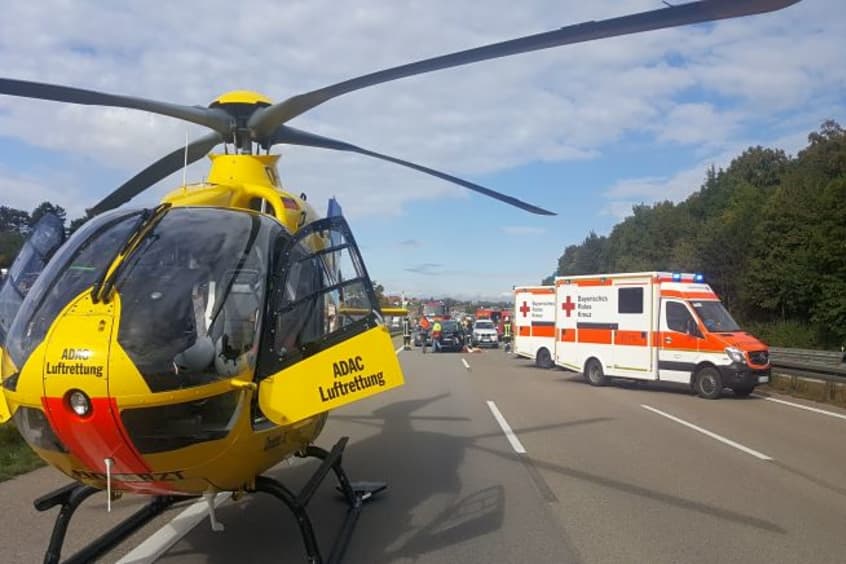
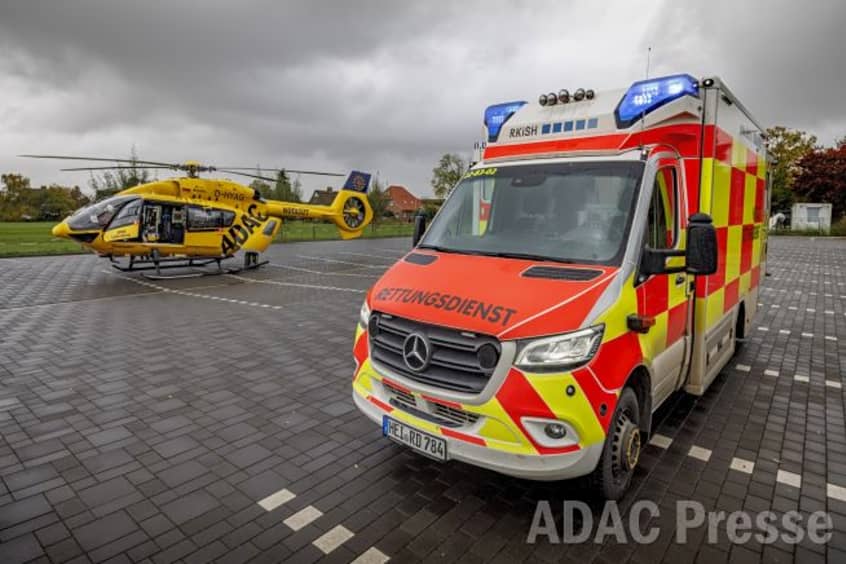

ADAC Air Rescue, the non-profit organisations of the ground-based rescue service and air rescue in Germany warns of serious consequences of the planned GKV contribution rate stabilisation law for emergency medical care.
ADAC Air Rescue, Arbeiter-Samariter-Bund, Deutsche Lebens-Rettungs-Gesellschaft, DRF Air Rescue, Deutsches Rotes Kreuz, Johanniter-Unfall-Hilfe with Johanniter Air Rescue and Malteser Hilfsdienst are jointly demanding an explicit opening clause for medical emergency rescue services.
The aid organisations support the federal government’s goal of stabilising the financing of statutory health insurance in the long term and limiting increases in contribution rates. However, in their assessment, the current draft legislation does not adequately consider the specific requirements of emergency medical services on the ground and in the air.
Stabilising statutory health insurance is an important goal. However, it must not come at the expense of emergency medical care. Emergency medical services are part of essential public services and therefore not comparable to other areas of the healthcare system. Emergency medical services are largely driven by external costs. In addition, there is a persistently strained shortage of qualified personnel, which can only be resolved through attractive working conditions and fair, performance-based compensation.
Emergency medical services, including air ambulance services, therefore require reliable and cost-covering funding that takes into account their specific tasks and cost structure. A rigid link to the unpredictable development of the basic wage rate is an unsuitable instrument for refinancing emergency medical services, including air ambulance services. This will not improve the quality of care. It risks restrictions on investments, innovations, and the long-term guarantee of unrestricted operational readiness. “Anyone who wants to ensure fast and high-quality emergency care for citizens must not subject the refinancing of emergency medical services to a rigid cost cap,” the non-profit emergency medical service providers jointly declare.
The planned limitation of remuneration increases to the basic wage rate, as well as additional deductions between 2027 and 2029, does not reflect the actual cost developments in emergency medical services. Cost increases for personnel, (air) vehicles, medical technology, energy, fuels and legal requirements develop largely independently of general wage trends and cannot be influenced by service providers. Unlike in many other areas of statutory health insurance, however, there are no further options for offsetting cost increases through efficiency improvements.
The exception clause proposed by the Federal Ministry in Section 133, Paragraph 1, Sentence 1 of the German Social Code, Book V (SGB V), also falls short from the perspective of aid organisations. It inadequately addresses the actual needs of emergency medical services. Furthermore, the Federal Constitutional Court, in its established case law on emergency medical services, sets strict limits on its implementation. An exception should not only apply when a concrete threat to care has already occurred or must be proven. Rather, reliable planning and investment security is needed for the infrastructure of the emergency medical services, which must be operational around the clock.
Aid organisations are therefore strongly calling for an explicit opening clause for emergency medical services in Section 133 of the German Social Code, Book V (SGB V). This clause must ensure that the special requirements regarding tasks, operational readiness, personnel, technology, and above all, safety are taken into account in remuneration agreements, so that cost-covering refinancing remains possible.
At the same time, the undersigned organisations continue to see opportunities to make emergency care more efficient with the help of the upcoming emergency care reform, for example, through better patient management, more modern and networked control centres and optimised dispatching of rescue resources, more flexible and tiered use of existing resources, and the reduction of unnecessary bureaucracy. However, necessary efficiency measures must not come at the expense of comprehensive operational readiness and the quality of emergency care.
Ground-based and air ambulance services are indispensable components of public services and not free market offerings. With the hospital reform and the upcoming reform of emergency care, the legislature has explicitly recognised and emphasised the deployment and importance of emergency medical services, including air ambulance, in emergency medical care.
Anyone who wants to ensure high quality and rapid emergency medical care in the long term must therefore guarantee that its actual costs can be fully refinanced in the future.