


• Leonardo Helicopters
Aircraft
• Norwegian Aero Solutions
Maintenance
BAN's World Gazetteer
• Italy The bimonthly news publication for aviation professionals.
 Read this story in our January/February 2026 printed issue.
Leonardo is taking two major steps to further expand the level of proximity and service to its growing customer base in Norway. On top of an existing fleet of over 25 helicopters of various types used for EMS, public services, security and long range rescue duties, around 20 more aircraft in a mix of AW139 intermediate twins and AW189 super medium helicopters for SAR and energy support missions are expected to be delivered and enter service by 2027 following contracts signed in 2024 and 2025, with a first batch of units already arrived in the country this summer.
In order to adequately sustain this growing presence and meet evolving market requirements, Leonardo is establishing an AW189 Level D full flight simulator and setting up enhanced localised logistics support.
The new simulator is the third FFS for the AW189 in Europe, adding to the ones already in Sesto Calende in Italy and Aberdeen, UK. Fully designed, manufactured, owned and operated by Leonardo, it will be based in Sola Stavanger airport, close to its AW101 FFS, and is expected to become operational by the end of 2027. Developed to train pilots to cope with a variety of mission scenarios and environments, the new simulator will mainly meet needs from operators in Norway and the broader region. It will also be ideally suited to support emerging requirements for various applications in the future, providing one more low risk and fully established service advantage for operators possibly requiring capabilities in this aircraft category.
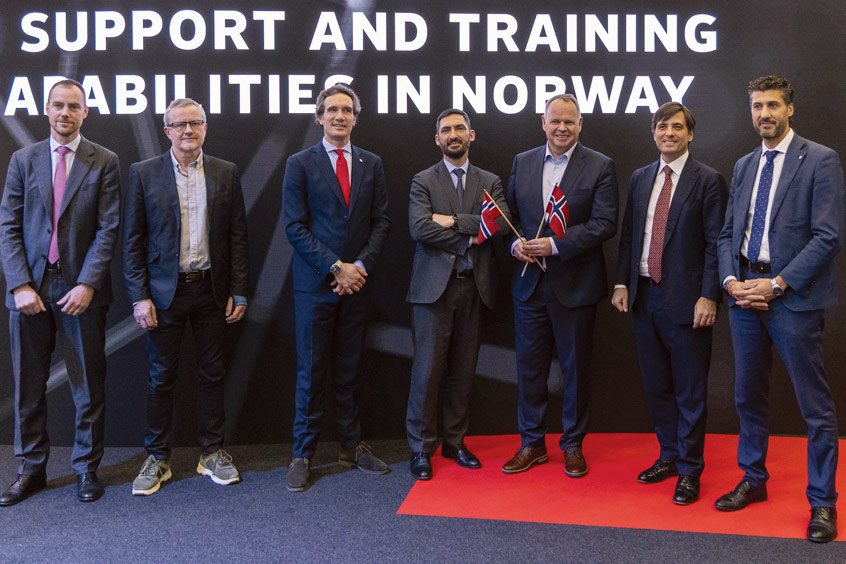
Stronger localised support services will be delivered by Leonardo's technical personnel deployed in country. Additionally a collaboration with Norwegian Aero Solution AS (NAS), established in 2024, will manage spare parts and logistics for Leonardo-owned stock. The spares will be based in Hønefoss by year end, allowing shortened delivery time for AOG (aircraft on ground) operations, urgent material recovery and greater proactivity to manage future logistical challenges.