 The bimonthly news publication for aviation professionals.
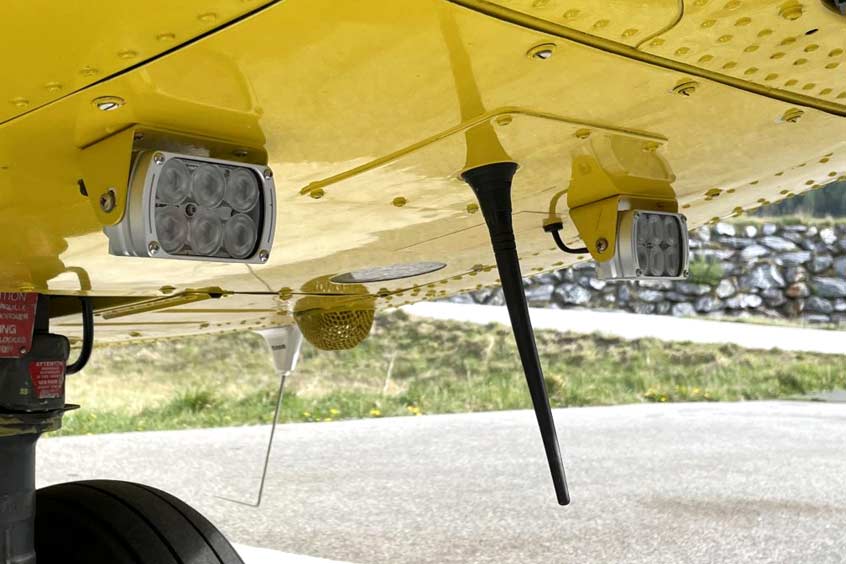
SPAES, a German Part 21J Design Organisation and Part 21G Manufacturing Organisation, has completed a minor change for the installation of pulse lights in an AS332 helicopter. This modification enhances the visibility and safety of the helicopter, particularly in adverse weather conditions or in the vicinity of other aircraft.
Before the modification, the helicopter was not equipped with pulse lights, which could limit visibility in fire fighting missions. As part of the modification, the pulse lights were installed under the helicopter's nose and securely attached to the front using special brackets. The lights are connected to the electrical circuit and can be controlled via a toggle switch in the cockpit, allowing the pilot to switch between the On, Off, and Pulse modes. Additionally, the lights are protected by a three-amp circuit breaker to ensure safe operation during flight.
Pulse lights are a crucial safety feature in aviation, especially in low visibility or crowded airspace. These lights emit a powerful flashing signal that makes the aircraft more visible from a greater distance, which is particularly important when flying at night or during inclement weather. The distinct pulsing pattern also allows for easier identification of the aircraft, reducing the risk of collisions with other aircraft or obstacles.
This modification aligns with ongoing efforts to enhance flight safety through the integration of advanced lighting systems, which are essential for both operational effectiveness and regulatory compliance. The ability to switch between different light modes provides flexibility to pilots, allowing them to adjust their lighting settings depending on the situation.
“Through the installation of the pulse lights, we have made an important contribution to the helicopter's safety and visibility. The close collaboration with the technicians and the thorough documentation guarantee that this modification has been implemented efficiently and reliably,” explains David Stringfellow, design engineer, structure/cabin/interior at SPAES.
For design and certification, a Minor Change was carried out in coordination with the customer and the EASA Part 21J Design Organisation of SPAES. After completing the installation tests, the documentation was finalised and the installation's documentation was issued. The installation was performed at the customer's own Part 145 maintenance facility.