 The bimonthly news publication for aviation professionals.
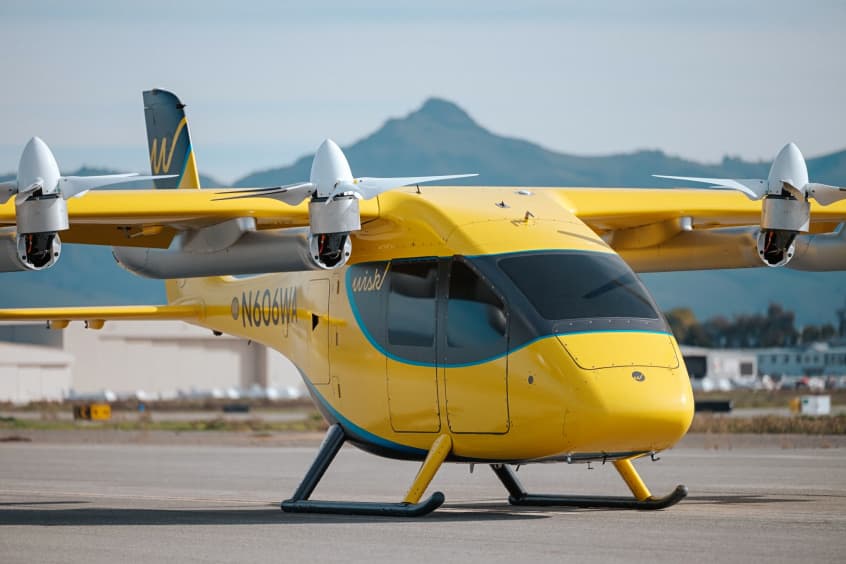
AIBot, based in California and developing eVTOL aircraft, completed Phase II core testing of its tilt-wing aircraft, which features eight rotors. This testing phase, which took place primarily at the company’s R&D and flight operations centre at San Bernardino International airport, included more than 200 flights and 150 hours of tests in both real-world and simulated environments.
These tests validated improvements to AIBot’s autonomous flight capabilities, boosting overall reliability and safety of the system. Additionally, AIBot conducted a successful flight test at the new Norton Test Range in March, operated by the Unmanned Aircraft Systems (UAS) Center at SBD, becoming the first eVTOL company to do so.
As part of its programme, AIBot utilised NASA’s System Identification methodology to enhance flight control precision, making it among the earliest to apply this advanced technique to an eight-rotor, tilt-wing eVTOL platform. This approach helps prepare AIBot to meet necessary airworthiness standards for commercial operations.
“This test phase demonstrated not only the maturity of our platform but also how advanced technologies like NASA’s System Identification can accelerate real-world readiness,” says Max Ma, president of AIBot. “We are expanding our San Bernardino facility to scale production and bring the next generation of intelligent flight systems to market. The tilt-wing, eight-rotor architecture provides greater redundancy, improved handling and enhanced safety, strengthening AIBot’s leadership in eVTOL innovation and commercialisation.”
AIBot’s production-ready aircraft is expected to debut soon, with further flight testing of the complete integrated system planned shortly.