The bimonthly news publication for aviation professionals.
 Read this story in our December 2024 printed issue.
magniX has completed testing of its magni650 electric propulsion unit (EPU) at NASA’s Electric Aircraft Testbed (NEAT) in Sandusky, Ohio.
The magni650 successfully performed at an altitude of 30,000 feet at a maximum continuous power of 700kw, an unprecedented achievement for an electric engine. The breakthrough performance of magniX’s EPU under simulated flight conditions at altitude demonstrates its readiness for the flight test phase of NASA’s Electrified Powertrain Flight Demonstration (EPFD) project and moves it closer to the world’s first electric engine certification.
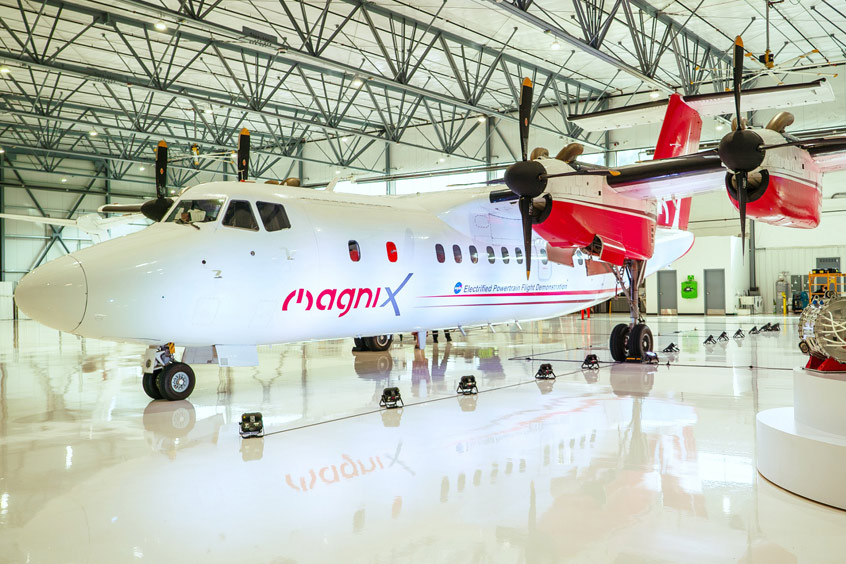
In the next stage of EPFD, one of the four turbine engines on magniX’s De Havilland Dash 7 test aircraft, provided by Air Tindi, a commercial turboprop operator from Yellowknife in the Canadian Northwest Territories, will be replaced with a magni650 electric powertrain, with test flights planned for 2026. The final stage of the programme will see a second turbine engine substituted with another magniX powertrain. This configuration is expected to reduce fuel consumption by up to 40 per cent on a typical flight. Through the data collected, this will bring the electrification of large-scale commercial aircraft closer to entry into service by the end of the decade.
Having powered first flights on five different aircraft, magniX is leading the advancement of electric aviation. It launched its Samson batteries earlier in 2024, with unmatched energy density and cycle-life, and provides a full electric powertrain solution with a clear pathway to entry into service.
“The NEAT test campaign has moved us closer to the world’s first certification of an electric powertrain for aviation,” says VP of technical programmes Ben Loxton. “The work we are doing with NASA in the EPFD project will enable the electrification of regional commercial aviation in pure electric on short routes, and hybridisation on longer routes, significant steps toward the decarbonisation of aerospace.”